
Perfect Spurs Shine Way For Chicago’s Dogs

I remember how it feels — that pure, warm hope. The kind that isn’t loud or performative, not yet. Just a private certainty you carry around all day like a hand-warmer in your pocket. The belief that this time, your team’s prospects are as real as anybody’s. That these regular season wins aren’t a mirage that will vanish in June. Not everybody has caught on yet, but you have. You can see it in the way the ball moves, the way the defense arrives on time, the way the young guys play like the future is already in the room with them. They’re winning now, and they’re still getting better — still searching for a ceiling that isn’t yet in sight.
I grew up a Chicago kid. There was something magical about believing in a squad and having them deliver, over and over, until belief stopped feeling like faith and started feeling like fact. You didn’t just watch games — you watched inevitability.
And right now, Spurs fans are holding that same warm light. They’re walking into February nights like they’ve been handed a secret. The arena is louder, the timelines are cleaner, the optimism isn’t hypothetical anymore. It’s lived. It’s on the scoreboard. It’s in the way the team plays like it expects good things to keep happening.
Chicago remembers that feeling. San Antonio is living in it - they won all eleven games in February, tying the third longest win streak in their history. Meanwhile, the Bulls lost all eleven of theirs. Think about that - the Bulls, in a single month, moved 22 games behind the Spurs in the standings. How have their fortunes fallen so far? Is there a way back into the light? What can we learn from San Antonio’s success?
Let’s start with how the Bulls got here.
The Shunning of the Bulls
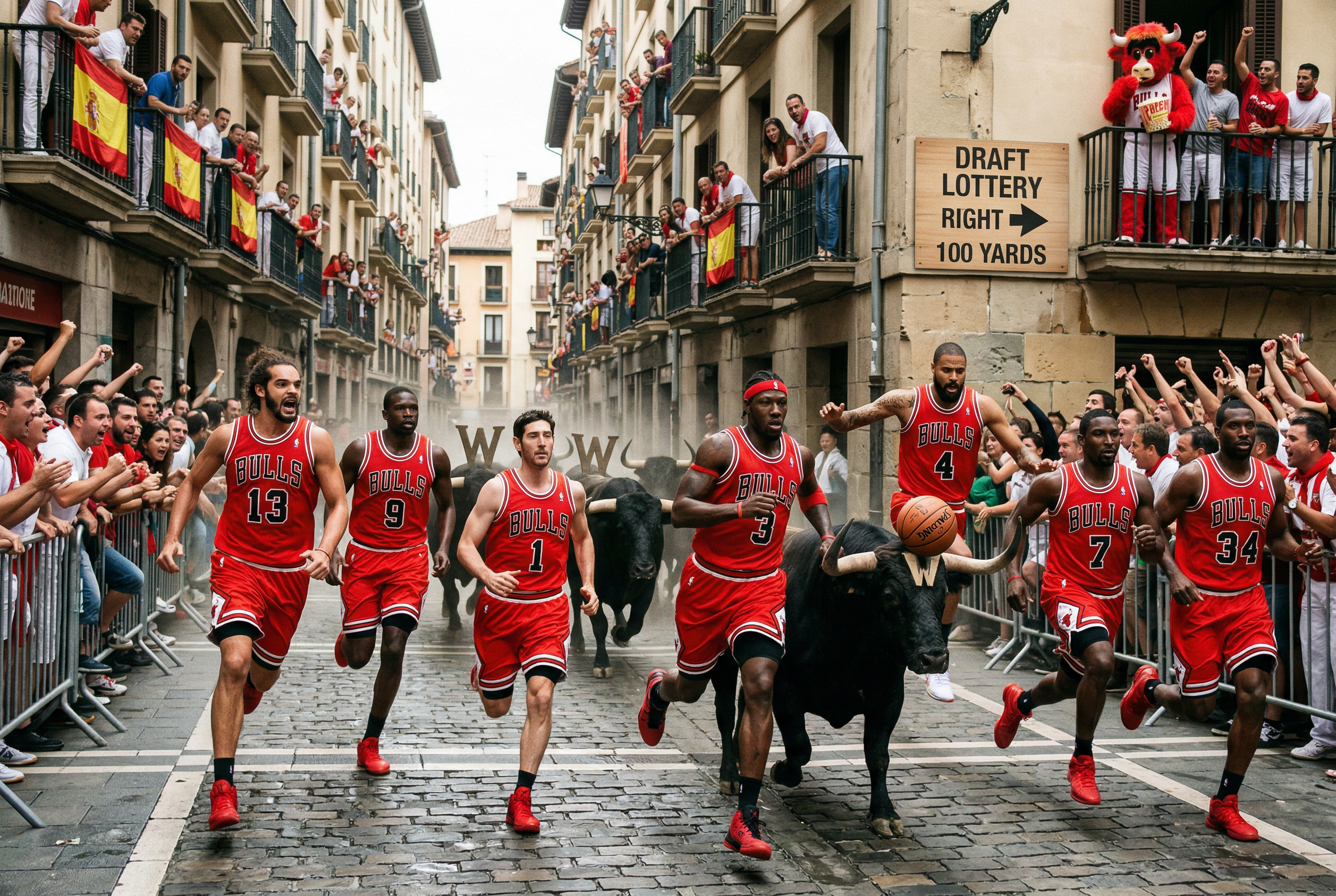
How do we get from the Three-Peat Repeat to 27 years of increasingly depressing mediocrity?
It starts with the Rose tragedy, because everything after that has been Chicago trying to recreate a feeling that can’t be replicated on command. That team wasn’t “promising.” It was real. It had hierarchy, identity, and a ceiling that felt like it was still rising. Then the injury hit, and the franchise didn’t just lose a player — it lost its timeline. When you lose your timeline, you start making decisions like a person who’s late to the airport: you stop thinking clearly and start paying extra for anything that feels like it might get you there faster.
Then came Jimmy. The best kind of problem: an alpha you didn’t expect to find, developing into the guy who could take the last possession and make everyone else’s job simpler by sheer force of will. Chicago had a second chance at hierarchy. But instead of building modern oxygen around him — shooting, spacing, secondary creation, a coherent offensive identity — they wobbled. They tried half-steps. They mixed timelines. They flirted with “retooling” while living in a league that punishes indecision. Eventually Jimmy did what elite competitors do when they sense drift: he forced clarity. If he couldn’t get a real contender built around him, he was going to go find one. That trade wasn’t just a transaction; it was the organization admitting it didn’t know how to cash a star at full value.
And that’s how you end up here: the LaVine era, the era of misplaced confidence. Zach is talented. DeMar was productive. Vucević was solid. None of that is the issue. The issue is what the front office convinced itself those ingredients meant. At some point, leadership bought into the oldest lie in basketball economics: that two 50-cent players make a dollar. LaVine plus DeRozan, add Vučević, sprinkle in veterans, tell yourself you’re close. But basketball isn’t spare change. Two rhythm scorers don’t create hierarchy; they create turn-taking. A true $1 superstar bends the defense even when he isn’t touching the ball. Two 50-cent creators bend it only when it’s their “turn,” which is exactly when playoff defenses clamp down and dare you to improvise.
That’s why the DeRozan–LaVine teams always felt like “your move, my move” instead of a system. It wasn’t that either guy was bad — it was that the roster construction treated star power like it was additive instead of multiplicative. You can survive that math in January. In May, it becomes a ceiling. The tragedy is that Chicago has known what hierarchy looks like. We saw it with Rose. We saw it with Butler. After those endings, we settled for the illusion of closeness — and paid full price for it.
San Antonio Did the Hard Thing
When Jordan retired in 1998, the Spurs won the next title in ‘99. And they kept winning, five championships in 15 years. But all eras eventually come to a close. Duncan retires in 2016 and they try to hold the line, because of course they do: they have Greg Popovich, continuity, pride, and Kawhi Leonard. But then the Kawhi rupture hits in 2018 the franchise acknowledges the hard part — that they can compete but not contend.
Over the next few years they let the last connective tissue of the dynasty walk out the door, cleared the veterans who belonged to a different timeline, and stopped paying for the privilege of being “pretty good.” LaMarcus Aldridge was bought out. DeRozan was moved via sign-and-trade for picks and seconds. Patty Mills and Rudy Gay were allowed to leave. Derrick White — a real player on a real contract — was cashed in for a first. Then in 2022 they traded Dejounte Murray, an All-Star for three firsts.
The next part takes time. The Spurs draft talent, maximize their at-bats on draft day. They continue to scout like its your primary business objective. They take their L’s developing young players, rather than bury them behind a veteran in the rotation. When a team does this cleanly, the payoff isn’t immediate wins — heck it’s not really guaranteed at all. The Pistons are making some noise this year, but their rebuild started in 2009. The Kings were rebuilding from the end of the Adelman era in 2006 until 2022. So, it can be a long walk in the desert. But because it takes so long, this underscores how important it is to stay focused on the mission, rather than switching to win now and resetting the clock prematurely.
And at the end of that long walk in the desert? Mana from heaven. Victor Wenbenyama isn’t just talent; he’s structural advantage. He turns defensive mistakes into highlights for the Spurs and nightmares for everyone else, and he changes what spacing even means because he can break a possession from thirty feet away or erase it at the rim. That’s why their February feels electric: alignment compounds over time. They have other great youth around Victor too. Keldon Johnson is a solid wing, and Castle is the absolute truth — a two way threat whose ceiling we can’t even identify yet.
When to End the Walk in the Desert
The most dangerous moment for a rebuilding franchise isn't the beginning of the walk into the purgatory of a rebuild — it’s the moment they decide it’s over. If you exit the desert too early, you aren't finding an oasis; you’re just walking into a smaller, more expensive desert (see: the 2021 Bulls).
To avoid the Mediocrity Trap (failing from the middle) there are three non-negotiable triggers that must be pulled before a team goes for winning now. And, like their records in February, the Spurs come up perfect here while the Bulls cough up a goose egg:
1. Top Three Seed or Pound Sand
In the NBA, contending means a Top 3 seed. History shows that champions almost exclusively come from the top three spots in their conference.
The Rule: You do not trade future draft capital for a win-now veteran unless that player realistically moves your floor to a 50-win pace and a Top 3 seed.
The Bulls' Mistake: When Chicago traded two first-round picks for Nikola Vučević in 2021, they were the 11th seed. They were exiting the desert because they were tired of walking, not because they saw the promised land. They moved up to 6th in 2022, and were back to 10th by 2023. They traded future upside for being league average.
The Spurs Example: The Spurs are already a 2-seed if they playoffs started today, and they still have 2-3 moves to make to get more competitive.
2.The Ten-Ten Red Line
You don't guess if you're ready; you let the efficiency ratings tell you.
The Rule: Championship DNA is balanced. A team is ready to strike when they are within striking distance of the Top 10 in both Offensive and Defensive Efficiency.
The Bulls' Mistake: After going all-in in August of 2021 on the LeVine-DeRozan-Vučević trio, the next season saw them 5th in offensive rating, but 18th in defensive rating. And as we saw, that’s not a contender; it’s a high-scoring casualty.
The Spurs Example: The Spurs are already the 8th best offense and 3rd best defense in the league, with room to improve if they slide their chips all the way in.
3. Championships are for Closers
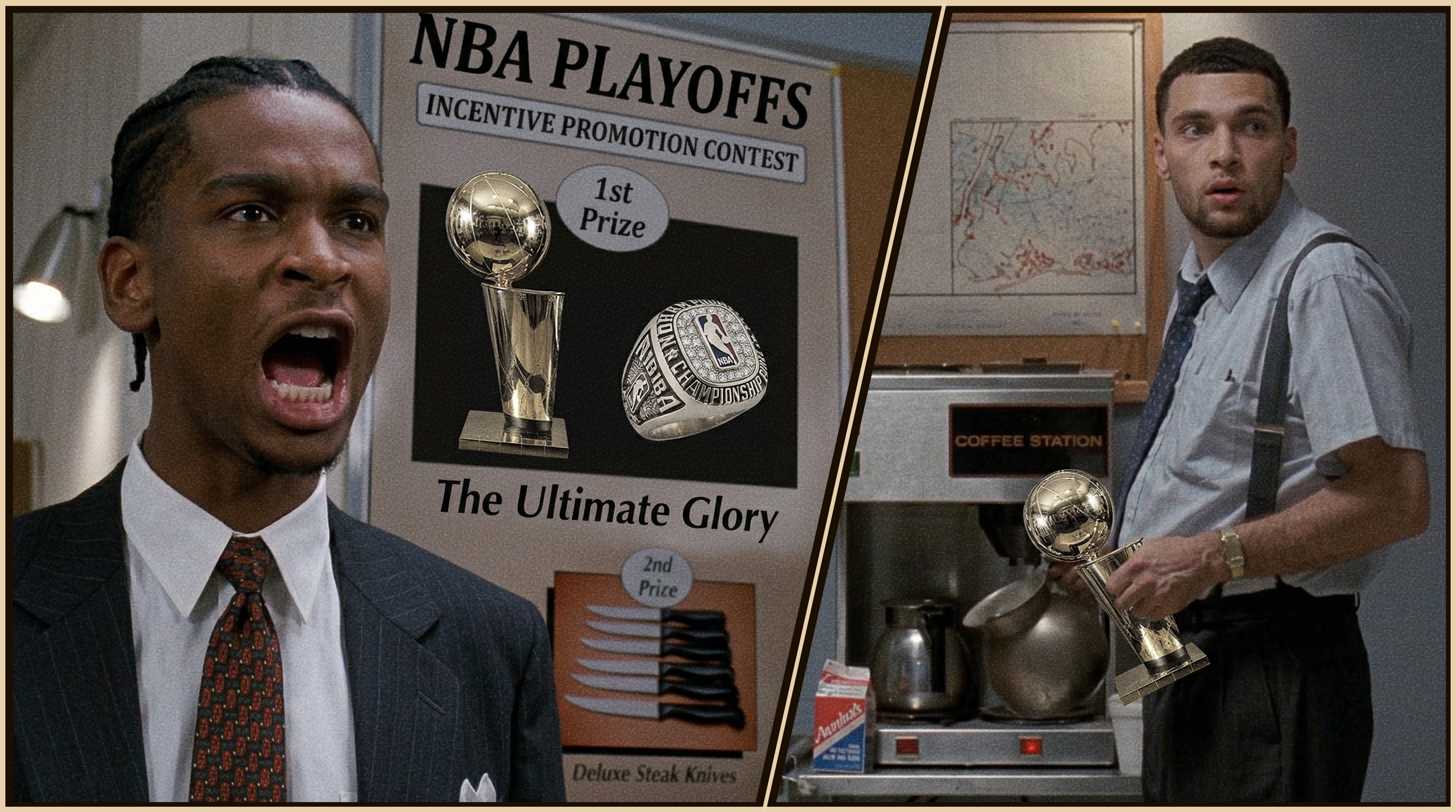
PUT THAT TROPHY DOWN, ZACH!
You exit the desert when you have an alpha dog that can close games. They can manufacture the late-clock baskets that seal the deal.
The Rule: The margins shrink as you go deeper into the playoffs. In a tight game between two competitive teams, the edge usually goes to the team with the best individual player on the floor. You only exit the desert if you have a player with a Top 10 PER Ranking. Why?
Over the last 40 years, 35 of 40 NBA Champions had a Top 10 PER star.
11 of 40 Champs had the #1 PER player.
The average best player on those teams had a ranking of 5.4 in PER.
The Bulls' Mistake: In 2022 DeMar DeRozan was the Bulls’ best player with a PER ranking of 16th. In 2023, he was 34th. Zach LeVine was just behind in both years. And today? Chicago doesn’t have a player in the top 50.
The Spurs Example: Victor is already 5th in the league in PER as a 22 year old — all clear.
Culture Compounds While Culture Drift Bleeds
Here’s the part that costs real money: the culture shock tax. Ben Wallace leaves Detroit’s defensive cathedral and lands in Chicago. Something feels off. The edge isn’t the same. Brad Miller leaves Sacramento’s structured offense and becomes… fine. Boozer leaves Utah’s Sloan machine and puts up numbers that don’t scale into impact the way they should.
It’s not that these players forgot how to play. It’s that environment amplifies or flattens. When a player used to clarity lands in ambiguity, one of two things happens: he assimilates downward or he disengages. Either way, you’re paying full freight for partial return. That’s millions in cap space evaporating because your organization doesn’t provide the thing contenders provide for free: clarity on their role, a clear set of guiding principles to aspire towards, and accountability.
Culture isn’t something you can Doordash in March. You build it over time, through continuity and consistency. Values applied inconsistently are just vibes, and any free agent will dismiss it. The best teams ensure that even when they change head coaches, the higher ideals of the culture can be continued.
Billy Donovan had a 61% win rate in OKC, but this has fallen to 48% in Chicago. He just signed an extension last summer, but after this season wraps up he probably has 1-2 years remaining on the non-public deal. After failing to make it past Miami for the play-in tournament in three consecutive years, I’m guessing he’s ready for a change. The Bulls should buy him out and start building a real culture. So who should they hire?
Path A: Import a System That Suits the Squad
If Chicago wants to maximize the specific young hardware they have — Josh Giddey, Matas Buzelis, and Rob Dillingham — they need a coach who treats the pass like a weapon.
The Visionary: Kenny Atkinson (the architect of the "fun" 2019 Nets) or Jordi Fernández (the lead strategist of the Kings' historic #1 offense).
The System: A Pure Motion Offense. In this world, the ball is never allowed to "stick." It’s built on "0.5-second decisions"—you shoot, pass, or drive within half a second of touching the leather.
The Fit: Giddey is a transitional genius whose value evaporates in a slow, half-court ISO set. Buzelis is a 6'10" wing who thrives in chaos and cutting. This path is about Efficiency through Volume. You might not have a Top 10 PER player yet, but you build a system so fast and so fluid that you manufacture "open looks" by sheer mathematical exhaustion of the defense. Pair that with an opportunistic defense that looks to spark fast breaks.
Bonus: Even if they don’t win more, dynamic offense teams sell tickets and merch. Give the fans some fun if they can’t have titles.
Path B: If You Can’t Beat ‘Em, Join ‘Em
If you don’t know how to incubate culture, maybe import it instead. Becky Hammon spent eight years on the Spurs' bench, but her time with the Las Vegas Aces proved she is more than just a Popovich disciple — she’s a champion. And to the Bulls, she represents a culture architect.
The Visionary: Becky Hammon. She understands the Spurs Way but delivers it with a modern, high-accountability edge that players actually enjoy.
The System: Pace, Space, and Sharing. Her Aces teams played at a crazy pace and blind trust. It’s a hybrid — taking the defensive discipline of San Antonio and pairing it with an offense that grants stars the freedom to be creative within a defined decision-making framework.
The Culture Fix: Hammon doesn't just coach sets, she sets standards. She can demand a championship standard on day one, and has the rings to back it up.
Bonus: The Spurs interviewed her for their head coaching job, they went with the safer choice already on the bench. The Bulls can make a splash by capitalizing on their caution.
The Little Stuff Is the Big Stuff
Here’s the part fans hate hearing because it sounds like accounting: championships get built in the margins. Scouting budgets. Development coaches. Medical staff. G-League infrastructure. The boring stuff that doesn’t trend on Twitter but quietly decides whether your late first-rounder becomes a rotation player like Keldon Johnson, or a project you give up on in 18 months like Chandler Hutchison.
San Antonio has treated that stuff like a competitive weapon for decades. They don’t just draft well — they finish the draft pick. They find value deep in the first round, and weirdly often in the second, because their organization is built to identify a role, teach the role, and keep polishing the edges until the player is useful. Tony Parker at #28, Goran Dragic at #45, Leandro Barbosa at #28, Luis Scola at #56, and, of course, Manu Ginóbili at #57. Of course, their commitment to scouting meant thinking outside the box — they had scouts in Europe before that was common practice.
Chicago, too often, looks like it’s still trying to figure out what it drafted after the fact. Tyson Chandler is the cleanest example: a premium pick with elite defensive upside who needed time, structure, and a clear developmental plan — and instead became a moving piece in someone else’s timeline. Lauri Markkanen is the modern version of the same disease: obvious skill package, unclear role, inconsistent usage, then a shrug and a sign-and-trade. Daniel Gafford isn’t a superstar story, but he does the little stuff: a young big with hustle who could’ve been developed into reliable, cheap frontcourt minutes, but instead became another asset dump. All three have blossomed in production and value since leaving the Bulls.
If Chicago wants out of this, they must spend like a serious franchise on the people who turn raw talent into NBA certainty, because the league is too smart and the margins are too thin to keep lighting assets on fire and calling it bad luck.
The Pain Is How You Know It's Working

The difference between San Antonio’s 11-0 February and Chicago’s 0-11 collapse isn’t just a statistical anomaly; it’s a public audit of the oversight of two very different front offices. One team respected the walk in the desert, while the other tried to Uber to the finish line. You can’t shortcut doing the work.
A few years ago, shortly after the DeRozan and Vučević trades, I went to visit my Uncle Mike in Chicago for Thanksgiving. He was in poor health, and I knew my opportunities to sit with a man I deeply respected were thinning out. The Bulls had actually sprinted out of the gate that year — sitting near the top of the East — and I thought I’d bring him some shared hope.
"Are you excited that the Bulls are contenders again?" I asked.
Uncle Mike didn't even hesitate. He’d watched 27 years of post-Jordan drift. He wasn’t focused on their 12-5 start; he saw the ceiling. His reply was a cold splash of water:
"They're bums."
He was right, of course. He saw the facade while everyone else was celebrating the fresh coat of paint. He’s watching from heaven now, still waiting for the Bulls to be fun again — waiting for them to build something with a foundation instead of just leasing a temporary high.
San Antonio is living in hope because they were willing to take pain and sit in it. They traded All-Stars for picks. They developed youth at the expense of veteran minutes. They didn't exit the desert because they were tired of walking; they exited because they found Victor Wembanyama — a structural advantage so massive it changed the gravity of the league.
To turn this around, the Bulls need to stop looking for a shortcut and start looking for a shovel. They need to take their L’s, move on from veteran placeholders, hoard picks and youth, install a culture-builder like Becky Hammon, and prioritize the development of Giddey, Buzelis, and Dillingham.
Hope springs eternal. I just hope the team can get it together while I’m still down here to buy a ticket.
THE DESERT IS THE POINT

If you made it this far, you already know what we do here. We write about greatness and delusion, triumph and collapse, and the strange emotional hold sports keeps on people who should probably know better.
Drop your email and once a week we’ll serve you something from the top shelf — no cheap shots.
THE DESERT IS THE POINT
If you stayed for the full walk through the Bulls' cautionary tale and the Spurs' blueprint, you already know what we're about.
Drop your email for one weekly shot of 120 Proof Ball. We don't sell shortcuts, vibes or leased hope. We write about what actually builds winners — even when it takes longer than anybody wants.

Todd / 120 Proof Ball
If you liked this piece, you’re part of the problem.
