
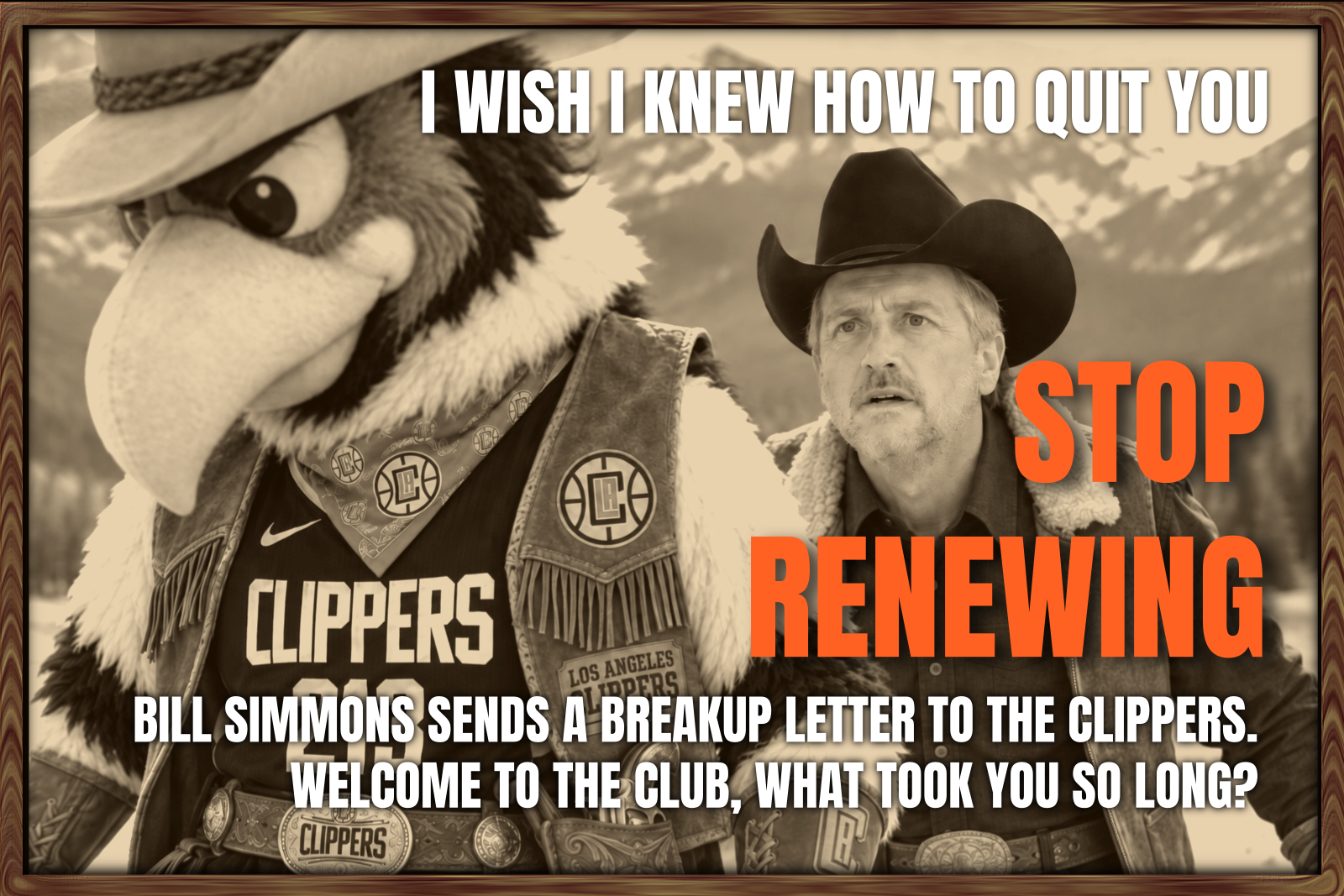
Bill Simmons Wants to See Other People
Bill Simmons has money, NBA contacts, famous friends, access to basically every basketball arena in America, and approximately four thousand ways to see a good game without signing a long-term contract with the Los Angeles Clippers. He signed one anyway. Why? Because there are indignities a lifelong Celtics fan can endure, and then there is being spotted voluntarily enjoying Lakers basketball. Once you understand that, twenty years of Clippers tickets suddenly make a deranged kind of sense. The intervention was overdue.
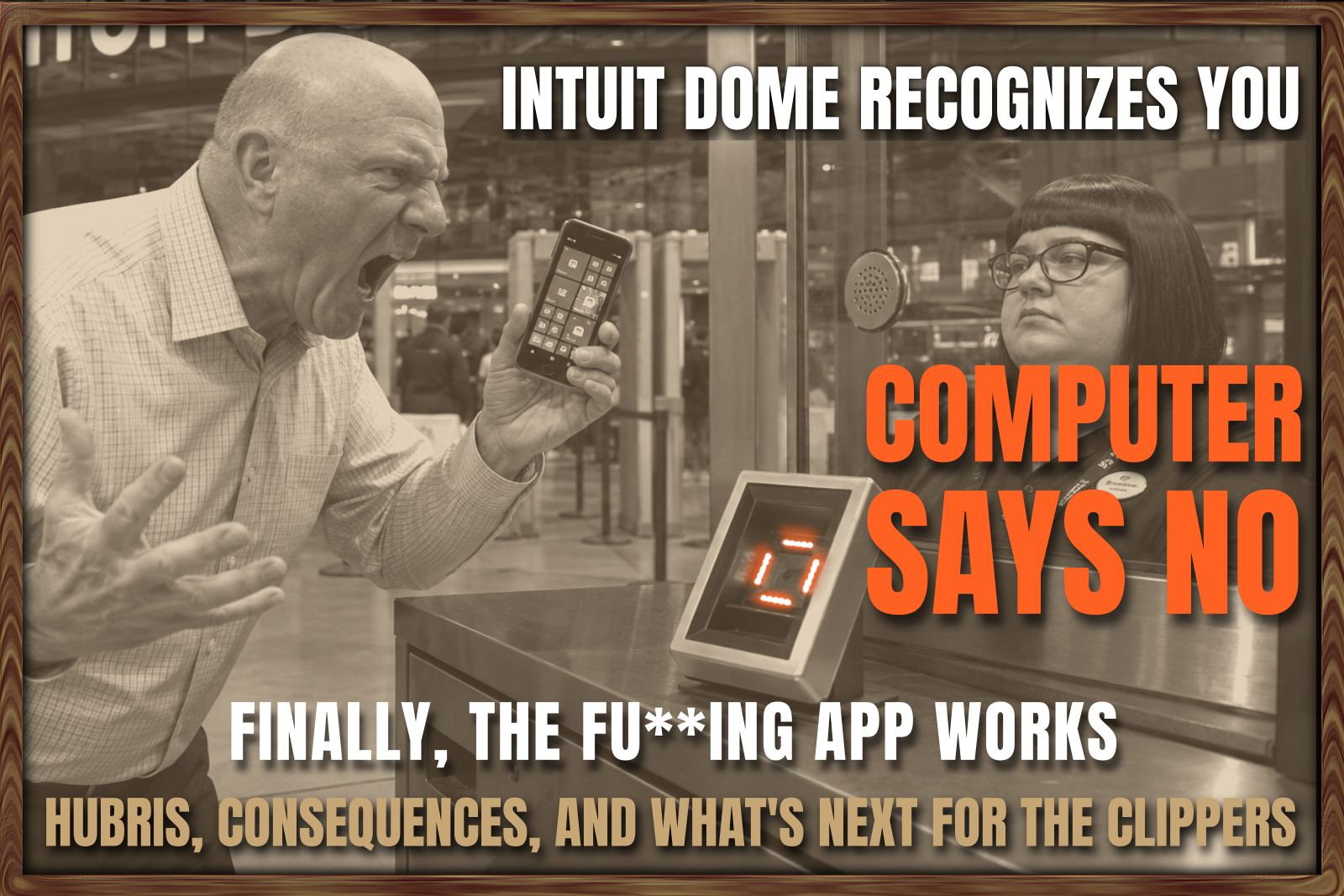
NBA: Max Pain for Ballmer’s Clippers
Sterling, Lob City, Daniel Ewing Game, Olowakandi — the Clippers Curse was supposed to end when Steve Ballmer arrived with tech money and a new arena.
Instead, Ballmer did a crime, and Clipper Nation pays the fine. The fans bought basketball. They got probation.
There’s a better way to bring justice.
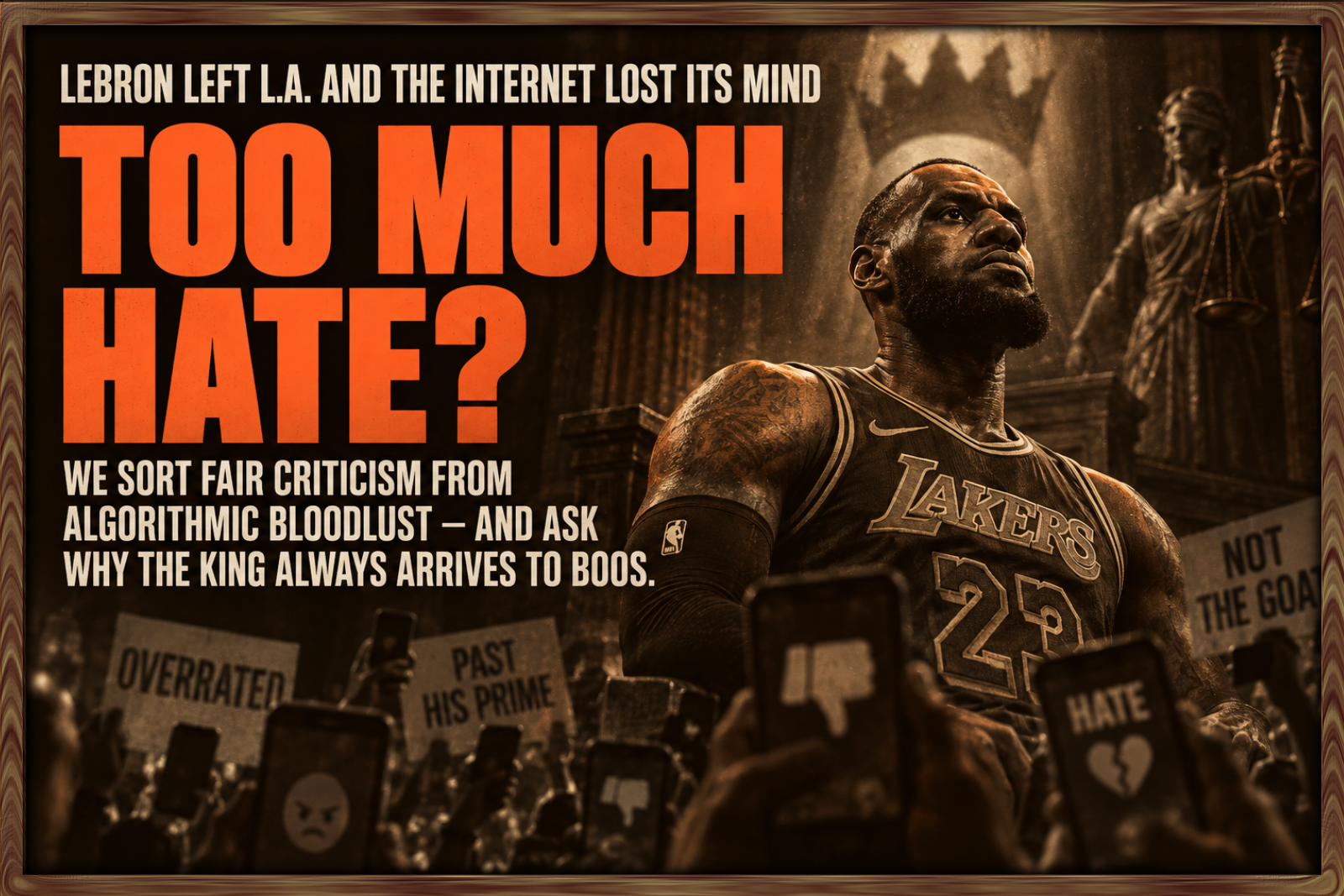
Does LeBron James Get Too Much Hate?
Lebron James has informed the Lakers he’s moving on. Predictably, social media reacted in the most predictable of ways. Here we take a look at the hate that Lebron gets, and consider how much of it is deserved and how much of it is the product of… well, inorganic origins.
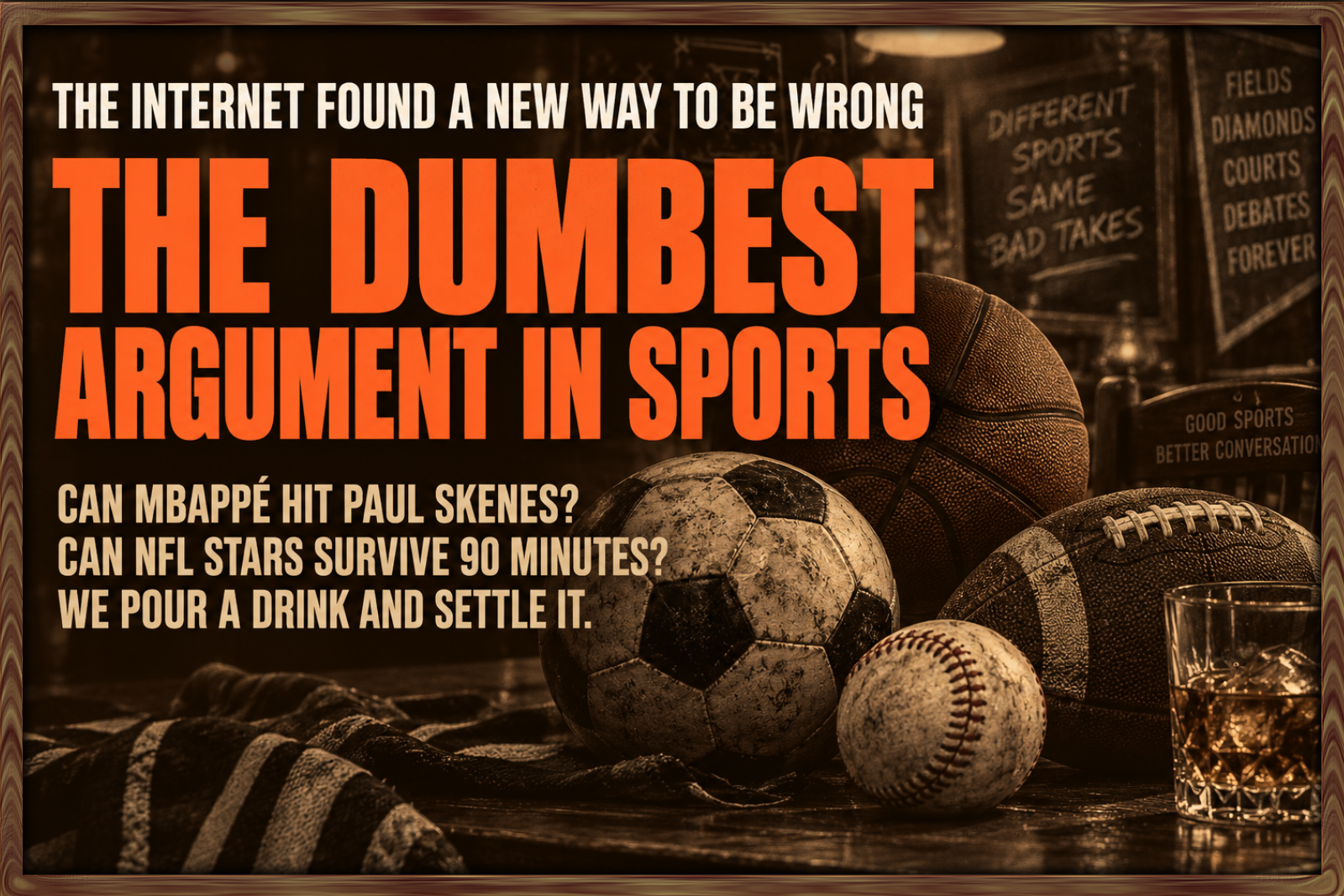
Settling The Dumbest Argument in Sports
Every sport has a fanbase convinced its athletes are built different. So the internet keeps asking what would happen if you dropped a soccer star into a batter’s box, a basketball alien onto skates, or a baseball flamethrower in front of Derrick Henry. The answer is usually humiliation — and that proves almost nothing. Great athletes are not cheat codes. They’re specialists who have spent their lives getting absurdly good at one very specific thing.
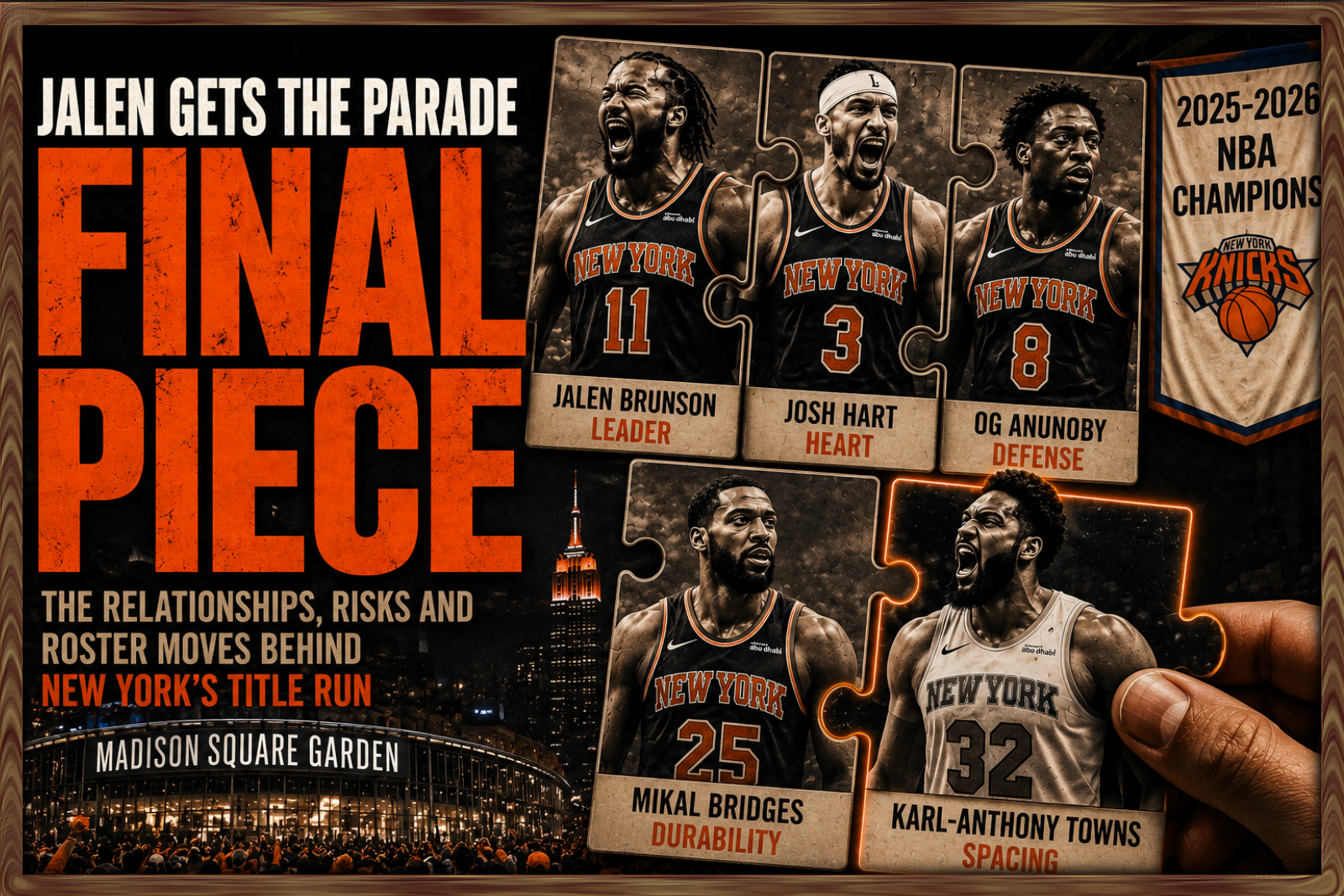
How the Knicks Rose
For years, the Knicks chased stars, headlines, and shortcuts. Leon Rose tried something far stranger: a plan. From Jalen Brunson to Josh Hart, OG Anunoby, Mikal Bridges, and Karl-Anthony Towns, New York assembled a roster built on fit, chemistry, and a clear basketball identity. The championship belongs to the players who delivered it, but the foundation was poured years earlier by a front office that finally stopped asking who could score and started asking who belonged. This is the story of how the Knicks became the most complete team in basketball.

Tag It and Baguette🥖
The Finals were supposed to be about Jalen Brunson versus Victor Wembanyama. Instead, Game 1 became a lesson in the difference between having a superstar and having a team. From Josh Hart's uniquely New York brand of basketball vandalism to Karl-Anthony Towns quietly becoming structural support, the Knicks spent the night proving that depth, experience, and Mike Brown's hard-earned perspective might be their biggest advantages. The future may belong to Wemby. The present looks a lot like New York.
Grandpa? We Need to Talk…
The hardest decision in sports isn’t building a winner. It’s knowing when the person who built it isn’t the one who should run it anymore. From Pat Riley to Jerry Jones, this piece digs into the uncomfortable space where legacy collides with reality. The résumé says “trust him.” The results start whispering something else. And in a league that replaces everyone except the people in charge, the question lingers longer than it should. Who, exactly, gets to take the keys?
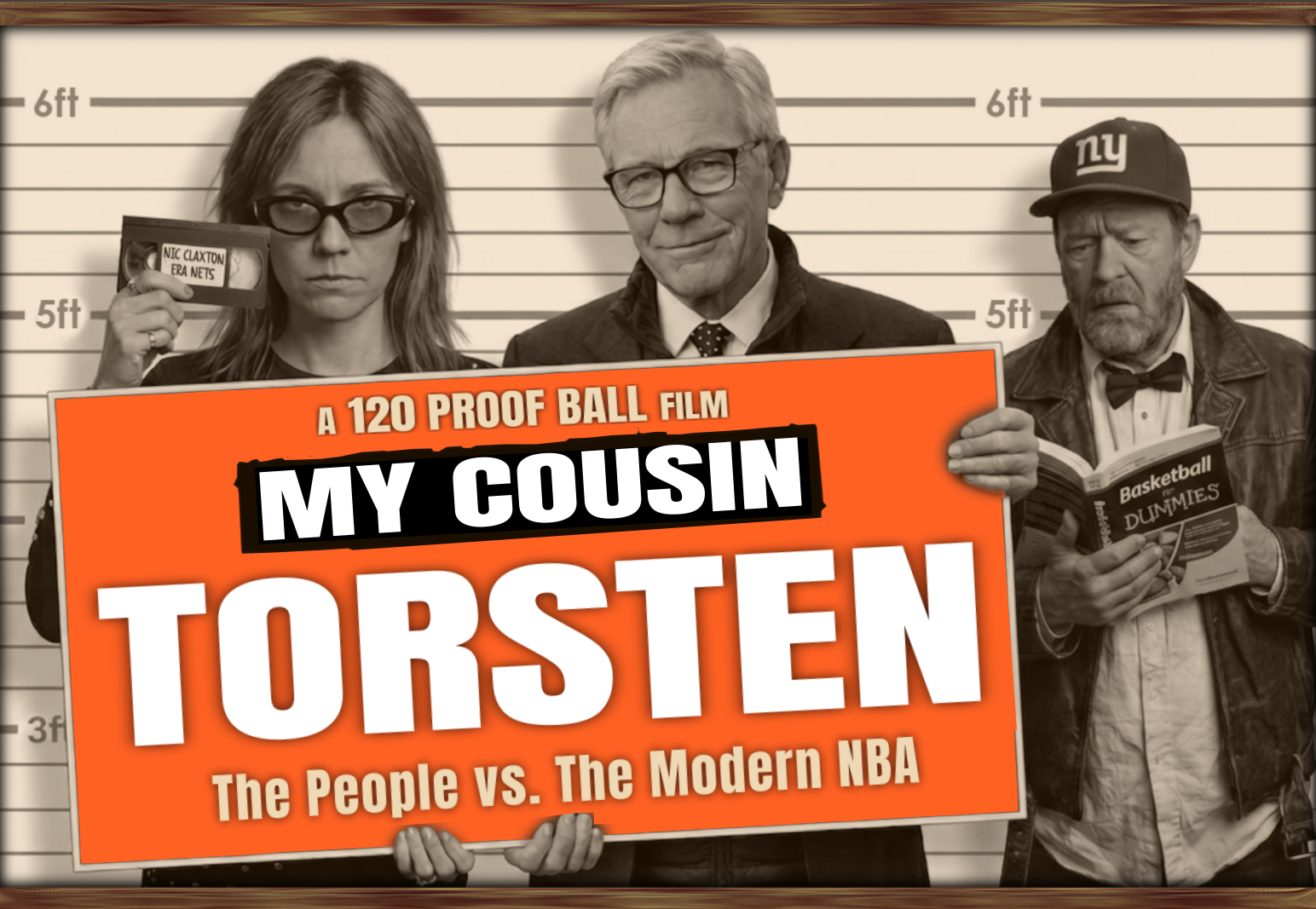
NBA v. Everything
This is not just a courtroom parody about the NBA having flaws. It is an argument that the league’s current problems are connected: replay bloat, diluted regular-season stakes, tanking incentives, injury-report opacity, and gambling-era incentives all point to the same structural issue. The modern NBA keeps defending the health of the asset while neglecting the experience of the audience. My Cousin Torsten turns that argument into a trial, then lets the defense make the league’s case in its own familiar language.
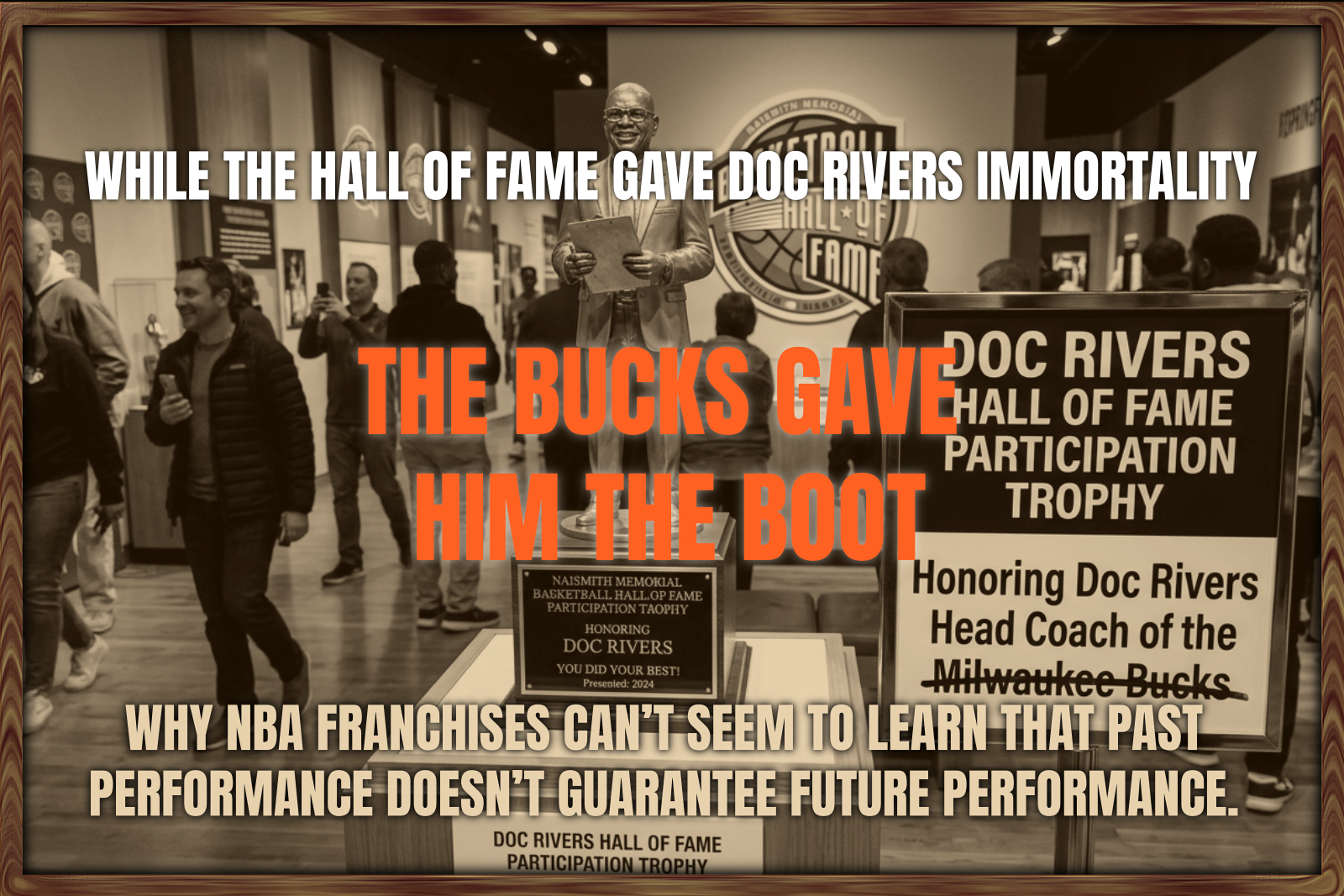
Google Me Once, Shame On You
I started writing this assuming Doc Rivers was probably on borrowed time in Milwaukee. Then he survived. Then he made the Hall of Fame. Then, right before publish, the Bucks fired him anyway. That sequence turned out to be the whole story: Doc has spent years outlasting his own basketball repricing. From the Celtics to the Clippers, Sixers, and Bucks, this piece tries to identify what his real value has been, why the league kept paying premium prices for it, and what exactly Springfield thinks it’s honoring now.
Taste Testing the Block Party
NBA shot-blocking used to establish the pecking order in the paint, and the true Sheiks of Shutdown never settled for merely saving two points. Wilt, Hakeem, Shaq, Mutombo, and Ben Wallace all brought their own distinct style of denial.
This piece treats them like vintage bottles, complete with tasting notes and describing the lingering notes of the kind of morning-after regret reserved for the morning after questionable decisions and worse layups.
Pull up a chair, swirl the glass, and let’s sample the varietals of deny-it-all.
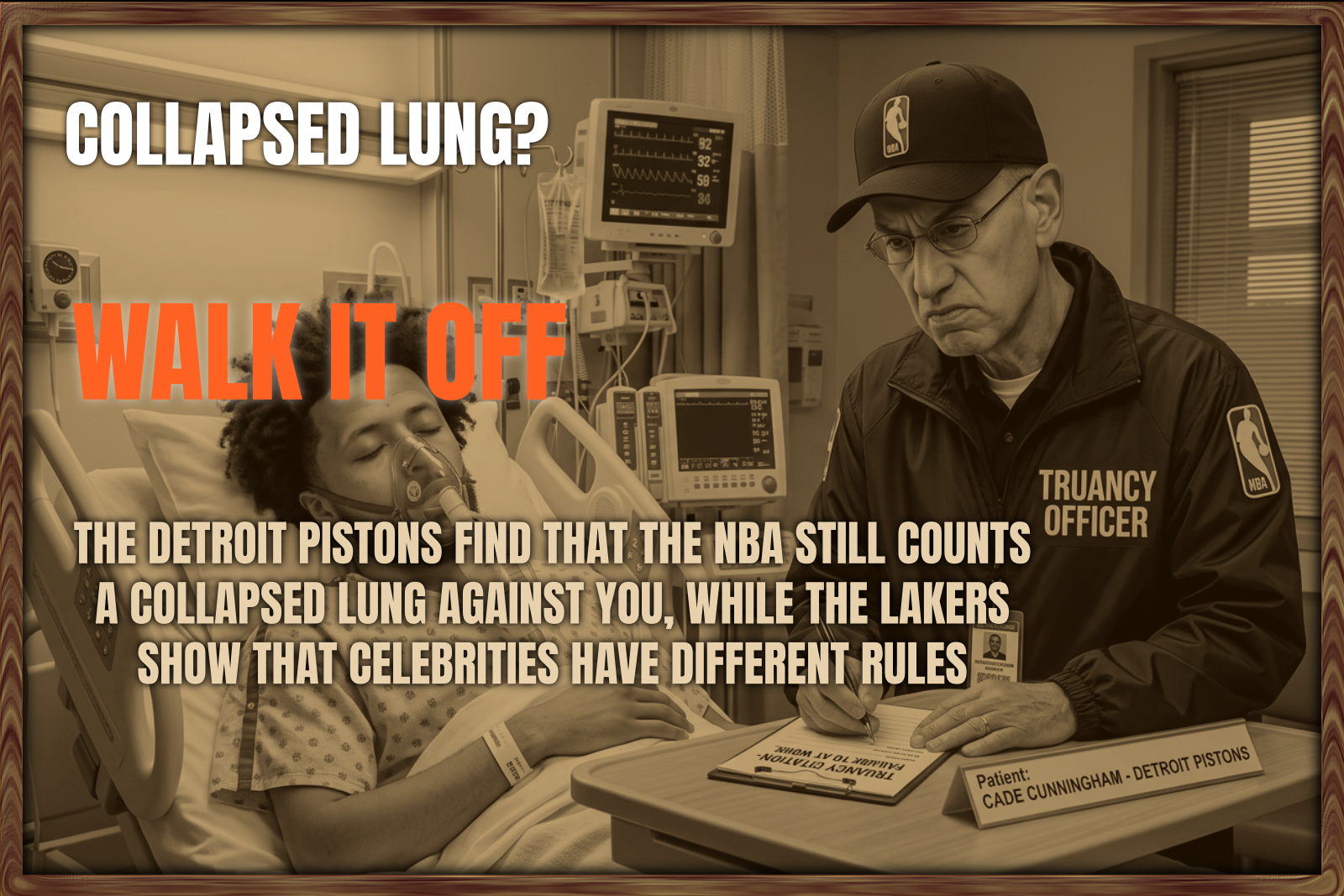
Luxury Justice
The NBA markets itself as a "hardwood Geneva Convention," but the application of its law suggests a two-tiered system of mercy. When Luka Dončić faces a suspension-triggering technical, the league discovers the "mechanism of review" to keep the star on the floor. When Cade Cunningham suffers a collapsed lung, the system becomes a rigid DMV kiosk, hiding behind a 65-game spreadsheet. Context is a luxury afforded to the relevant; policy is a mallet used on the rest.
Another Brick on the Wall
The heroes change. The wall remains. “Another Brick on the Wall” follows five decades of NBA history not through its champions, but through the barriers that made champions of so few and heartbreak of so many. Sidney Moncrief, Patrick Ewing, Steve Nash, and Chris Paul are not the main event here. They are the men unlucky enough to arrive when each era’s wall was at its highest.
We unpack the character of those walls across five eras of basketball, then ask what seventeen seasons of denial at the gate does to a player’s ambition, patience, and sense of self.
Perfect Spurs Shine Way For Chicago’s Dogs
The Bulls spent years acting like stacking enough “pretty good” players would somehow equal a contender. Meanwhile the Spurs did the hard thing: lose patiently, draft well, and wait for the basketball gods to send them Victor Wembanyama. One franchise found the future. The other keeps leasing mediocrity at premium rates.
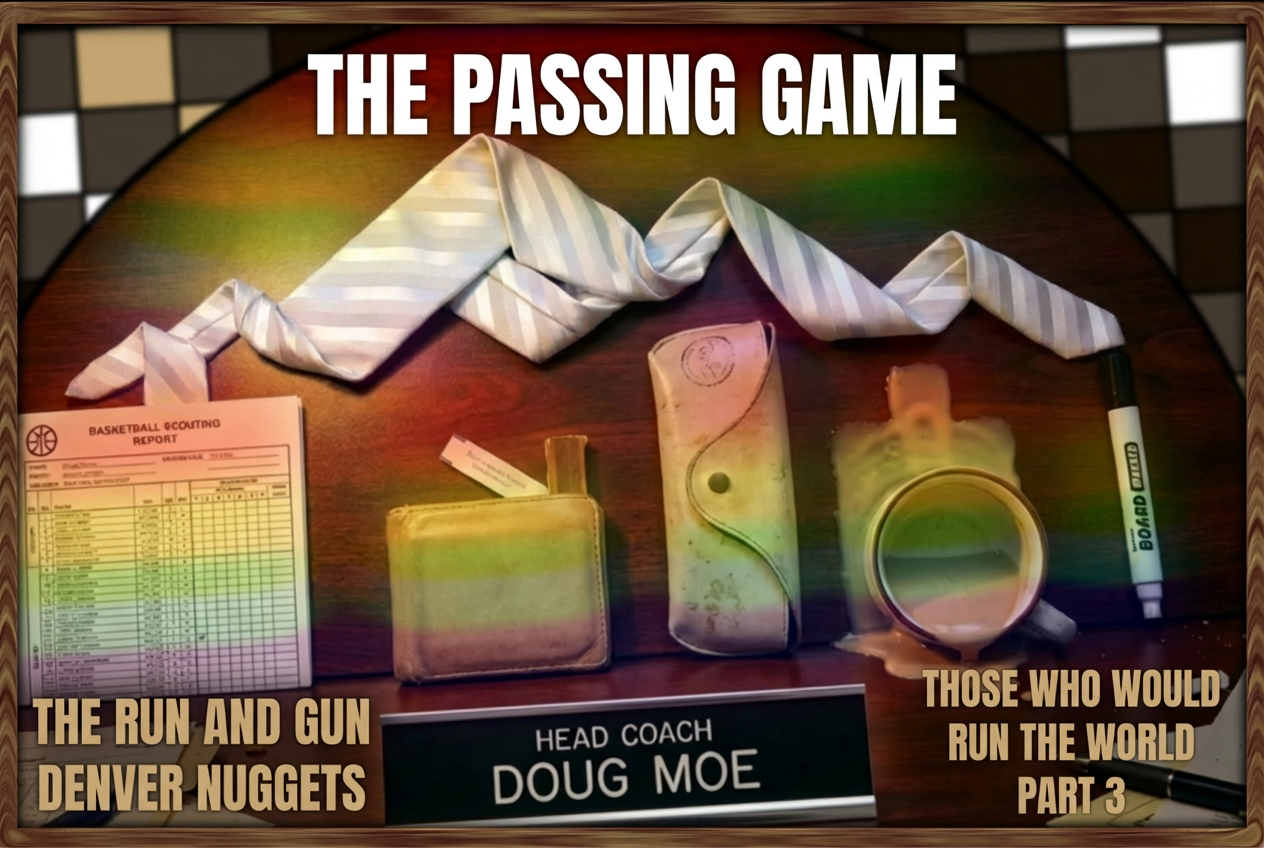
The Passing Game
This is the story of the greatest high-octane team most fans haven’t really heard of — and the most compelling anti-hero I’ve ever written about.
Doug Moe’s Nuggets ran before running was fashionable. They turned altitude into leverage, chaos into structure, and speed into a weapon. They led the league in scoring, went 295 – 100 at home, and forced opponents into a mile high track meet they didn’t train for.
Then, in 1985, Moe did the unthinkable. He changed. He traded brilliance for balance. He added defense to conviction — and nearly toppled one of the greatest teams in history.
This is a tale about belief, evolution, and what it costs to peak in the wrong year.
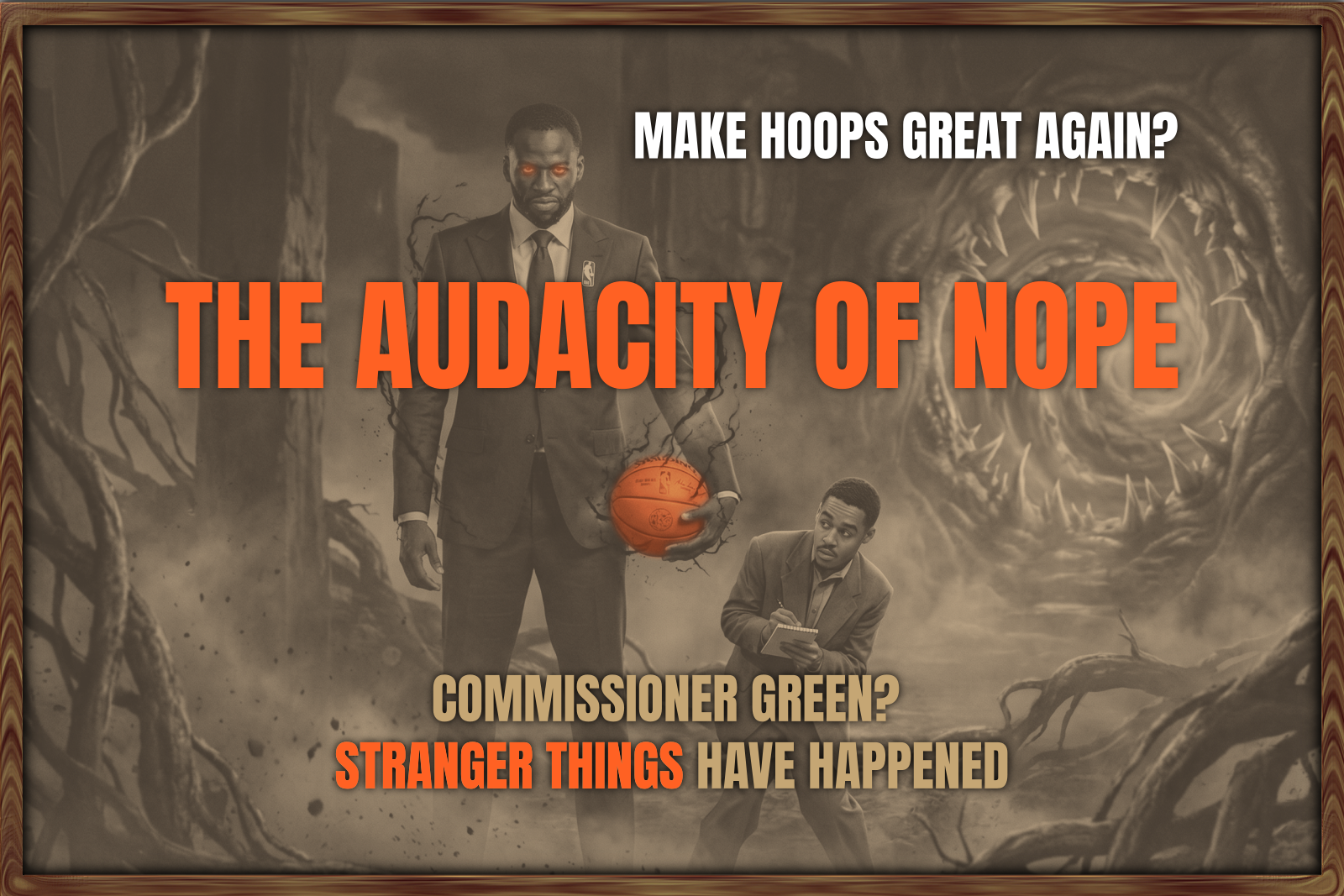
Draymond Green Wants To Run More Than His Mouth
In this piece, Todd explores a bold hypothetical: what would the league look like under the rule of Draymond Green?
Never one to shy away from controversy, Green has built a career on intensity, outspokenness, and championship pedigree. Todd imagines how that mindset would reshape everything from player discipline and league investigations to All-Star Weekend spectacle and the Dunk Contest spotlight.
Which teams would benefit? Which stars would clash with his philosophy? Would the result be accountability, chaos, or a strangely compelling mix of both?
One thing’s certain: an NBA run by Draymond wouldn’t lack drama and Todd breaks down exactly why.
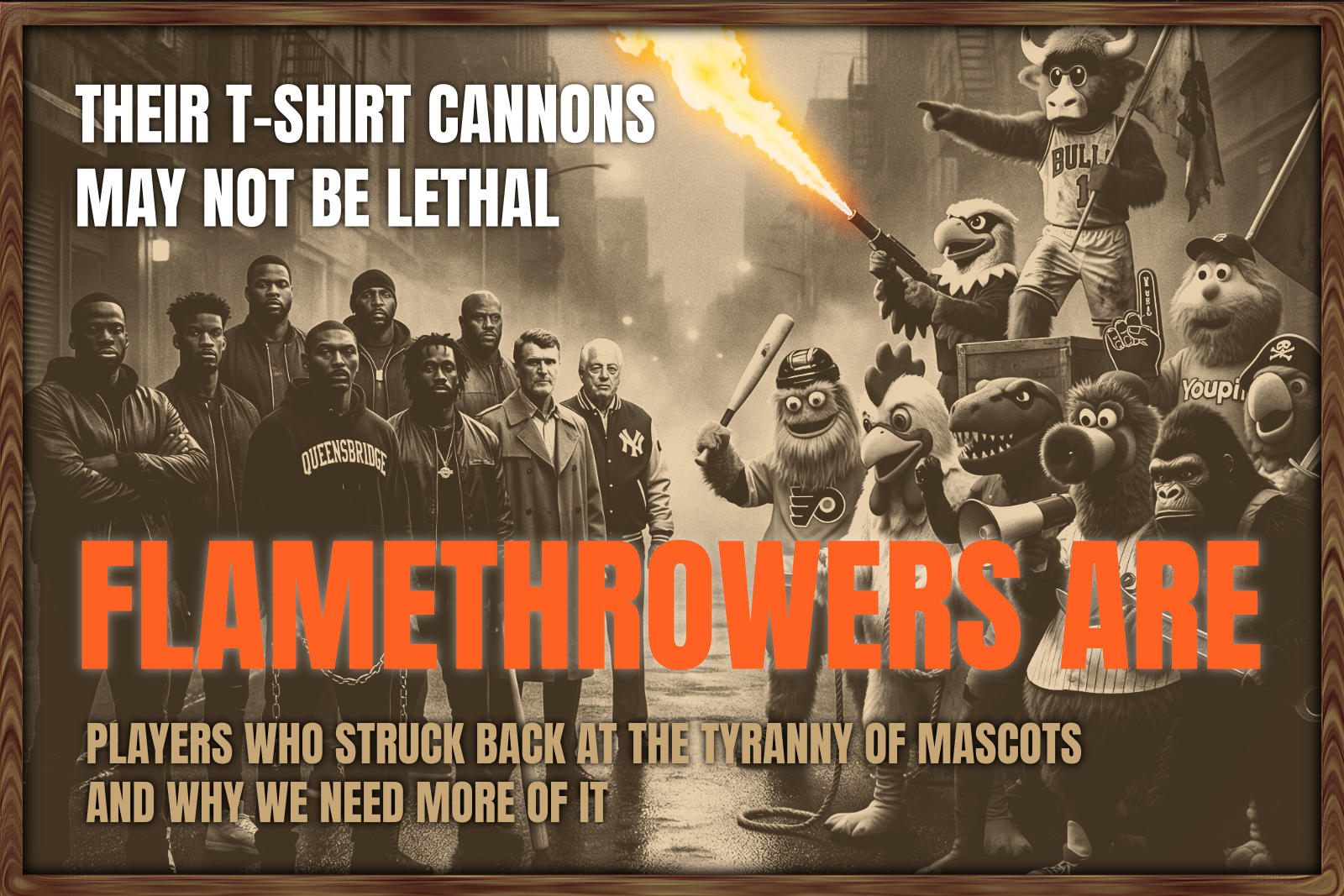
The Trial of the Sacred Foam
What if the real crime isn’t players bumping mascots, but a league that treats G-Wiz and his chaos-goblin friends like fragile civilians and acts like Jaxson Hayes and the Lakers are the problem for finally shoving back

The Judas of West 33rd Street
Spike Lee took a signed Lakers 77 on the world’s most petty floor and smiled like it was a blessing instead of a biohazard. The Knicks finally handled their business, and their high priest still kissed the enemy’s ring. Call it a cute moment if you want; the rest of us logged it as the exact frame where the covenant with the Garden snapped.
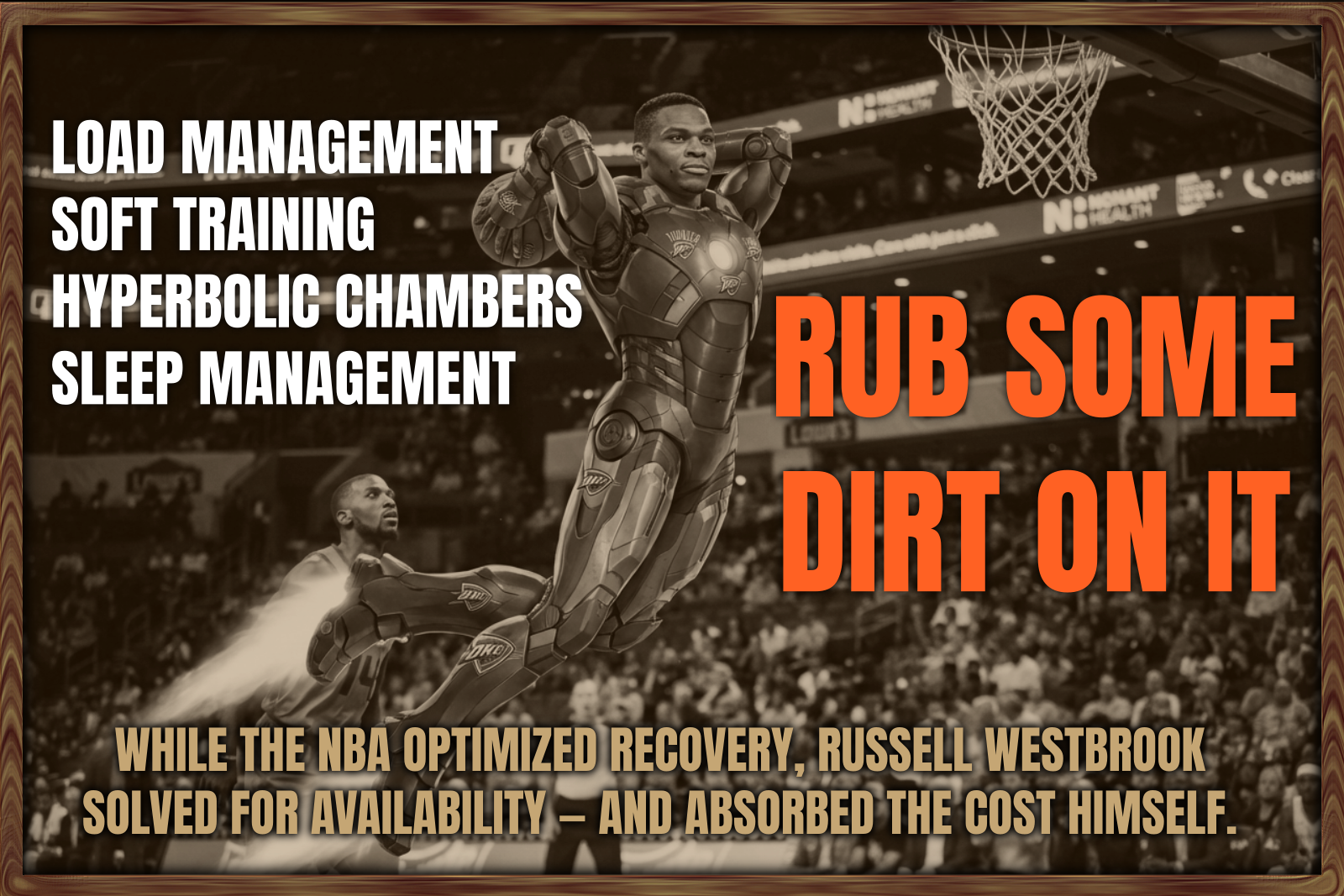
Westbrook: A NBA Career Retrospective
Russell Westbrook: A player of consequence, who comes with consequences — and who never learned how to be anything else.
As the league shifted toward restraint and efficiency, Westbrook kept charging forward, raising floors, shaking ceilings, and daring everyone involved to live with the results. This is what happens when a player defines his values as non-negotiable, even as the game adapts around him.
The Ball Finds Energy
From 2004 to 2007, the Seven Seconds or Less Suns played basketball the way jazz works: fast, collaborative, alive, in the moment. Mike D’Antoni set the tempo, Steve Nash read the room, and the rest followed instinct inside structure. Nothing was scripted, but nothing was accidental either. This second entry in Those Who Would Run the World looks at why the Suns’ ideas live on long past their championship window closed.
The Rules of Trash Talk - Where is The Line?
Trash talk has a line, usually found somewhere between ‘your mom smells of elderberries’ and ‘your mom is the village mule,’ since everybody’s had a ride.
What follows is Torsten’s confessional about his own brush with extracurricular justice in a high school soccer match involving a fast striker, a slow referee, and an insult so nuclear it triggered a response normally reserved for nature documentaries.
Torsten builds the Mount Rushmore of the greatest smack-talkers across sports history — the artists, the sociopaths, the philosophers, and Philip Rivers.