The Passing Game
Those Who Would Run the World - Part III
Doug Moe’s “Run N’ Gun” Denver Nuggets
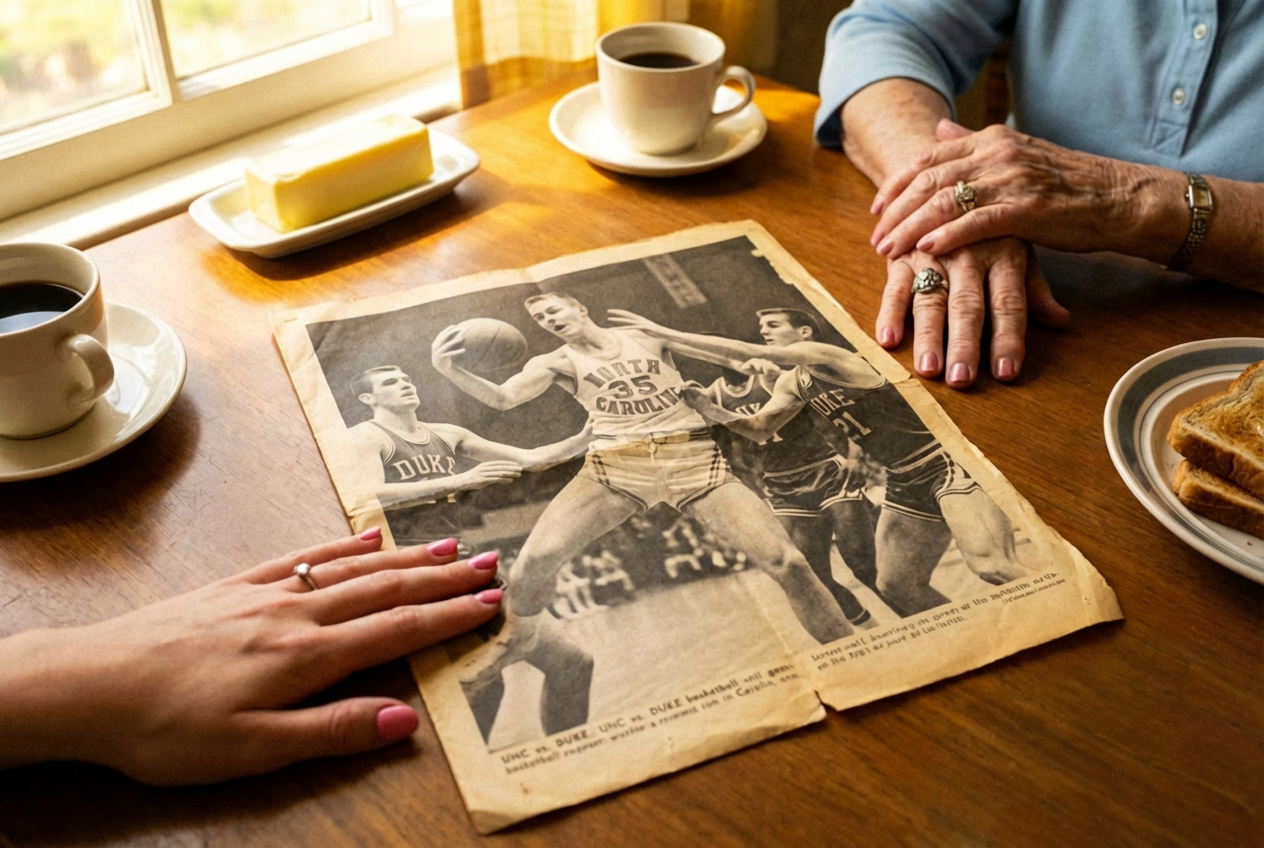
The spring light of 1961 filtered into the Brooklyn kitchen, casting a sharp glare on the newspaper clipping that lay between them. It was a photo of Doug Moe on the court with his UNC Tarheels — limbs everywhere, a blur of kinetic energy. Jane’s mother didn't spare a glance at the box score or the reports of his athletic exploits.
"Jane, be sensible," her mother began, her voice tight with the kind of pragmatism that had survived the Great Depression. "The boy is a walking disaster. I saw him arrive yesterday — one sock was navy, the other was black, and he looked like he’d slept in a hedge."
Jane leaned back in her chair, a small, knowing smile tugging at her mouth. "He’s just... relaxed, Ma. He doesn't let things get to him."
"He’s not relaxed, he’s unraveled!" Her mother leaned forward, her palm hitting the table with a sharp thwack. "He asked me to lunch, got us lost getting there, proceeded to ask permission to marry you, and then had the gall to ask me to pay for lunch because he had no money."
Jane didn't blink. She’d already accounted for the empty pockets. "So he’s bad with money. It’s fine. I’ll handle the finances. I’ve already started."
"He’s got that scandal following him from Carolina over seventy-five dollars," her mother countered, her eyes narrowing. "Who gets banned from the NBA over seventy-five dollars? A man who makes poor decisions, that's who."
"He doesn’t have to make the decisions Ma," Jane said, her voice dropping an octave into a register of absolute certainty, "because I do."
Her mother threw her hands up in exasperation, pacing the small linoleum floor. "He doesn't have a plan, Jane. I asked him what he wants to do if the basketball thing doesn't work out, and he called me a 'stiff' and asked if there was any more potato salad."
Jane let out a soft laugh. "He calls everyone a stiff. It’s a term of endearment. Mostly."
"He’s a loudmouth," her mother continued, ignoring the defense. "He’s sloppy. He loses his keys, gets lost getting to his house, and would probably lose his own head if it wasn't attached to his neck. He’s a three-ring circus and you'll be spending all your time playing ringmaster."
Jane leaned in then, her eyes fixated on the grainy photo of the man who couldn't match his socks. The softness in her voice didn't mask the pride underneath. "Maybe. But Ma, you should see him out there. Everything that’s messy out here? It just... disappears. He sees the game before it happens. He’s a genius... even if he can’t find his own shoes."
Her mother stopped pacing. She looked at her daughter — young, vibrant, and possessed of a sharp mind that could have had any life she wanted. Her expression softened into a look of genuine concern.
“Jane… honey. You’re young, you’re successful. You have so many options for your life. Why hitch your wagon to a man who hasn't set himself up with a backup plan?”
Jane didn't hesitate. She looked her mother in the eye, the Brooklyn morning settled around them like a promise.
"Because Ma, he’s not confused about his purpose. And I don’t want to spend my life with someone who is. If nothing else, our life will be interesting. I’d rather manage a genius’s mess than spend my life bored by a man with a pressed suit and contingency plans."
ONE
“There’s not a lot of defense on the fast break.”
December 13, 1983. Detroit Pistons at Denver Nuggets. McNichols Sports Arena, Denver, Colorado.
The mile-high air in McNichols Arena is thin, tasting of sweat and overtaxed lungs, but the pace hasn't slowed to let anyone breathe. Denver leads 144–141, and Doug Moe stands on the sideline like a man who just survived a shipwreck — his hair is a frantic nest, and his sport coat hangs off him as if he’s forgotten he’s wearing it.
On the floor, Detroit moves with a terrifying, lean speed — they are fourth in the league in pace, and they aren’t here to grind.
Kelly Tripucka catches on the perimeter, turning his back to Kiki Vandeweghe and backing him down with a rhythmic, heavy dribble that feels like a countdown. Isiah Thomas, a blur of blue, slices along the baseline and curls around Alex English, catching Tripucka’s entry pass on the right post. Mike Evans is draped over him, and English arrives to help, a wall of Denver white, but Isiah is unbothered by the geometry of the defense. He pivots left, hard-steps back to his right, and lofts a fading jumper that seems to ignore the four hands in his face, snapping the cord with a clean, lethal sound. 0:55 left in regulation, the Nuggets’ lead by one; 144 – 143.
Defensive wing Bill Hanzlik brings the ball up into the carnival, and suddenly the Denver offense becomes a shooting gallery of shifting targets — bodies popping out of the paint, screening, and disappearing as soon as a defender commits. Hanzlik feeds English on the wing and cuts hard, only to be sent sprawling to the floor by a heavy shoulder from Bill Laimbeer. No whistle, and English doesn't wait for him to get up, driving right and drawing three Detroit jerseys into the paint before whipping a pass out to Evans. The ball pings to Vandeweghe and back to Evans in a blur of unscripted motion before finding English again near the post. Dan Issel steps up, his frame creating a granite screen that pins Earl Cureton, allowing English to drive and slip a pass to a rolling Issel. Issel meets Isiah Thomas at the rim and their collision sends Thomas sliding into the basket stanchion as the whistle finally screams. Blocking foul. Issel sinks the first free throw but clanks the second; English leaps, tipping the rebound backward over his head with a desperate touch. Issel hauls it in near mid-court, securing the possession as the clock bleeds down to 34 seconds.
Denver's passing game resumes its dizzying, rhythmic flow. The ball doesn't stick in any one place as it gets whipped around the perimeter searching for truth. From Dan to Kiki, to Hanz, the ball ultimately finds Alex at the top of the arc. The Detroit defense is scrambling, a step behind the constant role-swapping of the Nuggets’ system. English sees Hanzlik already moving toward John Long — who just stepped onto the floor and is still adjusting to the speed of the game. English fires it back to Hanzlik in one motion, and Hanzlik rises for the kill. The shot looks good until it isn't, catching the back iron and rattling to Earl Cureton. Detroit timeout.
Walking back out onto the court as horn sounds, the Nuggets are loose, comfortable closing games in the thin air of their home court. Issel sets the stakes to his teammates, "Up two". Hanzlik nods, "Just need one stop". English turns to Evans, "Mike, don't give Isiah space. No threes." Checking in for John Long, Isiah Thomas takes the floor — young, but calm, like a man who has already seen how this ends.
The Nuggets’ defense looks cohesive, a fluid unit matching the Pistons' desperation. Tripucka inbounds to Isiah, and as Bill Laimbeer moves to set a screen, Kiki Vandeweghe reads the play perfectly, jumping out to meet Isiah chest-to-chest at the three-point line. Thomas is forced to abort, spinning back to his left and driving downhill toward the baseline with Evans trailing. He pulls up for a desperation jumper that misses the rim entirely, but the airball becomes a perfect pass as it drops into the hands of Laimbeer at the rim. English contests from behind, rising with Laimbeer and burying his hand on top of the ball for what looks like a miraculous, game-saving block. Then the whistle blows. The arena erupts in disbelief as the refs signal a foul on the contest, handing Laimbeer a chance to tie it from the line.
With 0:06 on the clock, the tension is a physical weight. Laimbeer’s first free throw is short. Detroit calls for another timeout. Moe swaps Kiki for the 6’10” Richard Anderson, and Chuck Daly counters with his own tree trunk, Kent Benson. The floor is now a forest of giants waiting for a miss. Laimbeer lines up for the second, his eyes hard, and intentionally hammers it off the backboard. The ball caroms wildly to the right, and before the bigs can reach it, Isiah Thomas flies into the frame, snatching the ball out of the air above Benson’s outstretched hands. He lands and explodes upward in the same heartbeat, laying the ball in off the glass as Dan Issel's hand swats only air.
Denver has four seconds to respond after their own timeout. The drawn up play generates a good shot by an open Issel from the circle. But a regulation win was not their destiny this day - not even close. The miss sends the teams into overtime, 145 — 145.
As the clock gets low in overtime, Denver leads 158 - 154, but the discipline that held them together in regulation begins to fray. Alex English misses a contested look, and as the rebound bounces long into the hands of Isiah Thomas, the Nuggets’ transition defense simply evaporates. Isiah doesn't hesitate; he crosses mid-court with a predatory glide, noticing that no one has stepped up to meet him at the arc. With the nonchalance of a man at a shoot-around, he pulls up from three and snaps the net, cutting the lead to one and leaving the Denver bench staring at the floor in silent frustration.
Detroit isn't interested in letting Denver burn a whole shot clock with the lead, and Ray Tolbert immediately wraps up Alex English to stop the clock. English walks to the line, his jersey darkened with sweat, and watches his first free throw rattle out. He takes a breath, focuses, and sinks the second to push the lead to two. Detroit burns a timeout, the tension ratcheting back up to a fever pitch.
Walking back out for the final 31 seconds of the first overtime, the Nuggets huddle with heavy limbs. Issel’s voice is a raspy growl: "Up two.” Hanzlik, eyes bloodshot from the altitude, just mutters, "One stop. We just need one." English pulls Mike Evans aside, his tone urgent: "Mike, stay on Isiah. No threes." He looks over at Isiah, who is standing near the scorer's table, not even breathing hard, wearing a smile that looks like a threat.
Out of the timeout, Detroit runs a crisp, deceptive set. Laimbeer inbounds to Kelly Tripucka and immediately takes the ball back, only to hand it right back to Tripucka as he curls toward the lane. Tripucka initiates heavy contact into Bill Hanzlik on the left side, a collision of shoulders that takes Hanzlik out of the play. This leaves Kiki Vandeweghe as the only help, but he’s caught on the wrong side of the rim, flat-footed and trailing the play. Tripucka exploits the gap, banking in a short jumper off the glass to tie the game at 159 with 31 seconds on the clock.
Following a Denver timeout, the Nuggets attempt to execute a final set drawn up by Moe. Mike Evans brings the ball in, but Isiah Thomas meets him high, playing a physical, pestering defense that bleeds the clock down to 15 seconds. The ball swings to Vandeweghe and back to Evans, searching for a seam in the Detroit shell. Finally, Evans finds Dan Issel open at the top of the key, 19 feet out. Issel sets his feet and fires, but the shot hits the back iron and caroms away, another chance at a game-winner slipping through their fingers.
Detroit secures the rebound. With 4 seconds left, Isiah Thomas takes the ball and rockets the length of the court, racing the clock. Mike Evans is in a full sprint trying to pace him, until Bill Laimbeer sets a screen at half court that feels like a car crash. Evans is leveled, hitting the hardwood as Isiah ducks inside the three-point line with 2 on the shot clock. He lofts a running layup just as the buzzer sounds. The ball drops through the hoop, and for a moment, it's finally over. But the referees wave it off — the ball was still on his fingertips as the backboard glowed red. The game remains tied at 159. Second overtime.
Deep into the second overtime, Denver leads 165 – 163, and the pace remains relentless. Isiah Thomas brings the ball up, forcing Mike Evans to backpedal frantically. Isiah dances with a through-the-legs move before kicking it over to Ray Tolbert at the nail. Off the ball, Kelly Tripucka is a blur, sprinting along the baseline and using a Laimbeer screen to lose a trailing Vandeweghe. Kiki slams into Laimbeer’s chest, and Tripucka catches the pass from Tolbert in rhythm, burying a jumper that is nothing but net to tie the game once more.
Mike Evans brings it back for Denver, slowing the tempo to find Vandeweghe on the left wing. The ball eventually finds English, who is backing down Ray Tolbert with a methodical, heavy-dribble post-up. English fakes a drive, pivots into his signature fallaway, and watches it splash through. But as the ball falls, the physicality turns ugly under the rim: Vandeweghe is fighting for rebounding position and puts a forearm shiver into Laimbeer that sends him to the floor. Laimbeer goes down and immediately pincers Kiki’s legs with his own, a dangerous, ankle-twisting tangle. Kiki yells "Jesus" as he gets pulled to the floor, but that must not have been the name of an official because the exhausted referees somehow ignore them; play continues.
As the players get off the floor, Danny Schayes barks to his teammates on the jog back, "Up two." Hanzlik doesn't even look up, keeps running: "One stop." English turns to Evans "Mike, no threes." Mike turns to face Isiah bringing the ball up the floor, and the Piston is no longer smiling; he's pointing a teammate to a spot on the floor, before locking Mike's stare back with cold eyes.
Isiah probes the defense, first a pass to John Long, who doesn't like the read and sends it back. Thomas dribbles in, Mike staying close, but the real threat is developing in the corner. Kelly Tripucka and Vandeweghe are hand-fighting on the low block until Laimbeer arrives to set yet another punishing screen. Tripucka curls around the pick, and Vandeweghe makes the fatal decision to go above the screen, giving Tripucka the sliver of space he needs. Isiah fires the bullet pass, Tripucka catches and rises for a 13-foot jumper that finds the bottom of the net, tying the game again.
The whistle blows for a Denver timeout, and Doug Moe is already halfway onto the court, his fingers snapping with a manic, rhythmic intensity. He catches Vandeweghe by the jersey as he nears the bench, his eyes wide and searching. "Kiki! Ground control to Major Tom!" Moe shouts over the roar of the crowd, snapping his fingers in Kiki's face. "I need your head in the game, not in outer space! I need you to stay locked in on Kelly, he's scored every point this period! Ground control, Kiki! Answer me!" Kiki just stares back, chest heaving.
Tripucka settles in at the line and drains both free throws, the sound of the ball hitting the net lost in the mounting roar of the crowd. 169 – 169. It is officially the highest-scoring game in the history of the league — then and now — but no one on the floor is celebrating. They are simply watching Mike Evans, the second Denver point guard to fall after T.R. Dunn, walk toward the bench with his sixth foul. Rob Williams, a 6’2” reserve, steps onto the hardwood cold, his jersey clean and dry, a jarring contrast to the nine ghosts already haunting the court.
Time passes. The clock is a phantasm, a flickering red suggestion that no one believes in anymore. 169 – 169. 175 – 175. The air in McNichols has been recycled so many times it tastes like copper and old socks. Somewhere in the distance, a stomach growls — a reminder of a dinner that was supposed to happen hours ago, now a forgotten luxury. Denver is up 179 – 177 and the floor has gone soft, a 94-foot stretch of memory foam and sand.
They are fanning out now, a slow-motion explosion of white jerseys. Hanzlik exhales as he finds his man, "One stop." English barks at Rob Williams, "Mike. Threes." Rob Williams doesn't correct him; Rob Williams isn't sure he’s Rob Williams anymore.
Isiah isn't running. He’s walking the ball up with a predatory, terrifying patience, like he’s the only one in the building with a steady heartbeat. He triggers a pass to Tripucka, who triggers a pass to Laimbeer, and the Denver defense is a step behind, then two steps, then a mile. Laimbeer’s shoulder finds Schayes’ chest — a dull, heavy thud that sounds like a sack of grain hitting the floor — and Schayes is down, looking up at the rafters while Laimbeer watches two free throws snap the net. Tied at 179. 1:30 left. Or maybe an eternity.
Rob Williams is staring at the rim and Isiah is ten feet back, hands on hips, a silent dare. Williams passes. The ball is a heavy stone. Hanzlik to Williams. Williams to English. Alex rises for the jumper — the shot that has lived in the back of the rim all night — but there’s a new hand there. Thomas. The ball caroms off the iron and Kiki is jumping toward the dream of a heroic putback, his fingers inching toward the leather — but his legs are lead. Laimbeer has it. The outlet is a streak of blue. John Long is dunking at the other end before the Nuggets are only halfway down the sand. 181 – 179.
The Nuggets' response is a frantic, jagged thing. Williams finds Hanzlik at the top of the circle. Maybe it was the exhaustion — or maybe he just wanted the nightmare to end — but Bill Hanzlik tries to find a crossover that isn't there. His feet tangle, a clumsy knot of rubber and bone. He stumbles and the ball is just... gone. Isiah has it, streaking away into the open floor, clipping Hanzlik's shoulder just enough to send him spiraling to the hardwood. Thomas stops under the rim. He looks around. He grins - nobody within twenty feet of him. He lofts a "bunny" layup that feels like an insult. 183 – 179.
On the other end, Hanzlik is still down, a crumpled white shape clutching his back while the trainer runs out into the chaos. The Nuggets' bench is a morgue. Doug Moe isn't looking at the court; he’s staring at his players, his face a bruised, frantic purple, his tie a haphazard noose. "If I see anyone — and I mean anyone — playing defense out there, I’m fining you! You hear me? I’ll fine your asses for playing defense!" He’s pointing toward the tunnel, his voice cracking with a manic rage. "The Guinness Book of World Records officials are on their way! They’re here to certify the longest stretch of not playing a lick of defense in human history! Don't you dare ruin it now!"
It wasn’t just Doug who had seen enough. The fans had already made the practical decision to try and beat midnight. Denver lost 184 - 186.
Neither team would ever be the same.
TWO
“We don’t have plays.”
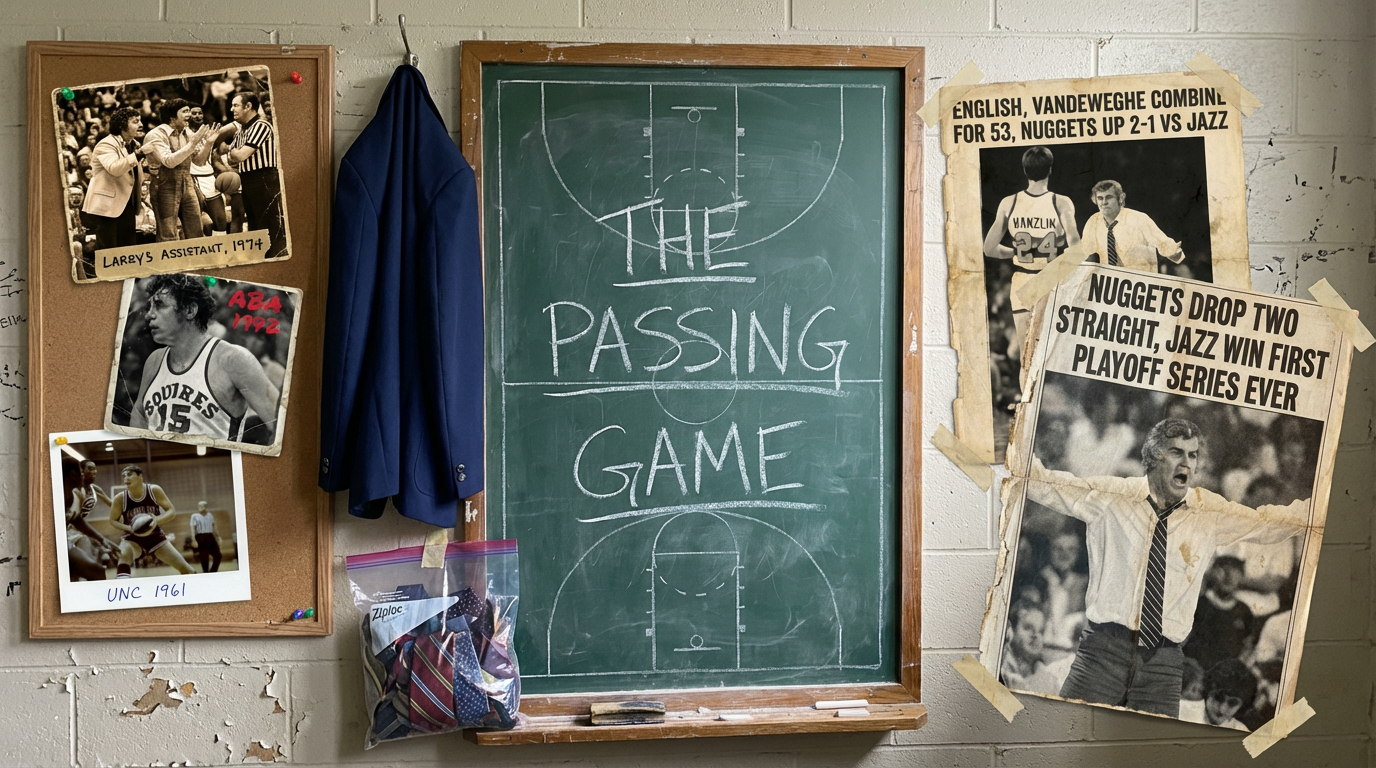
Doug Moe didn’t come up as a visionary. He came up as a guard trying to keep the ball moving.
At North Carolina, Moe learned early what he wasn’t. He wasn’t the star. He wasn’t the reason the gym filled up on a Tuesday night. What he was — almost immediately — was useful. He could keep things from sticking. See passing lanes the other team didn't realize existed.
Frank McGuire’s Carolina teams played loose by the standards of the time. Dean Smith — still just an assistant then — talked about freedom the same way other coaches talked about discipline. Let the game breathe. Let players play. Did Doug respect this approach? Well, decades later, he still calls Smith “Uncle Dino."
Larry Brown was there too. Teammate. Kindred spirit. Another guard wired for motion. The two built a connection, on the Tarheels' court and otherwise.
After college, Moe drifted. Italy for a minute where basketball seemed to flow more freely. Then the ABA came calling, offering chaos. When the New Orleans Buccaneers offered him a roster spot, Moe agreed — on one condition: they had to sign Larry Brown too. They said yes.
And so the two of them were at it again. They played together. Ate together. Got traded to the Oakland Oaks together. Brown once noticed Moe balling his uniform into a bag after games, then shaking it out and putting it back on next time like nothing had happened. After that, Brown started doing Moe’s laundry along with his own. Some partnerships are philosophical. Some are logistical.
“I’m just above a moron.”
The only thing that ever stopped Moe’s motion was his knee. After offseason surgery, his doctor told him he wouldn’t play again. Brown heard the news and called before Doug was discharged from the hospital. Brown had just been offered the head coaching job with the ABA’s Carolina Cougars and wanted Moe on the bench beside him.
The ABA was a misfit league—loud, experimental, allergic to restraint. An open rebellion against the NBA’s buttoned-down order. And, the Cougars had unceremoniously fired every coach they'd had. So Larry and Doug agreed that if they were going to be fired anyway, they might as well run it their way. They trapped. They pressed. They ran teams out of their comfort zones and made them decide faster than they wanted to. Over four seasons, Brown won Coach of the Year three times.
“If we lost, Doug cared as much as I did,” Brown would say later. “If we won, he stayed in the background.”
When the leagues merged, Brown took the Nuggets job. Moe stayed on. Denver went 125–45 over the next two seasons, running teams into mistakes they didn’t know they were capable of making. Eventually, Brown decided it was time for Moe to have his own team and talked him into taking the Spurs job. Moe didn’t want it.
“I didn’t want to be a head coach. Hey — I had it great. I was Larry’s assistant. He was going to coach forever. I knew I had a job forever.”
Larry sat with Doug and Big Jane in their kitchen until Doug agreed. Four years coaching San Antonio led to Denver again in 1980 — this time as the head coach. And somewhere along that stretch, the thing he’d been circling his entire life finally crystallized.
It wasn’t a system. Not really. It was a refusal.
A refusal to stop the ball. A refusal to freeze players into positions. A refusal to pretend basketball needed more rules than it already had.
Moe called it The Passing Game. If you’re looking for plays, you’ve already missed the point. It was a free-form offense that trusted motion to organize itself — the ball moving, bodies moving, the game solving its own problems while creating ones the other team had no way to diagram.
The hallmarks of the philosophy: when you get the ball, you have two seconds to score or move the ball. Off the ball activity is constant, if you aren’t cutting to a new position, you’re setting a screen for somebody else who is. Defense wasn’t an afterthought, it was designed to serve the offense and launch fast breaks — active on-ball defense to generate steals, swarming double teams to create chaos, and stepping into passing lanes for picks. Or, to put it in Doug’s words:
“We run the Passing Game, which, if you take this line here, this line here,” he said motioning at the four lines that make up the exterior of a court, “this line here, and this line here… and you play in-between there and have a good time — you’ll end up scoring.”
”So, forget the plays. Just go out there, have a good time, run around like a chicken with your head cut off. Make those stiffs run and chase you on defense a little bit. And, you too can win a few games.””
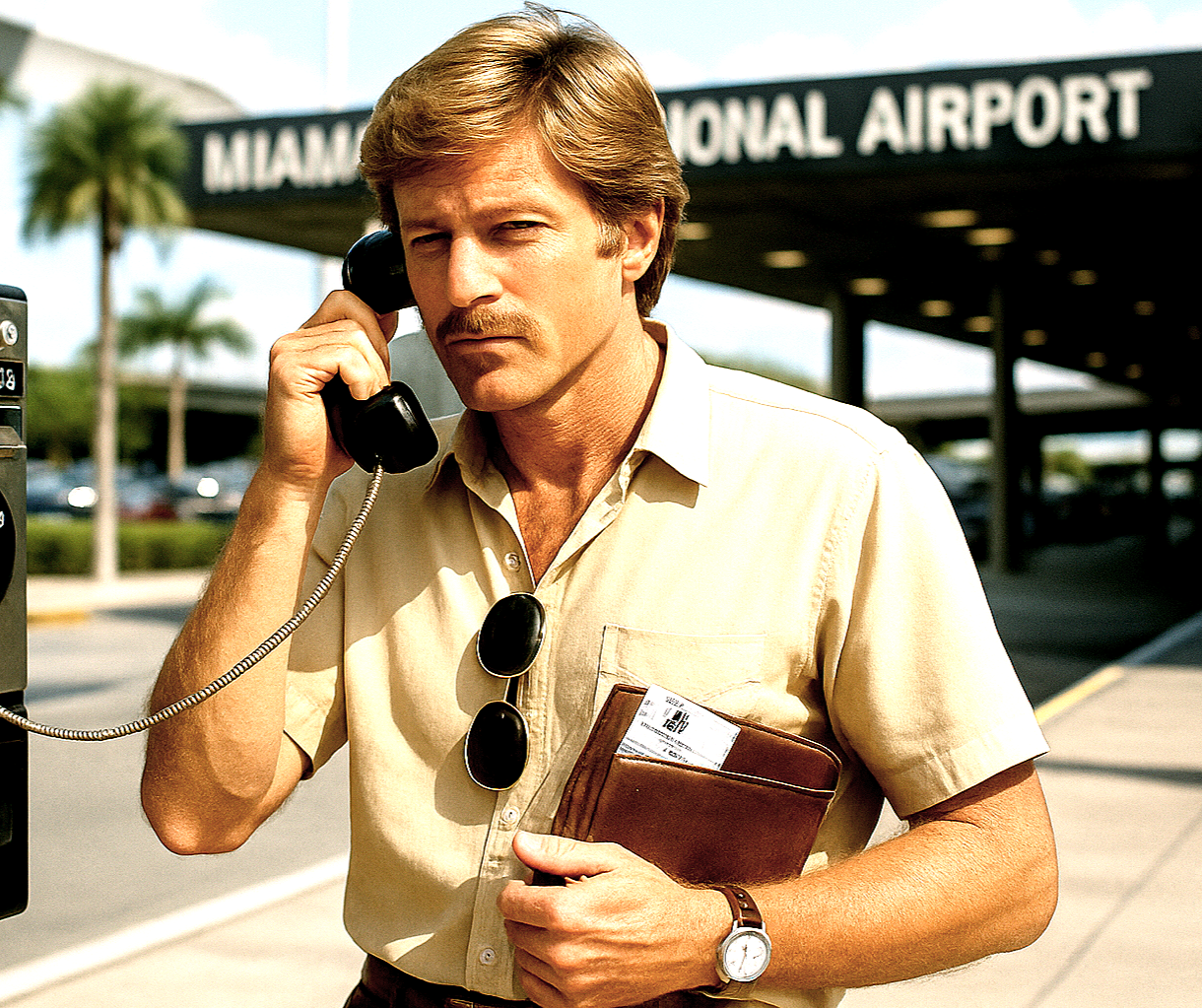
September, 1984. Miami International Airport —Departures Terminal.
Sam Hargreaves drops his bag at his feet, sand still clinging to the canvas, fishes change from his pocket, feeds the payphone, and punches in the number for his editor’s office at Sports Illustrated.
The airport smells like sunscreen and jet fuel. Ceiling fans turn lazily above a crowd that looks unbothered by time. Sam had spent the week doing nothing on purpose. No notebooks. No box scores. He was supposed to fly home tonight.
“Sam, change of plans,” his editor says. No greeting. Sam can hear a cigarette being lit, papers sliding across a desk, "I need you in Denver."
Sam doesn’t wait, “If you have me on assignment, it should be to Boston."
“Why Boston?”
“Because they just won the title,” Sam says. “Because that’s where the league is. Because if I’m writing about basketball in 1985, Auerbach and Bird are the story.”
“Take a number. I’ve got Boston covered.”
“So this is a color piece,” Sam sighs.
“It’s access, Sam. You’ll travel with the Nuggets this season. Go sit in it. See what it smells like, sounds like.”
“They lost in the first round to the Jazz. Gave up one-twenty-two a night to them. No business being in the playoffs if you don’t play defense.”
“Sure, Sam. Which is probably why they just shipped out Kiki Vandeweghe. Twenty-nine a night -- gone. For Natt, Cooper and Fat Lever. Offense for defense.”
Sam thought back to the headlines in June, and wondered if it had anything to do with Doug Moe’s head coaching contract — he was in his final year and hadn’t been renewed yet.
“Either they finally admitted his system is broken," his editor said, pausing to flick his cigarette, “or they panicked, abandoned their principles, and now they’ve got the wrong coach trying to teach a new language. One way or another, you've got an angle. Go get the story, Sam. Bring me something I can print.”
THREE
“These are my stiffs.”
September, 1984. Denver Nuggets Training Camp. McNichols Sports Arena, Denver, Colorado.
Doug Moe’s office door is already closing by the time Sam reaches it.
“Practice started,” Moe says, not looking at him.
The door shuts. No slam. No apology. Just finished.
Sam stands there a second, notebook still tucked under his arm, then exhales and turns toward the gym.
The noise hits first. Sneakers. Whistles. A ball smacking hardwood hard enough to echo.
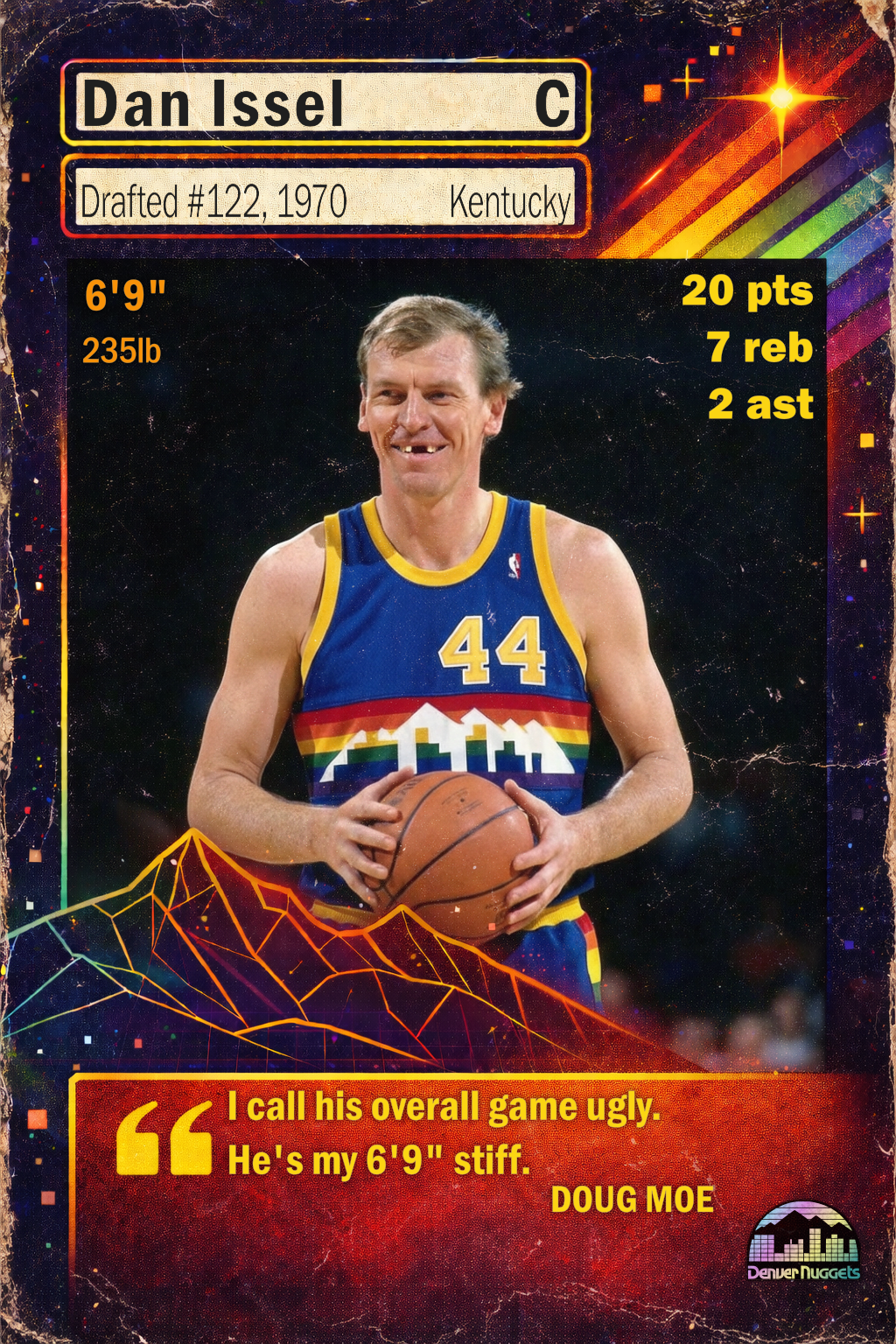
As he approaches courtside, a familiar figure peels out of the scrimmage and drifts toward the water station. Veteran big Dan Issel bends down to re-tie his shoe. Sam has heard rumors that Dan is considering retiring after this season; he can probably skip some practice sets in September at this point in his career.
Issel looks up, sees Sam holding his notebook. “Half-clock sets,” he says, almost conversational. “Twelve seconds. That’s it.”
Sam glances back at the floor. “Conditioning?”
Issel flashes an easy smile, revealing a gap where his two front teeth used to be. “Decision-making. Conditioning just makes it possible.”
He cinches the knot, stands, and nods toward the action. “If the ball stops when it finds you, Doug won't play you. You can sit still on the bench.”
A guard crosses half court with only nine seconds on the shot clock. He probes once, kicks it into the post, then swings it back out to a wing Sam recognizes.
Calvin Natt — six-six, thick through the shoulders, built like a bulldog — catches with his back already leaning into contact. He puts the ball on the floor and backs his defender down once, twice, then pivots into the paint for a clean seven-footer.
The buzzer sounds as the ball leaves his fingers.
“Two seconds to move or move it! The clock doesn’t care how strong you are!” Issel hollers.
Issel grabs two paper cups from the cooler and fills them halfway. He doesn’t offer one to Sam.
“Come on,” he says. “I’ll show you the other two that came over from Portland.”
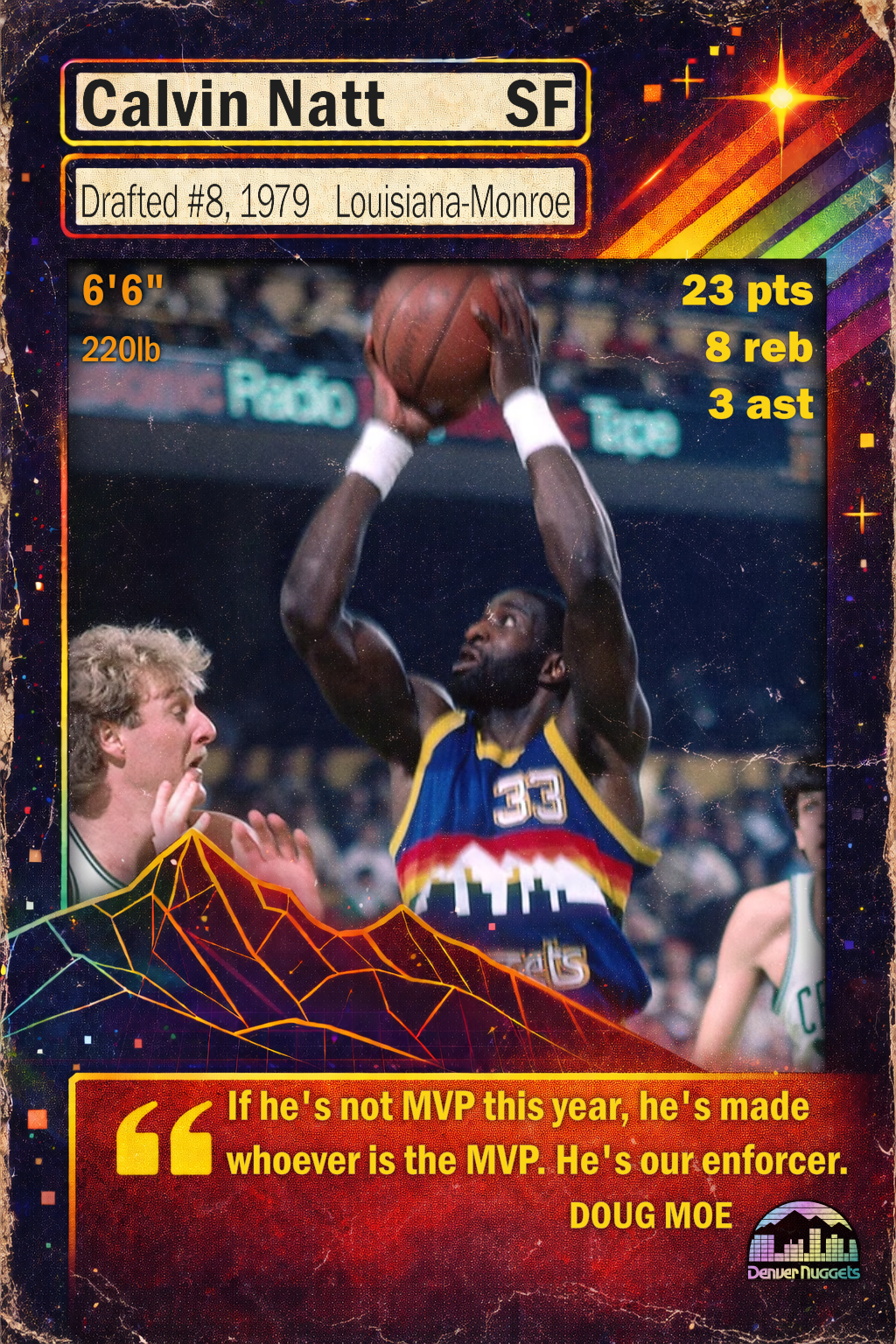
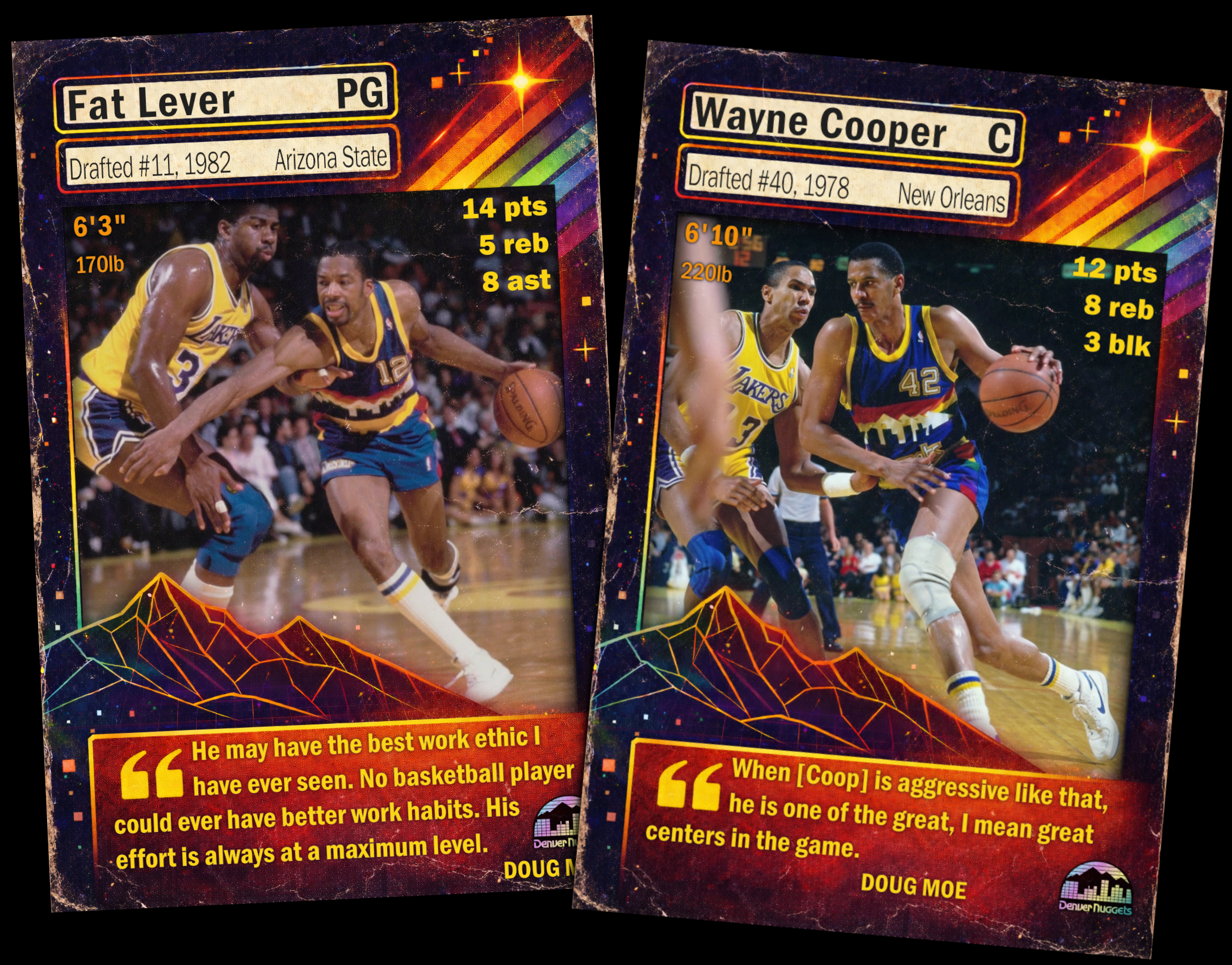
They walk away from the on-court action, where the sound thins out. No whistles here. Just shoes slapping wood and lungs working harder than they’d like. Two players are running suicides.
Fat Lever hits the line first. Low center of gravity, sharp turn, and he's pushing the other way. He looks like he’s done this a thousand times and decided long ago it wasn’t worth complaining about.
Wayne Cooper comes in a beat later. Six foot ten with a long frame he's still growing into, his moves are more deliberate. Each stride covers ground, but it costs him. His shoulders rise and fall like bellows as he reaches the line, bends briefly, then straightens — refusing the rest his body is asking for.
Issel hands Lever a cup without ceremony. “This one thinks fast. Sees the floor. Keeps busy on both ends.”
Cooper gets his water next. He drains it. “That one gives us size we haven't had in the past. Good hands too -- even when he’s tired.”
A trainer whistles again, and Lever is already starting the next set of suicides. Cooper pushes off a half-second later, forcing his legs to agree with him.
Issel watches them go. “Until they learn how to breathe at 5300 feet,” Dan says, almost casually, “we can’t teach them anything else.”
Issel excuses himself to jog back and rejoin the half-clock sets after a whistle. Sam lingers a moment, then drifts toward the second court, two players stand near the top of the three point line, a trainer feeding them passes to catch and shoot.
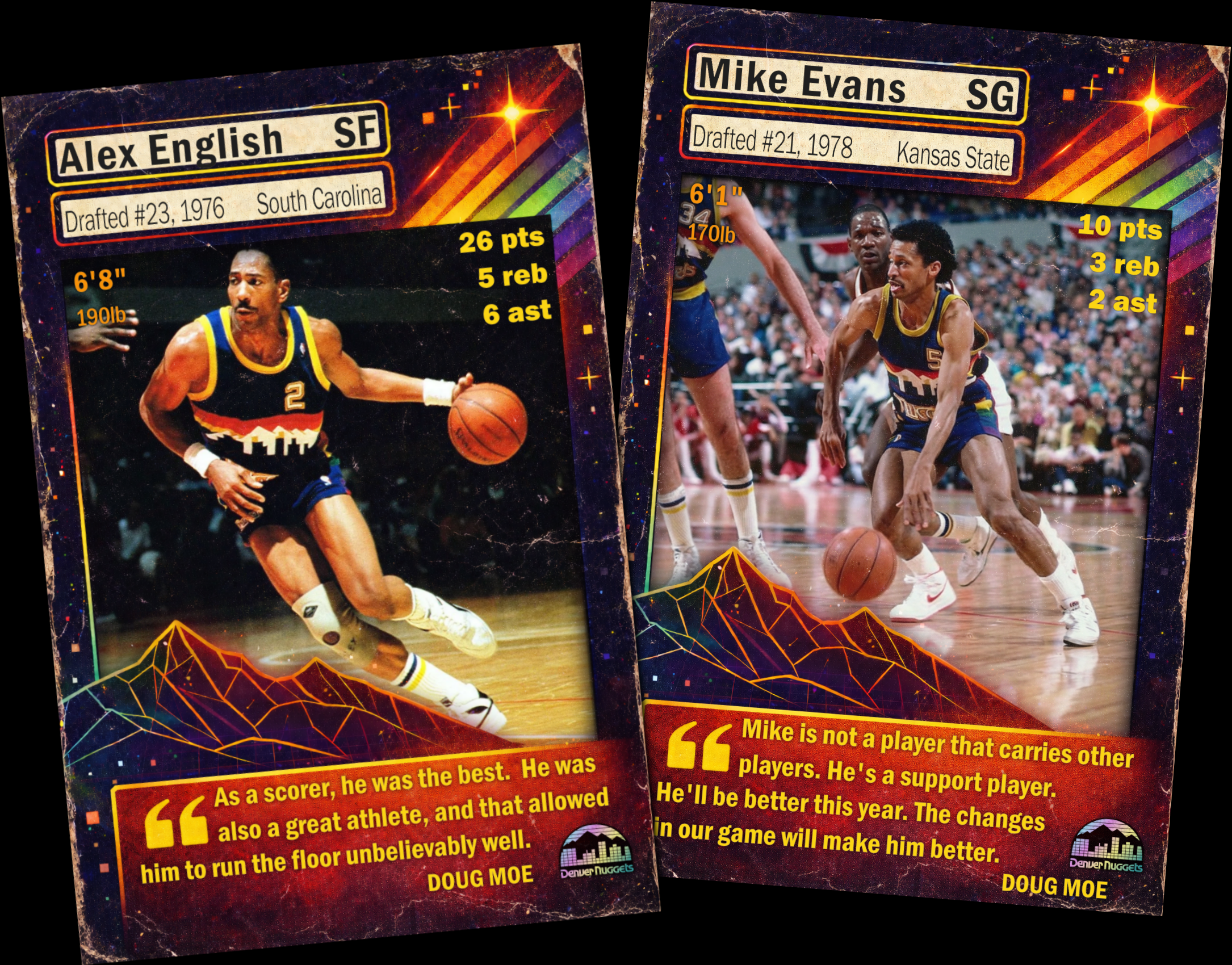
Mike Evans shoots first. Catch. Release, the form is practices. Net.
“Last to twenty-one buys the first round tonight at Rick's Cafe?” says Mike Evans in-between shots, looking over at Alex English.
Alex gives him a nod, then answers from the other side. The ball leaves his hands from high above his head, a high arc with an effortless release. It drops straight through and the race is on.
Sam watches before stepping closer. English is their star scorer at forward, and there’s a grace to his motion. Despite being guarded by the other team's best stopper every night, he still finds a way to deliver. He watches Alex, notes that he's not satisfied to just catch and shoot — he’ll reposition without the ball, catch, dribble and side-step, release.
Evens is more mechanical, but no less deadly. Four shots in, and he still hasn't missed. His role is to keep the defense honest.
“I’m starting at point,” Mike says, without turning around. “Put it in the notebook.”
Sam raises an eyebrow. “Coach know that?”
“He knows,” Evans says. “I don’t rush. I don’t turn it over.”
As Evans lines up his next shot, English makes eye contact with Sam — a bemused look that communicates "don't write that."
“Shoot,” English says.
Evans does. Make.
English nods. “That’s why you’re going to play.”
As the day's practice is wrapping up, Sam stops at a framed photo mounted near the hallway. Last year’s team. Same colors. Same logo. Different posture.
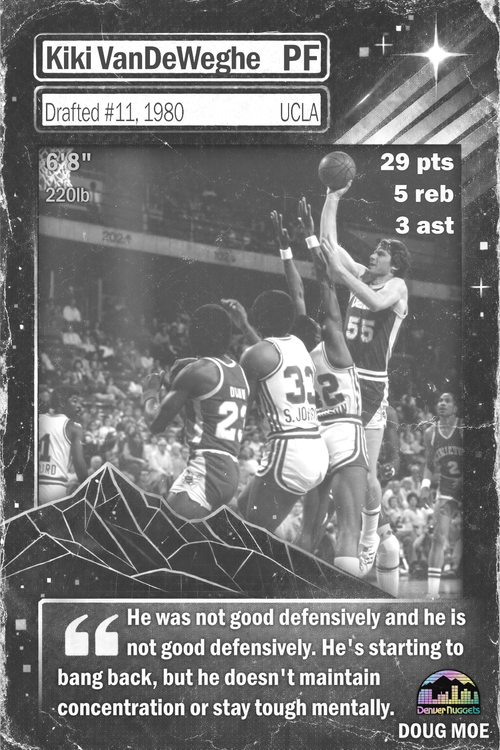
The smiles are loose. Arms draped over shoulders. A group that looks like it knows where its points are coming from. Kiki Vandeweghe stands near the middle — tall, relaxed, built like someone who never had to rush a shot in his life. Twenty-nine a night will do that.
Sam studies the picture longer than he means to. He thinks about what that team asked of him, writing-wise. About pace as priority, consequences be damned.
This team hasn’t disowned what it was. It’s just stopped pretending it could live there forever.
Whether this works — whether trading beauty for pressure buys them something real — is a question the season hasn’t answered yet.
Sam opens his notebook. Now he knows what he’s looking for.
FOUR
“We’re not chopped liver.”
April 28, 1985. I-25 Highway, Denver, Colorado.
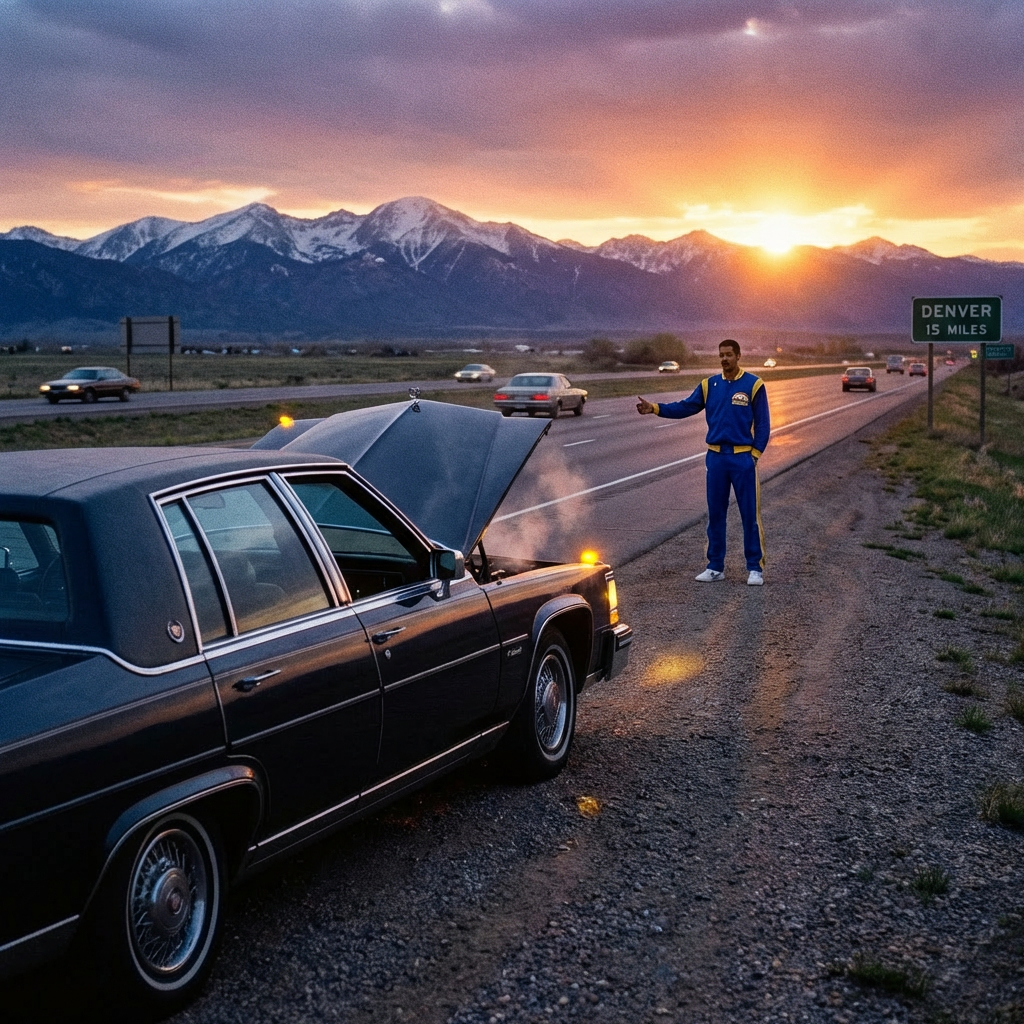
There's a ghost in the machine of the Denver Nuggets — the lingering memory of a 1983 playoff collapse that still haunts the locker room. But tonight, the machine being haunted is Wayne Cooper’s broken-down car, dead on the shoulder of the I-25 as the sun dips behind the Rockies.
Cooper is 6’10”, but standing in the gravel with the hazard lights clicking in mocking indifference, he has never felt smaller. Tip-off is an hour away. The winner of this Game 5 advances; the loser goes home to think about what went wrong. George "The Iceman" Gervin is already at the arena, waiting to turn back the clock one more time.
He sticks his thumb out. It feels absurd. He is a seven-foot beacon of desperation in his Nuggets warmups. A dozen cars pass before the brake lights of a station wagon flare red.
The window rolls down. A man in an "Issel for President" T-shirt looks up, his eyes widening as he realizes the giant on the shoulder is the starting center he was currently driving to go see. In the back seat, two kids are pressed against the glass, their eyes wide and dinner-plate round.
"Cooper?" the man asks, stunned.
"McNichols," Cooper says, his voice a low, frantic rumble. "I need to get to McNichols."
The engine whines as the humble wagon merges back into the stream of traffic. Inside, Cooper folds his massive frame into the passenger seat like human origami, his knees pressed into the glovebox and his head tilted at a precarious angle against the roof. He sits in the cramped silence of a stranger's car, jaw set, already imagining the collision with Artis Gilmore that waits at the end of the road.
NBA Quarterfinals Game 5, Spurs at Nuggets. McNichols Sports Arena, Denver, Colorado.
Less than three minutes left in the half. Mike Mitchell, a wing who led his Spurs in scoring, pushes the fast break. But Fat Lever is on the hunt, tracking the ball from behind. With surgical precision, he tips the ball loose to himself, and fires a pass ahead to Elston Turner. The ball keeps moving — first English, then back to Lever on the right wing. Lever lofts a lob toward the far side of the rim where Wayne Cooper is already airborne. Cooper’s initial finish thuds off the glass, but he cleans up his own miss, controlling the board. Cooper thrashes a heavy shoulder into Iavaroni’s chest, forcing the defender onto his heels, and creating space for a pull-up jumper. The shot misses, but as Calvin Natt and Jeff Cook are muscling each other for rebounding position, a whistle sends Natt to the line. Calvin calmly sinks them both, pushing the score to Nuggets 54, Spurs 43.
Moore pushes the pace like the Spurs have all series before kicking to Iavaroni at the circle, and then continuing a roll to the basket. Marc feeds George Gervin on the left wing, but Elston Turner stays attached to Gervin’s hip, contesting a jumper that clanks off the rim. Moore collects the rebound only to find himself swarmed by four Denver home jerseys. Trapped, Moore attempts a desperate escape pass to a cutting Gervin, but Turner has already read the angle; he deflects the pass and sparks an outlet to English, who glides in for a layup over Ozell Jones. Nuggets by 13.
Iavaroni trails the play as the ball is swung his way at the top. English is there, giving him space at first. When he realizes that Marc can't find a clean pass, English closes the gap, hands active. Forced to retreat, Iavaroni releases a backward pass toward a teammate, but as he lets it go, he drives a stiff left elbow into English’s ribs. The whistle screams for the offensive foul, but before the sound dies, English delivers a sharp, corrective punch to Iavaroni’s bicep. No further words are exchanged as Iavaroni heads to the bench with his second foul. English heads to the stripe, makes one of two.
Moore brings the ball up and uses a screen from Ozell Jones to force a switch, drawing the 6’11” Schayes into a mismatch. But Lever closes from his rear to apply pressure. Moore dishes to Ozell Jones near the hoop, where Schayes slides over to pick up somebody his own size. Jones rises to score, but Schayes is whistled for contact on the contest. The thing is, Jones isn't supposed to be in the game right now. But with Artis Gilmore already sitting with three fouls, he'll have to be next man up. Jones steps to the line with a chance to change the momentum. He clanks both.
T.R. Dunn initiates the offense, using a spin-move and a behind-the-back dribble to lose Jones at the top. He feeds Natt on the right wing and relocates, drawing the defense with him, before receiving the return pass and finding Natt again deep in the post. Natt gathers with both feet planted and rises over a contesting Jones and Iavaroni. The jumper hits the front rim, but Schayes has already carved out the interior space, snatching the offensive board and laying it back in for two. Nuggets by 16.
As Johnny Moore walks the ball up, the McNichols crowd has been whipped into a deafening cacophony. Iavaroni is bent over at the left elbow, hands on his shorts. Gervin cuts across the paint with Dunn hand checking him, a size mismatch that sees the guard leaning into the Iceman with all his weight. A whistle on Dunn mercifully stops the action. As Dunn heads to the bench with three fouls, Doug Moe points at Mike Evans, “Get in there.” Gervin makes the first free throw, but as the second one rattles out another foul is assessed to Jones as he and Danny Schayes battle for position. Schayes makes both.
The Spurs run a play where Iavaroni feeds Gervin cutting toward the right nail, who draws the defense onto him before dishing to Jones under the basket. Schayes leaps, his hand nearly deflecting the entry, but Jones manages to corral it and spin toward the rim. A foul stops the layup, and Ozell Jones heads back to the line for a pair, his earlier pair of misses still fresh in mind. He takes his time, leaning into the muscle memory of his shooting routine. Both shots miss anyways.
Mike Evans is well-rested and brings the ball up at pace. As he approaches Moore, he maintains space with a sharp S-curve dribble. As he continues down toward the left baseline, he hits the gas, leaving a tired Johnny Moore a step behind. Evans pulls up for a leaning, baseline ten-foot jumper that finds the bottom of the net. The lead is 19.
Moore stops at the arc and tries to drive right, but Evans mirrors his movement, staying chest-to-chest to bar the path to the rim. Moore retreats and kicks to Iavaroni, who attempts to feed Gervin near the hoop, but two Denver defenders front the post entry, their hands batting the ball back out toward the perimeter. Moore collects the loose ball, but a whistle for off-ball contact between Lever and Gervin sends the Iceman to the line, where he splits the pair.
Lever brings it up the left side and finds Schayes at the top of the circle. As the defense shifts to account for the big man, Mike Evans sprints the baseline from left to right, ghosting behind the San Antonio interior. Schayes waits for the angle to open and delivers a pass to Evans on the right wing. Evans catches and rises in one motion, burying a seventeen-footer for his second straight bucket. Nuggets by 20.
With twenty seconds left in the half, Moore walks the ball up with a heavy, deliberate pace. He bleeds the clock before trying to use a Jones screen to lose Mike Evans and drive baseline, but Schayes rotates over instantly. Smothered by a double-team, Moore attempts a desperate heave back toward Iavaroni at mid-court. Marc barely gets a finger on the wild pass -- backcourt violation. The Denver crowd rises in a deafening, unified roar.
The Nuggets’ locker room is a humid, chaotic box after a blowout 127-99 win that saw the starters get the luxury of rest minutes in the second half. The tension of the series has evaporated, replaced by the sweet relief of success. Doug Moe is a one-man parade in the center of it, his tie long since surrendered and his hair somehow pointing in every direction at the same time.
Sam Hargreaves stands on the periphery, his notebook open. He considers what this win means. Holding one the league's top offenses to 99 points in a closeout game, while somehow still scoring 121 per game against them? Elite. But the Spurs are a team in transition -- they aren't the real test. The Lakers had swept the Suns in their first round series, and they loom large if the Nuggets are able to get past the Utah Jazz.
Sam catches Moe’s eye as the coach strides past, and can't help himself. "Doug, how much do you think home-court crowd and the altitude had to do with tonight's win?"
“McNichols is turning into a tough place to play, Sam. But we’re not chopped liver, you know?” Moe barks, his voice cracking with a jubilant, raspy edge. “Our defense did it again. That’s the way we’ve played all year and it’s made us a great team. San Antonio came in here trying to be physical, but we were even more physical than they were. Look at the turnovers! That’s the proof!”
A Spurs official taps Sam's elbow. “Gervin’s doing a Q&A,” the man whispers. “Small group. Last time he'll wear the jersey.”
Had the night gone differently, it would have been Dan Issel at that podium, ending his career on a note of quiet failure. But the Nuggets won, and now it is Gervin’s legacy being shuttered in a back room. Sam slips away, spending nearly an hour submerged in the poetry of the Iceman’s exit. It is a world of reflection, gratitude, and the slow, deliberate pace of a legend saying goodbye.
When Sam finally pushes through the exit doors of McNichols Arena, the April night is still and cold. He walks toward the curb where the team bus is usually idling, its engine a low, diesel heartbeat.
The curb is empty.
There is no bus. There is no security detail. There is only the distant sound of a highway that had claimed Wayne Cooper’s car hours earlier. After a season with the team, Sam knows better than to take this personally. The Nuggets hadn't left him out of spite, or because he chose a rival’s wake over their celebration.
They left him because Doug Moe has no interest in the rearview mirror. For Moe, forward motion is fundamental. It’s the same instinct that drove a teenage Doug to play in different three leagues, just to maximize his time with a ball in his hand. Since leagues had rules against being on multiple rosters, he'd sign up under different last names, whether it was his school team, the local Protestant team, or the Jewish League where he went by "Doug Moskowitz."
To Doug Moe, if you’re standing still, you’re a stiff. And the bus is already gone.
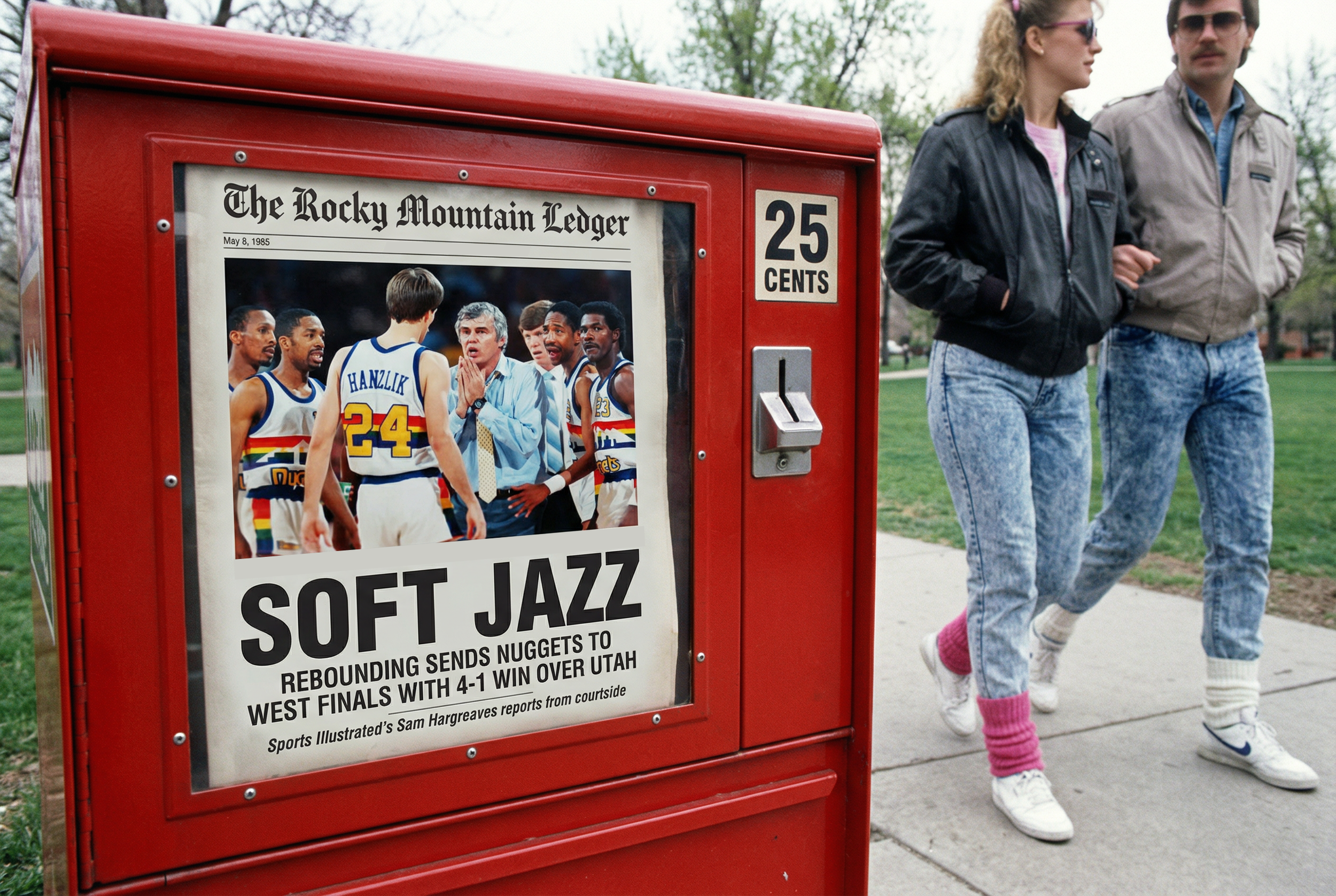
SOFT JAZZ
REBOUNDING SENDS NUGGETS TO WEST FINALS WITH 4-1 WIN OVER UTAH
Sports Illustrated’s Sam Hargreaves reports from courtside
There was a moment in Game 1 that explained the entire series. Fat Lever chased down a long rebound and landed flat on his backside in the paint. Four Utah defenders surrounded him. No passing lane. No whistle.
Still seated, Lever flipped the ball toward the rim. It dropped through the net.
“It was a smart shot,” Nuggets coach Doug Moe said afterward.
“It was a lucky shot,” Lever insisted.
The numbers suggest the Jazz were not overwhelmed by the Nuggets in this series. Field-goal percentages were nearly identical. Turnovers and foul counts were even. Utah scored enough to win on most nights.
But over five games, Denver rebounded Utah 265 to 220. The absence of injured center Mark Eaton mattered, sure. But the rebounding advantage for Denver continued after Fat Lever was injured at the end of Game 3. He hopes to return sometime during the Conference Finals from arthroscopic knee surgery.
Nine extra possessions a night? It’s arithmetic. The Nuggets averaged 125 points in the series — up from 121 against San Antonio — not because they shot dramatically better, but because they kept getting the ball back. Lever had games of 16 and 13 rebounds on his way to a pair of triple-doubles. Center Wayne Cooper joked that the little guy was making the bigs look bad.
The result was a five-game series that felt closer than it was — a gentleman’s sweep that sent the Nuggets to the Western Conference Finals for the first time in seven years.
Los Angeles presents a different scale of challenge.
The Lakers, the West’s top seed and defending conference champions, swept Phoenix while averaging 136 points per game. They handled Portland in five while scoring 127 a night. Magic Johnson is playing at an MVP level. Kareem Abdul-Jabbar remains an All-NBA presence at age 37.
And yet, the Lakers lost both of their home games against the Nuggets during the regular season.
Game 1 is May 11th in Los Angeles.
FIVE
“Ain’t it great to be alive, fellas?”
May 11, 1985. Postgame of Western Conference Finals Game 1. The Forum, Inglewood, California.
The Forum had emptied the way a theater empties after a blockbuster — slowly, satisfied, already quoting its favorite moments. The Lakers had been up 28 at half; won by 17. 139–122.
The Nuggets had not just lost Game 1. They had been escorted through it.
In the locker room, the mood was not rage. It was something worse — recalculation. Tape came off ankles in long strips. Ice bags were applied without ceremony. A few players stared at the floor.
Upstairs, the press room buzzes with the soft confidence of a series already solved. Doug Moe walks in chewing something — gum, probably — and sits down like a man who had just finished a Tuesday practice in February.
First question, predictably blunt.
“Coach, the Lakers shot sixty-four percent, they dictated the pace, and their trapping defense caused twenty-five turnovers. What adjustments could possibly close the gap?"
A pause. Then Doug looks up and smirks. “Ain’t it great to be alive, fellas?”
Laughter. Not loud. Not forced. Just enough to loosen the room. A reminder that the Lakers had only won one game, not four.
Another reporter presses, “Coach, with Fat Lever not returning until games three or four back in Denver, do you think that will be too late for the team to turn it around?”
He shrugs, “Certainly we have a chance. Ask me who is going to win, and if I’m a wagering man, I say L.A.; I’m no fool after all. But we have a chance.”
May 14, 1985. Western Conference Finals Game 2. The Forum, Inglewood, California.
The Forum is a furnace of gold and purple, the decibel level climbing with every rhythmic Laker stride. T.R. Dunn and Calvin Natt are grinding, but the scoreboard reads 23—18 in favor of Los Angeles, and the air feels heavy with the threat of a repeat Showtime avalanche.
Calvin Natt is muscling Magic Johnson for position under the hoop, and he’s just won inside position. Bill Hanzlik sees the advantage and he rises over his defender as if to shoot before firing a bullet that Natt gathers under the rim. Natt pivots away from Magic, rising for the layup on the far side of the glass, but Kareem Abdul-Jabbar arrives from the weak side like a closing door, swatting the ball into Byron Scott’s waiting hands. Scott doesn’t even look; he snaps the ball to Magic, who launches a guided missile of a lead pass to Michael Cooper streaking down the hardwood. As Cooper flushes the dunk, the crowd explodes. With the Laker lead stretching to seven, Doug Moe doesn’t wait — he’s already halfway to the scorer’s table, hands waving for a timeout before the ball even clears the net.
As the Nuggets trudge toward the bench, the noise from the Laker faithful is a physical weight, but Doug Moe is already in the middle of the huddle, his voice cutting through the din like a hacksaw. "Listen up boys. Lemme guess how it feels out there. Everywhere you go, they're sending two stiffs to trap you, right?"
A few players nod. Doug wipes a hand across his brow, a predatory grin forming. "Remember all those suicide drills we sprint back at home? I say we check to see if the Lakers have been doing their cardio drills."
He grabs the clipboard, drawing three aggressive 'X's nearly six feet behind the three-point arc.
"Move the perimeter spots to here, here and here. Wherever you get the ball, if your defender isn't already on you, or you're not going to score, let the stiffs come to you before you move the ball. Let's see how long they keep running before they figure out the ball is faster. “
To test the Lakers' lung capacity against the speed of the pass, Moe needs shooters who can punish from range. He adds, “Natt, Dunn — Time for a breather. Dan, Mike, get in there."
The Nuggets emerge from the timeout with a different geometry, Elston Turner and Alex English checking in to provide the floor spacing Doug demanded. Evans takes the inbound and stands defiantly deep — well behind the three-point line — waiting for the inevitable purple-and-gold pressure. Magic and James Worthy bite, sprinting out to trap him, but the distance they have to cover is the trap itself. Evans snaps the ball to Hanzlik on the baseline, and as Magic lurches to recover, Hanzlik immediately returns it to Evans, forcing the defense to pivot again. The ball zips to English on the left perimeter, drawing Worthy and Michael Cooper into a desperate double-team that leaves them lunging at shadows. English kicks it back to Evans, who launches a long three that clangs off the iron, but English is already there, snaring the offensive rebound in the scramble. He tries a quick pull-up over the outstretched arm of Kareem, but the shot misses, and Magic secures the board. The Laker fast break starts with a familiar long pass to Michael Cooper, but this time the timing is frayed — the ball sails out of bounds, a rare moment of Showtime friction as the Nuggets find their footing.
Off the inbound, Evans ignites the passing game’s engine with a pass to Turner, who zips the ball to Wayne Cooper on the right wing, who immediately faces the daunting length of Kareem; Cooper probes left toward the high post, drawing Michael Cooper over as a help defender. As the defense converges, Wayne Cooper executes a hand-off as Bill Hanzlik runs a route behind him. Kareem switches onto bill, pulled out toward the perimeter to meet him twenty feet from the hoop. Hanzlik whips the ball to English on the right wing and Kareem retreats to the paint, refusing to take the bait to step farther out. English finds Wayne Cooper open, flaring to the left elbow. Cooper takes one quick dribble to evade a closing Michael Cooper and rises for a mid-range jumper that rattles off the iron, but a whistle cuts through the scramble for the rebound. Larry Spriggs is whistled for a foul in the crowd, sending Alex English to the line, where he calmly sinks both free throws to pull the Nuggets within five at 25–20.
The Lakers try to re-establish the hierarchy, Magic bringing the ball up and immediately looking for the captain on the right block. Wayne Cooper is fighting for every inch, fronting Kareem to deny the easy entry, but Magic lofts a high lob over the top anyway. Cooper drops back to defend the catch, and Kareem gathers the ball, testing the space with a series of rhythmic dribbles and pump fakes. A whistle pierces the air; the official gestures for a walk, before Kareem can get his hook shot off. The Forum groans.
The teams trade empty trips, English pulls down a rebound off of a Spriggs miss and off to Evans, who is already at a dead sprint before the defense can set. Evans finds Turner at the three-point line, Turner to Hanzlik on the wing, and Hanzlik feeding the post to Issel. Michael Cooper reaches in for a deflection, but Issel — Doug’s veteran security blanket — swings the ball away with a wide arc to protect it. As English flares to the wing, Issel delivers a crisp pass and then pivots his body into Spriggs' path, a wall that erases the defender. English sinks a smooth 17-footer to bring the Nuggets within three.
The Lakers suffer back to back possessions where Spriggs and Cooper take over primary ballhandler duties for Magic and turn the ball over.
The Nuggets don't give the Lakers time to dwell on it. Evans pushes the tempo, feeding Hanzlik streaking down the right wing. Michael Cooper closes out hard to stop the momentum, but Hanzlik gives a quick juke to the left, slipping past the defender and finishing the layup before a second defender can arrive. The Laker lead is down to one.
Magic brings the ball back up, using his broad frame to back down Turner and shield the ball near the perimeter. He lofts a long, high-stakes entry pass to McAdoo in the post, who is being shadowed by Evans. As McAdoo pivots to face the rim, his right elbow catches Evans squarely in the face with a dull thud. The whistle blows for an offensive foul, and Evans walks back up the court doubled over, Alex English checking the damage as they head the other way.
Elston Turner crosses the three-point line and snapping a pass left to English, who kicks it to T.R. Dunn.. English doesn't stop, cutting hard into the paint with Spriggs trailing like a shadow. Reaching the heart of the lane, English abruptly reverses direction, flaring back to the left elbow and leaving a flat-footed Spriggs behind. Dunn hits him perfectly, and English rises for the catch-and-shoot jumper, a pure motion that gives the Nuggets their first lead.
As the quarter winds down, Dan Issel buries a heroic 22-footer at the buzzer. Nuggets 30—Lakers 27.
With only 1:25 to go in the period, the second quarter has been a grinder. The Nuggets maintain a slim 60—57 lead. Magic Johnson is on the bench for a quick breather while James Worthy and Byron Scott are tethered there by three fouls each. And the Nuggets are still testing whether the Lakers can outrun the ball.
Dunn reverses it to Hanzlik on the right wing and the ball doesn’t pause. Hanzlik drives hard, forcing the first shift. Cooper lifts from the block to the top of the circle — and Kareem goes with him, pulled out of the paint by design. The ball skips to Turner. Spriggs flies at him. Turner gives it right back. The Lakers defense rotates again. Cooper drifts farther now, all the way to the right corner. Kareem follows, but hesitates to commit that far out. Hanzlik finds him immediately. The 18-foot jumper is clean.
The Lakers try to stabilize their half-court set as the ball swings to Michael Cooper on the perimeter. On the left block, the game morphs from a marathon into a wrestling match; Wayne Cooper digs a forearm into Kareem’s side, and the Captain sells the contact with a sharp bend forward that draws a whistle. During the stoppage, Magic checks back into the game as Kareem splits his free throws. The Lakers inbound to McGee, who feeds Kareem in the paint, but the Nuggets have seen enough; a triple-team collapses on the post like a falling building. Kareem desperately tries to kick the ball out to Magic at the top, but Elston Turner reads the eyes, leaps for the interception, and streaks the other way for a thunderous transition dunk that makes it 64—58.
Magic brings the ball back up with under forty seconds remaining, his face a mask of focus as he navigates the Nuggets' pressure. He finds McGee on the perimeter, who once again looks to feed a weary Kareem in the post. Wayne Cooper is relentless, fronting Kareem to deny the angle, but McGee lofts the entry pass anyway. Cooper manages to get a hand on the ball, deflecting it into a chaotic scrum where bodies collide in pursuit of the loose leather. In the mess of limbs, a whistle blows, and a reaching foul is assessed to Mike McGee.
Turner brings the ball across the timeline with Michael Cooper applying the press. Mike Evans sprints on a line behind Turner, receiving a quick hand-off that triggers a Laker switch, putting the long arms of Cooper on the smaller guard. Evans holds the ball well beyond the arc near the right sideline, letting the seconds bleed as the Nuggets' floor spacers—English, Cooper, and Turner—pull the defense toward the left side. Danny Schayes lingers near center court as a safety valve, leaving Cooper on an island to guard Evans on the right. Evans drops his shoulder, blasts past Cooper, and glides all the way to the rim for an uncontested layup. The Denver bench erupts as the lead stretches to 66—59.
The Lakers have six seconds to respond. Kareem is visibly disgusted with the easy basket his team just conceded and angrily hucks the ball one-handed to Magic. Magic turns and accelerates to full speed, eating up the hardwood as Wayne Cooper backpedals to stay in front. Magic stops on a dime at the three-point line, rising for a pull-up jumper as the horn blares through the Forum. The shot catches the front of the rim and falls away.
As Pat Riley and his gold jerseys disappear into the tunnel, they carry the quiet recalculation of a bully who just found out the other guy punches back.
With four minutes left in the third quarter, the Nuggets hang onto a three point lead. Hanzlik is hounded by Worthy, but darts a pass to Wayne Cooper on the right block. Cooper pivots left into the heart of the lane, rising for a left-handed skyhook over Kareem long arms. The shot won’t fall but Cooper outworks Magic for the offensive board. He twists away from Magic’s tie-up attempt and lofts a second short jumper; Kareem rises and rejects the shot cleanly against the glass, but the whistle blows. Kareem’s frustration boils over; he punches the air in a violent downward motion and storms away as Cooper heads to the line to sink both.
The Lakers offense settles on Worthy dishing to finds Kareem on the lower right block. The Nuggets are currently deploying a twin towers lineup featuring both Wayne Cooper as Kareem’s primary defender, and Danny Schayes who has rotated over to wall off the baseline. Kareem turns left to shield the ball from Schayes and attempts a layup, but Wayne Cooper is there, meeting the ball at the apex for a thudding block. The ball falls back to Kareem, who goes up instantly for a second attempt, only for Cooper to rise a second time and swat it again. The Forum waits for a whistle that never comes as the ball deflects toward the sideline. Michael Cooper saves it, shoveling a pass to Byron Scott at the top of the key; Scott drives and sinks a tough jumper over Mike Evans’ contest. Nuggets 78—Lakers 75.
As the quarter is about to end, Calvin Natt and Larry Spriggs engage in a physical battle for a rebound; Spriggs, outmatched by Natt’s size, delivers a frustrated shove that the official catches immediately. Natt walks to the line for the penalty shots and sinks both.
Three seconds remain on the clock. The Lakers inbound quickly to Spriggs, who pitches a lateral to James Worthy. Worthy takes one massive, desperate stride and launches a running heave from the left side of the half-court stripe. The ball tracks true through the air and crashes through the net as the buzzer sounds, an emotional lightning strike that cuts the Denver lead in half. Denver 89—Los Angeles 86.
One minute into the fourth, Magic eases it across against Turner, dribbling high and patient while the floor settles. He swings left to Worthy, who wastes no time dropping it into Kareem on the block. Issel leans a forearm into his lower back as Kareem dribbles middle, Natt shading down just enough to show a second body. The ball skips to McGee in the corner; the three catches rim and kicks long. McAdoo slips inside for the rebound and pushes it back out, around the horn to Magic on the right wing. He sees a seam and takes it, splitting the first line before Natt plants outside the charge circle. Contact. Whistle. Offensive foul. Natt spills backward into Issel’s leg. Issel steps away from the collision limping, hand to thigh, and gestures toward the bench. Doug waves him in. Schayes stands, pulls off his warmups.
Before Schayes reaches the scorer’s table, Doug grabs his arm. “Six fouls to give, Danny,” he says, eyes locked. “The only way we win this is if we're just as physical on both ends.” Danny nods once and jogs on.
Turner pushes the pace for Denver, finding English on the wing, who immediately feeds Natt deep under the rim. McAdoo is draped over him, and Kareem rotates over, a seven-foot-two wall of verticality. Natt tries to pivot for the far-side layup, but Kareem times it perfectly, swatting the ball clean away. The block is a masterpiece of timing, but the whistle screams anyway on contact from McAdoo below the block. Kareem doesn't yell; he just stares at the referee for a beat, his jaw set in a mask of growing disbelief. Natt steps to the line and sinks both. Nuggets 95—Lakers 88.
Magic brings the ball up and fires a lob down to Kareem on the lower right block. Danny Schayes doesn’t just defend; he crowds, his chest pinned to Kareem’s jersey, refusing to grant the Captain the ceremonial space he’s used to. Kareem gives Schayes a stiff shoulder, but Schayes re-engages instantly. As Kareem turns for the skyhook — a shot that finally, beautifully finds the bottom of the net — another whistle. The officials wave it off, ruling Schayes’ had fouled him a heartbeat before the release. The Lakers inbound and the sequence devolves into a desperate, frantic scramble of missed put-backs until the ball finds McGee. Schayes, somehow a pest to everybody, gets whistled for contact on the contest. McGee splits the free throws.
After a play that ends with a clean 16-footer from Elston Turner, Magic advances the ball with a visible urgency. He again lofts a high entry pass toward Kareem in the post. Schayes meets the ball and the man simultaneously, his contact to Kareem’s head and shoulders drawing a quick whistle for his third foul of the quarter. On the reset, the Lakers go right back to the well. Kareem catches, and Schayes plants a forearm firmly into his back, maintaining heavy body contact as the skyhook goes up. The shot falls short, no whistle. Both men leap for the loose ball, the whistle blows again, but this time the finger points at the Captain — Kareem is whistled for an over-the-back. The Forum erupts in disbelief.
On the other end, things seem to go more smoothly. The Nuggets swing the ball through the hands of four players before Alex receives a pass at the post, pivots away from two defenders, and sinks a clean bank shot. Nuggets by ten.
Magic advances with a purpose, eying Willie White waiting for him at the arc. Magic offers a violent pump-fake, sending White soaring. He waits for the gravity to do its work, then drives hard into the space White vacated, clipping the defender and sending him sprawling to the hardwood. Magic pulls up for what should be a mid-range momentum-changer, but the shot clangs. Below, the rebound is a street fight between Schayes and Kareem — a tangle of jagged elbows and un-called contact that bats the ball toward Worthy. Schayes pivots, his arm crashing into Worthy’s shooting hand, but Worthy powers through the contact to finish the bucket. Enraged by the lack of a whistle, Worthy reacts with a demonstrative shout that earns him an immediate technical foul. While English misses the freebie, the Lakers’ frustrations persist.
On the other end, the first shot the Passing Game generates, a Natt floater, rims out on a strong close-out by Magic Johnson. Kareem clears the board and he fires an outlet to Magic, but Turner is already there with a hand in the lane; he picks the pass clean, and immediately finds Schayes rolling toward the basket. Danny's only obstacle is Abdul-Jabbar, so he accelerates, absorbing the impact before taking a circus-shot fall-away that drops through as Kareem picks up the foul.
The teams trade continue to trade haymakers, but the lead slowly stretches to Nuggets 108—Lakers 95 with seven minutes to go. Magic finds Cooper on the wing, who again drops it in to Kareem. Schayes is there, his forearm now a permanent fixture in the Captain’s lower back, and Elston Turner closes in to double. Kareem recognizes the trap and kicks it back out to Cooper, who buries an eighteen-footer. But the real battle is happening underneath the rim. As the shot falls, Schayes is still tangled with Kareem, his hands locked onto the Captain’s shoulders, effectively dragging the legend toward the floor. The tension that has been building since the first quarter finally snaps; as Schayes releases the hold, Kareem spins and fires a closed-fist right toward the back of Schayes’ neck. The two men square up. The first official to arrive and attempt to defuse the conflict is given an unceremonious one-hand shove away by Kareem, nearly losing his balance before rushing back in.
As hands return to sides and the men begin to walk down the floor, a technical is assessed to Kareem. English steps to the line with the cold indifference of an executioner, sinking the freebie to push the lead to twelve. The Nuggets run their offense, a give and go where White passes to Schayes at the circle, cuts through the paint, and pops out the other side to bury an open eighteen-footer. Riley burns a twenty-second timeout at the 6:48 mark with the scoreboard showing Nuggets 111—Lakers 97.
The Lakers look to find their footing off of Riley's drawn up action. Magic curls around a Worthy screen, but Turner slips underneath and recovers instantly. Magic throws a wild one-handed pass toward Byron Scott in the corner. Scott saves the ball on one foot, flinging it back to Magic, who cleanly lobs to Kareem on the block. The Captain is swarmed by Schayes and forced to kick it out to Cooper, whose long jumper clangs off the iron. English secures the board and outlets to Turner, and suddenly the Nuggets are a three-lane blur: Natt in the middle, White on the left, Turner on the right. White receives the ball and elevates for the dunk, but Cooper meets him at the summit, swatting the ball forcefully to the floor. The ball rebounds straight down, but White is quicker, tapping the loose scrap to English. From five feet out, English rises and lofts the ball off the glass — a soft, clinical finish that turns Cooper’s defensive highlight into a footnote. Nuggets 113—Lakers 97.
As most of the players transitioned back down the floor, a few stayed behind. Magic had walked straight at Danny Schayes with some hard words for him. Hands went on each other's shoulders. Schayes didn’t retreat. As the two start to wrestle, Kareem shows up to speak his mind to Danny. He didn’t ask what happened. He didn’t wait.
A referee sprints in, arms up, trying to wedge himself between them. Kareem drives a forearm into the referee — enough to send him skidding backward — and then goes over the top of Schayes from behind. Arms wrapped. Bodies tangled. Schayes bends forward under the weight and Kareem’s feet lift off the floor. They pitch sideways together, crashing onto the hardwood, Danny held prone in a headlock.
Players lunged in. Coaches shouted. And then the building turned. Drinks. Ice. Whatever people had in their hands came sailing down. Someone finally pried the men apart.
Kareem stood off to the side, breathing hard, expression locked in place. The officials huddled. One technical had already been issued. The call was his second. He was done. No protest came. After this night, the call was probably a mercy. He began the long walk toward the tunnel.
English stepped to the line and buried the free throw. 114–97. Bob McAdoo checked in. And then nothing happened -- it would be minutes before the floor crew finished cleaning up all the ice and debris on the floor.
The Lakers were suddenly without their captain, their center, their anchor.
For a moment, it almost felt like basketball again. Worthy scored. The Lakers ran something clean. The crowd tried to rediscover its voice. Then Alex English touched the ball. Turnaround jumper. Baseline sixteen-footer from Natt. Schayes blocking McAdoo at the rim. Willie White slipping in for a layup.
And for every Nuggets make, an empty trip for the Lakers on the other end. Stolen ball. Missed shot. Block. Interception.
Doug Moe was on the sideline now, fully animated — waving traffic, barking instructions, clapping guys through the break like a crossing guard at rush hour. Usually he wore the expression of a man fighting indigestion. Tonight he was conducting the 1812 Overture — and every jumper felt like a cannon.
Turner hit a seventeen-footer. Scott answered with a long two. Rambis traveled. English ran the right baseline and floated one in on the move — that familiar one-handed release, like he was placing the ball on a shelf only he could see. It stopped feeling tense. It started feeling inevitable.
Schayes intercepted an entry pass and saved it before tumbling out of bounds. English hit another jumper. McAdoo got one at the rim. English came right back with a floater and the foul. Of course the free throw went in. Hanzlik deflected a pass in the lane. English tipped in his own miss. By then it was just him.
He had barely scored in the third; two points. Seventeen in the first half. In the fourth? He was everywhere — 21 points in a blur. Pull-ups. Runners. Put-backs. The sort of quiet avalanche that doesn’t feel loud until you look up and realize the building has gone flat.
The Lakers kept shooting. Some went in. Most didn’t matter. The lead stretched. Twenty. Twenty-two. It touched twenty-five for a moment, and you could feel the air leave the place. Half the fans were already headed for the exits when the benches emptied. Names you didn’t recognize drifted onto the floor. The fight was over. The noise was gone.
And then, almost as an afterthought, the horn. Nuggets 136—Lakers 114.
Earlier in the day, before all of it, Doug Moe had joked with the broadcast crew. "You'll see, we’ll beat them by twenty-five," he’d said with smiling eyes. "Just wait."
As he walked off the court, he looked up toward them and held up two fingers, then five. Now the grin was wide and unguarded — the real deal.
Sam Hargreaves should have been heading to the airport. Instead, with his bags packed and his ticket home to Boston in his pocket, he stood across from the City and County Building waiting to see what would happen.
The press release had come late. Noon. A parade to honor the Nuggets. It had been suggested after Game 5 — after the 153—109 loss, after the series ended 4—1. Thrown together fast enough to feel unrealistic. Someone said there would be a marching band. Someone else said the band hadn’t shown up.
By eleven-thirty, the lawn in front of the City and County Building looked more like a picnic than a celebration. Families with blankets. Balloons. Paper signs. Nothing moving. No motorcade in sight.
Sam had come because he didn’t believe it would happen.
At eleven-forty-five he crossed the street to the payphone outside a drugstore and dropped a quarter in. It was a scheduled call. His editor didn’t care about parades.
“You called it, Sam,” the voice on the other end says. "They never learned how to play defense.”
Sam watches the steps of the building while he listens.
His editor continued, “What’s the angle? Hubris? Flying too close to the sun?” A pause. “Listen, file your story and we’ll talk about moving you to the front of the line on Boston next season.”
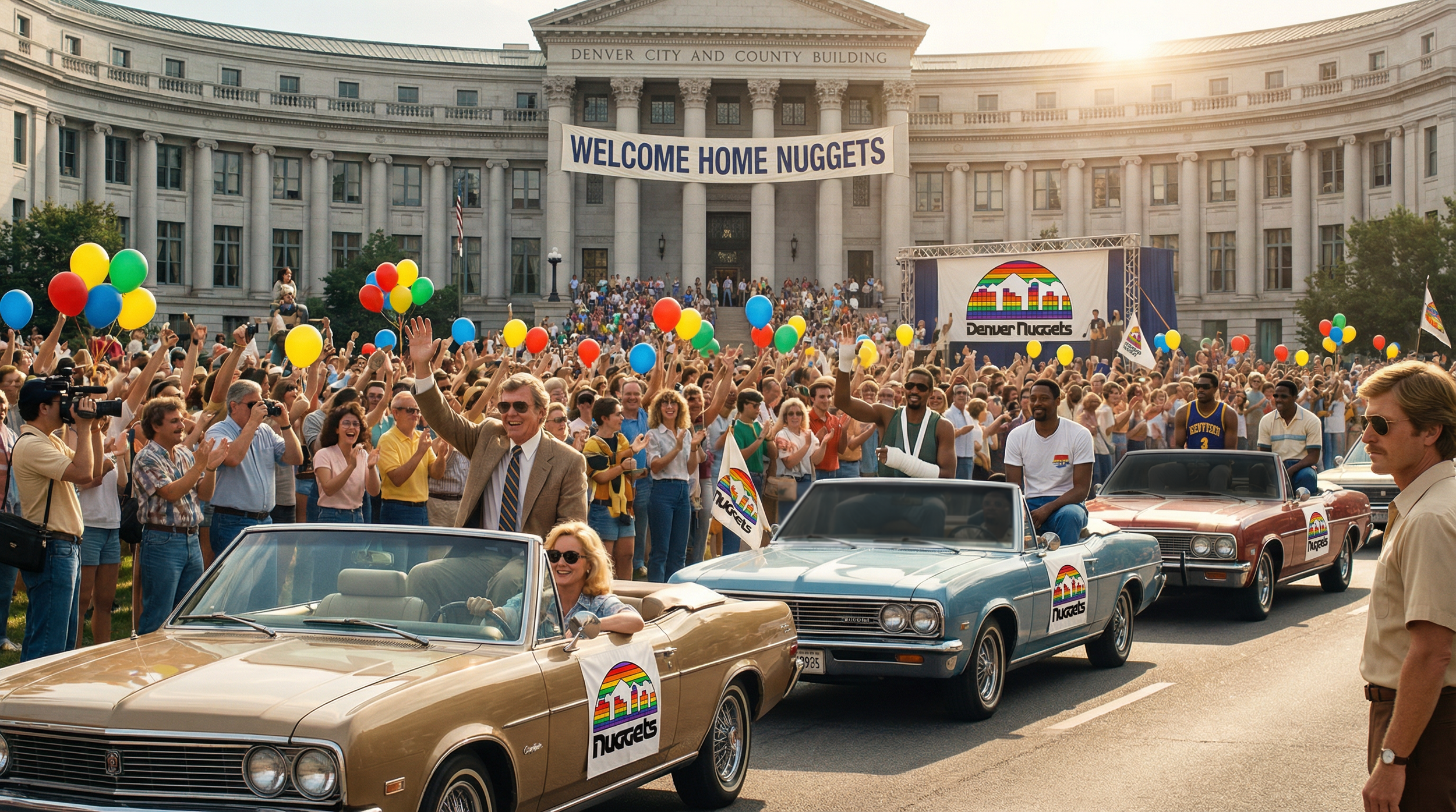
Sam looks back at the lawn. People still waiting. Kids climbing the low stone wall. A banner stretched awkwardly between two poles: WELCOME HOME NUGGETS.
He starts to answer. Then the speakers crackle. It isn’t polished. It just arrives — the first brass notes of Rocky, thin and slightly distorted, spilling into the afternoon.
The crowd reacts before the cars are visible. Applause starts near Colfax and rolls down the mall in a wave. Eight convertibles inch into view, moving slow enough that you can see faces. There’s no band. No floats. Just players sitting on the backs of cars, waving as if surprised anyone came.
Doug Moe is in one of the cars at the front, half-turned toward the sidewalk, offering a small, almost sheepish wave. He looks less like a conqueror and more like a coach who still expects practice tomorrow. His wife Big Jane drives the car, hands on the wheel so that he can take it all in. She looks satisfied.
Alex English stands in another car, lifting his arm. It’s in a cast.
Dan Issel isn’t there. Sam had heard he’d left Los Angeles for Lexington the morning after the final game — fifteen seasons behind him, more points scored than anyone who has ever played the game not named Kareem, Wilt, or Dr. J. No last lap. No speech. Just time with family he’s put off long enough.
As the convertibles crawl past, Wayne Cooper rises in the back seat of one of them, squinting into the sunlight. He isn’t waving at the mass of people. He’s searching — scanning faces along the curb as if he expects to recognize someone. Back on I-25, a station wagon had stopped for him when his car died. All he can remember is an “Issel for President” T-shirt and two kids pressed against the glass.
The cars pass close enough that Sam can see the fatigue in their faces.
Mayor Federico Peia begins reading carefully from note cards, “Denver welcomes our champions home. Let’s hear it for your Denver Nuggets!”
A man near Sam in a Dodgers hat turns down an offer of a free license plate border that reads CHAMPIONS - A Mile High, retorting, “Champions? They lost.”
A local woman nearby answers without turning. “Well, they’re champions in Denver.”
On the line, his editor says, “You there?”
“Yeah,” Sam says.
He doesn’t argue the score. He doesn’t defend the losses. Across the street, the crowd keeps clapping for a team that lost by forty-four, for a season that ended three games short.
The box score has its verdict. The city has its own.
SIX
“If we’re gonna get fired, we’re gonna get fired doing it our way.”
The barroom version of basketball history is ruthless. A guy walks in with no ring, the room already knows what it thinks. Somebody at the end of the counter says it like it’s scripture — never won it. Another guy nods, like that’s the whole story, like the scoreboard is a judge and the trophy is the only evidence admissible in court.
Doug Moe never won a title. That part’s true.
But “true” and “complete” aren’t the same thing. And if this series has taught us anything, it’s that speed doesn’t let you hide — it reveals you. At full speed, you don’t get to curate who you are. You either have character, or you don’t. Your system works in full speed combat, or it doesn't. And the game — played fast enough — finds out.
Here’s what “never won a title” doesn’t cover:
The record isn’t a punchline
Doug’s teams weren’t merely loud. They were good. 432—357 over a decade. But in Denver, at altitude? His home record turns into something close to absurd.
295 wins to 100 losses; a 75% win rate.
Phil Jackson still holds the career high water mark for head coaching win rate; 70%.
If you want to call Doug crazy, fine. But it’s the kind of crazy that knows exactly what it’s doing. Crazy like a fox.
The franchise might not have survived without him
Here’s the part nobody puts in the montage: the Nuggets needed cash. Not “we’d like to upgrade the drapes” cash — keep-the-lights-on cash. So the organization did something you almost never see in pro sports: it went looking for investors. A public offering, basically — small slices of the team sold to raise money and buy time. It wasn’t about getting rich. It was about staying alive long enough to have a future. And the only way that works is if the building stays full. And of course, Doug's teams offered a style of basketball that was electric even in losses. Score totals that seemed made up. But he also brought winning.
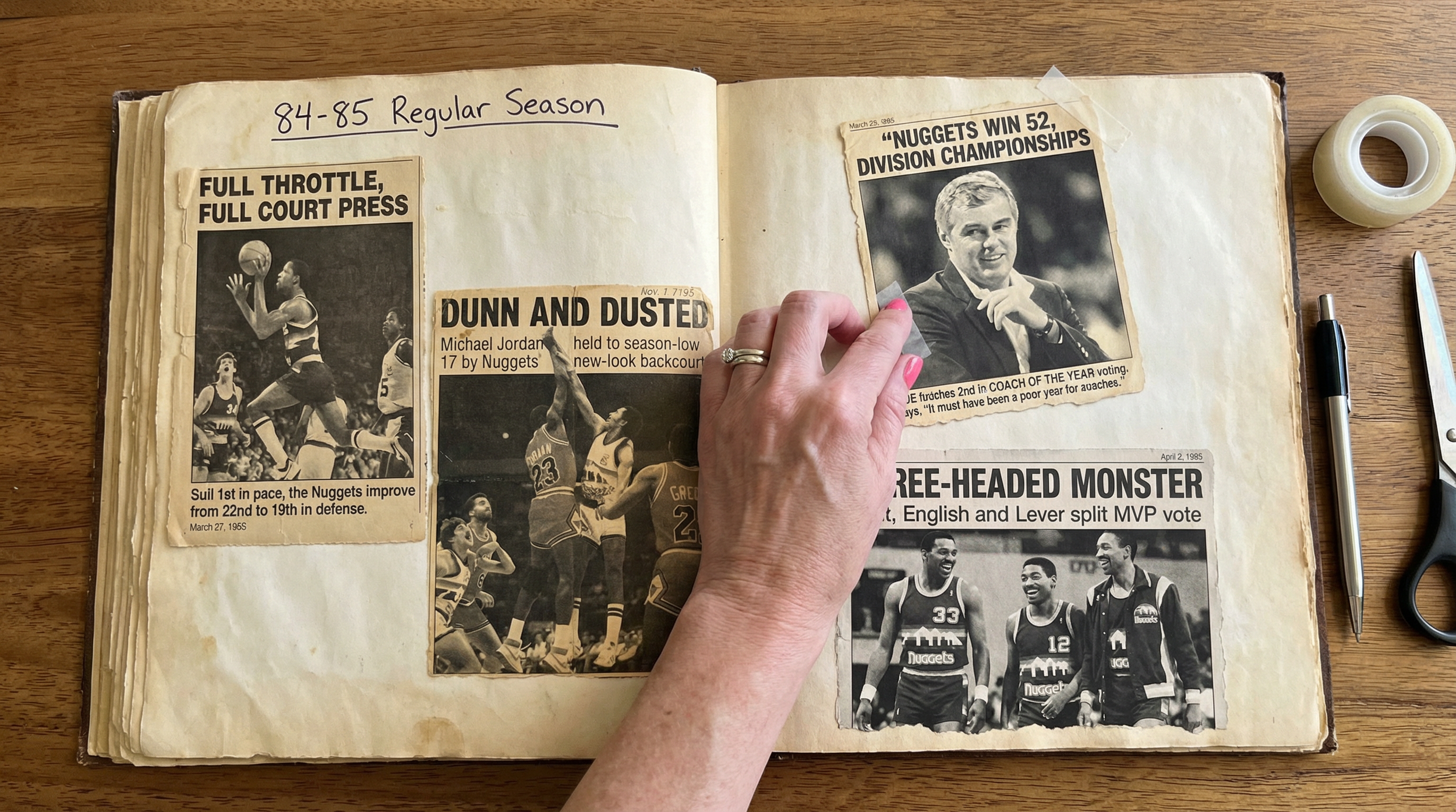
The Nuggets had missed the playoffs for consecutive seasons before Doug was installed as Head Coach in the 80-81 season. By 1983 they were in the West Semi's. By '85 they were facing off against Magic and Kareem in the West Finals. And for nine straight seasons a Doug Moe Nuggets team never missed the Playoffs.
So when the capital raise went through, owner Red McCombs didn't just get enough cash to say alive -- he managed a 1400% return on his $2M investment three years prior, thanks to a man who can't pair socks.
The people who actually coach recognized him
In 1988 he wins Coach of the Year. And the Chuck Daly Lifetime Achievement Award. In the same year.
And then Doug, on brand, was quick to cut his own statue down to size:
“Must have been a poor year for coaches.”
He never asked for our approval
Which brings us to the scene that tells you everything you need to know about his relationship with legacy: champagne in the living room.
September 6, 1990. Doug Moe’s Dismissal Press Conference. Moe Family Home, Denver, Colorado.
The first thing that surprises you is how quiet the house is. The quiet of a place that has already decided what this day means.
There are reporters in Doug Moe’s living room — shoes at the door, notebooks out, trying to make the scene behave like the scene they came for. A coach has just been fired. There is supposed to be a pall. There is supposed to be a quote that tastes like regret.
Instead there’s champagne.
Big Jane is seated like she’s hosting a holiday dinner. Doug is beside her, shoulders slouched into comfort, chewing on the moment the way he chews on everything — like it’s not that serious, until you realize he’s using humor the way other men use armor.
He raises the glass, “We’re having a party,” he tells them, grinning like he’s gotten away with something. “We’re celebrating. I’m finally free of all you stiffs.”
So what do Doug's Run N' Gun Nuggets teach us about the game?
It takes audacity to see a singular idea all the way through
Doug’s ideal offense wasn’t negotiable. Not because he was stubborn in the childish way — because he understood the deal. If you’re going to play that fast, you can’t have five different faiths on the floor. One language. One pulse.
It takes maturity to accept you can’t be everything all the time
Adding defensive heft has costs. Sometimes it drags the pace. Sometimes it narrows the player pool to a tiny tribe of people who can think and execute at speed on both ends without melting down.
Doug bent without breaking — and it produced his best team
He improved the team from 22nd to 13th on defense while staying 1st in pace. That’s not an accident. That’s a man refining the idea without betraying it.
The system still carried fragility, the same way Phoenix would
When the pool of “can do this” players gets small, poor luck hurts more. Calvin Natt’s 1986 achilles rupture wasn’t just an injury; it was structural damage for the team. When the ecosystem is that specialized, one broken beam matters. Greatness, at full speed, is always built closer to the edge.
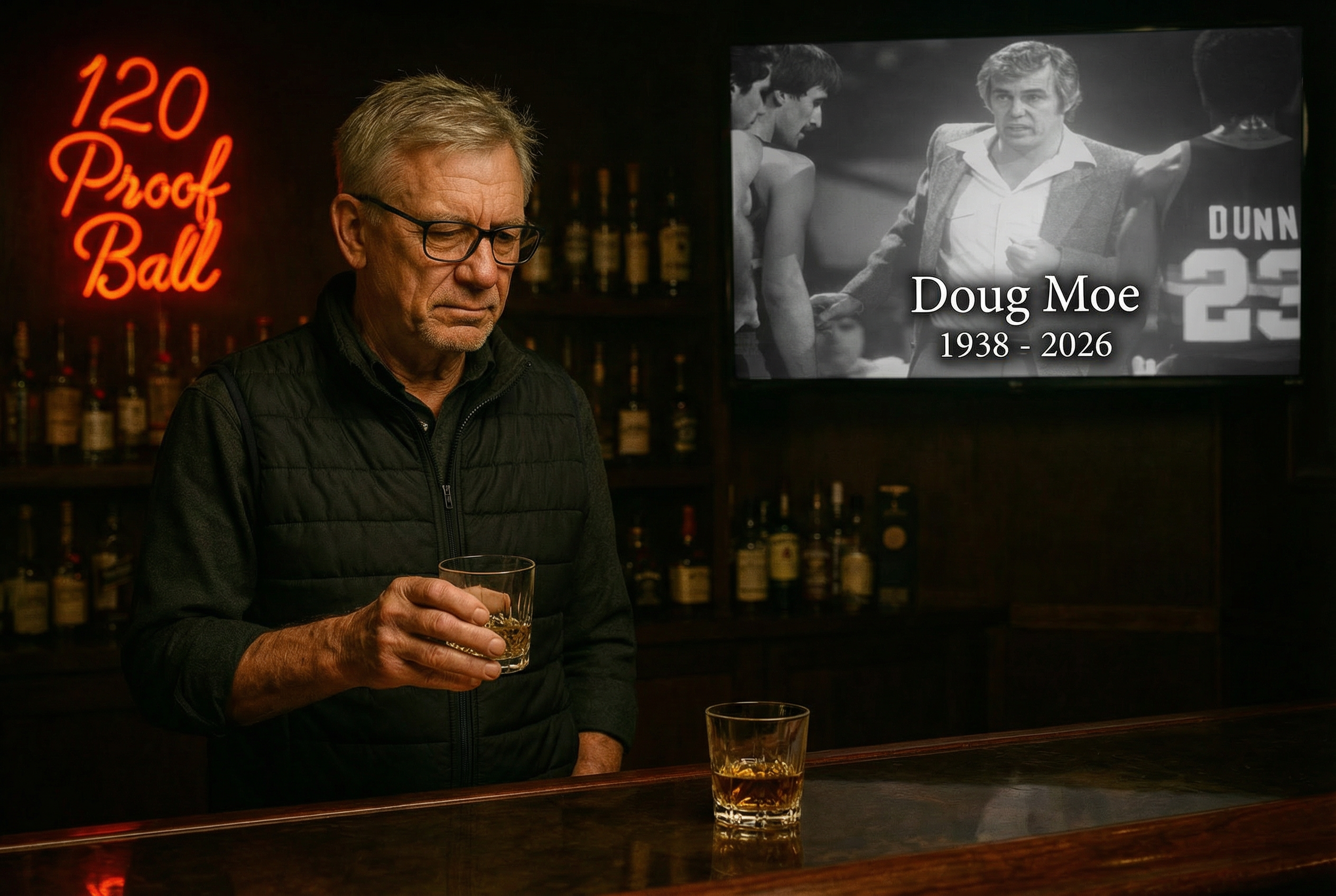
What does Doug Moe teach us about ourselves?
The most inspiring thing about Doug isn’t the tempo. It’s the clarity.
Most of us live like we’re going to get an extra decade to figure it out later—extra chances, extra do-overs, extra energy. Doug lived like the clock was real. He maximized what kept him on the hardwood, with Big Jane at his side, and he radically minimized the rest. Delegated it, ignored it, laughed it off — whatever it took to keep the center of his life intact.
And we should say the quiet part out loud: 62 years of marriage is not background detail. That’s a life built with intention. Anybody who’s been married knows it takes work, compromise, repair, and choosing the same person again and again even when the day is inconvenient.
That’s the adult version of Doug Moe. He knew what he was here for — and actually lived that way.
“I don’t ponder the meaning of life. For me, the meaning of life is to enjoy it. It goes fast. And I was put here to meet Big Jane.”
GET NOTIFIED AS SOON AS THE NEXT ONE DROPS

THOSE WHO WOULD RUN THE WORLD
Three down, six more to come. Our series on basketball innovators still has stops with the
Moreyball Rockets, Sam Presti’s Thunder, the Adelman Kings, the We Believe Warriors, and Kerr’s Splash Brothers.
Author’s Note
I started this project thinking Doug Moe was a basketball idea — pace, altitude, scoring, innovation. Eight weeks of archival newspapers later, he stopped being an idea. He felt familiar. Accomplished without being impressed with himself. Quick with a joke in the press room. The kind of coach whose players still tell stories decades later.
When he passed just days before I published, it landed harder than I expected. Because I respect him. Doug didn’t ponder the meaning of life. He enjoyed it. It goes fast. I think he understood something about conviction — and about joy — that outlasts box scores.
I reread the piece after the news broke. His passing didn’t change a word. Nothing felt dishonest. That was a quiet relief.
We raise our glass to this man and his memory, and smile knowing that the afterlife has a two-second rule now.
Where transcripts, footage, or reporting exist, I’ve leaned on them closely. Where the record was silent — especially in private conversations — I’ve reconstructed dialogue in a way that fits the spirit of the moment and the character of the person speaking. Those passages are narrative choices, not verbatim transcripts.
And if you’re relying on 120 Proof Ball as your primary historical source, we’ve both made some questionable decisions.

Todd / 120 Proof Ball
If you liked this piece, you’re part of the problem.