
Tron Taught Me Everything I Know About Basketball

Pay no attention to the Mouse behind the curtain.
We don’t speak ill of the dead.
That’s the rule. When someone passes, we gather, we nod solemnly, and we talk about the good things. The kindness. The generosity. The peach cobbler grandma brought to Thanksgiving every single year.
We do not mention how she used to fart in elevators.
That part comes later. After the service. After the casseroles. After two glasses of red wine, when someone lowers their voice and says, “I loved her, obviously… but come on.”
So today, let’s be kind.
Tron has passed away.
The franchise is dead. There will be no more neon corridors, no more de-aged Jeff Bridges staring into the soul of a graphics card from 1982, no more snow cones with emojis on them masquerading as main villains. Like many eccentric relatives, Tron was hard to explain to outsiders, deeply misunderstood at family gatherings, and absolutely convinced it was saying something important.
Today isn’t about how Tron died. We can talk about that later — maybe after the wine. Today is about what Tron got right. What it gave us. What we learned while it was still glowing faintly in the corner of the room.
You could be forgiven for dismissing Tron as Star Wars for graphing-calculator enthusiasts. But the truth is, Tron was about computers about as much as Mad Men was about advertising.
It was about agency — about people inside systems, and whether those systems amplify human potential or quietly erase it. About rules, roles, and the tension between obedience and imagination. About what happens when the machine forgets who it’s supposed to serve.
Which is why this was always going to end up on a basketball court.
Let’s do this.
1. Users and Programs Are Not the Same Thing
“Users wrote us. A User even wrote you!”
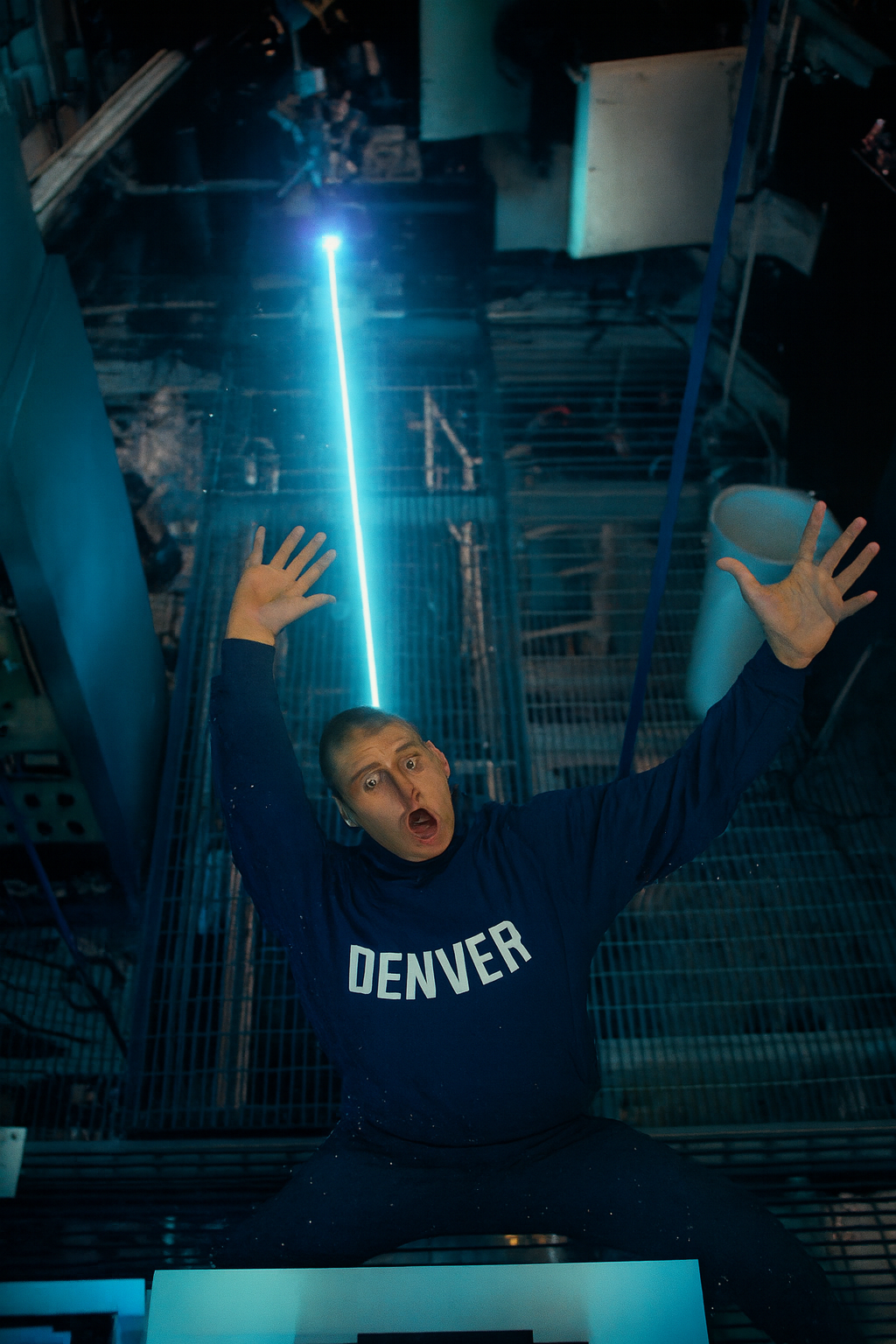
In Tron, the distinction matters. Users write code. Programs execute it. That idea maps cleanly to basketball.
Stars and role players are not the same thing. Both are valuable. Both are necessary. But a true star — a true User — is defined by more than production. Users define direction. They establish hierarchy, set tone, and give the system something to organize itself around. They don’t just run plays. They decide what the offense is trying to do. Leadership isn’t an accessory trait. It’s the job.
You can see the difference clearly in Ray Allen’s career. In his best seasons as Milwaukee’s primary option, Allen was elite — 43% shooting, 22 points per game, even some MVP votes. The heroics were there. The buzzer-beaters were there. What wasn’t there was direction. Ray’s leadership style was quiet, internal, technical — closer to Kawhi than Kobe. He didn’t fail in Milwaukee. He was simply miscast.
Boston understood that. They didn’t ask Allen to define the team. They asked him to amplify one. He stretched the floor for Kevin Garnett and Paul Pierce, while those two supplied the emotional gravity and leadership that defined the Celtics. The result was four deep playoff runs, two trips to the Finals, and a championship.
Washington made the same category error later with Bradley Beal. After John Wall, the franchise didn’t just keep Beal — it handed him the keys. The offense bent around his scoring, his usage, his contract. Beal is an elite offensive player. But like Allen, he was never the organizing force. Asking him to be one didn’t elevate the team. It installed a ceiling.
Chicago compounded the mistake with DeMar DeRozan and Zach LaVine. In the absence of a true leader, the Bulls tried to build one out of two elite scorers. In the NBA, you can’t exchange two fifty-cent coins for a dollar. Both players did their jobs. Neither gave the team a clear identity. The result was a team that looked strong on paper — and toothless when it mattered.
2. Systems Exist to Serve Their Users
“User requests are what computers are for!”
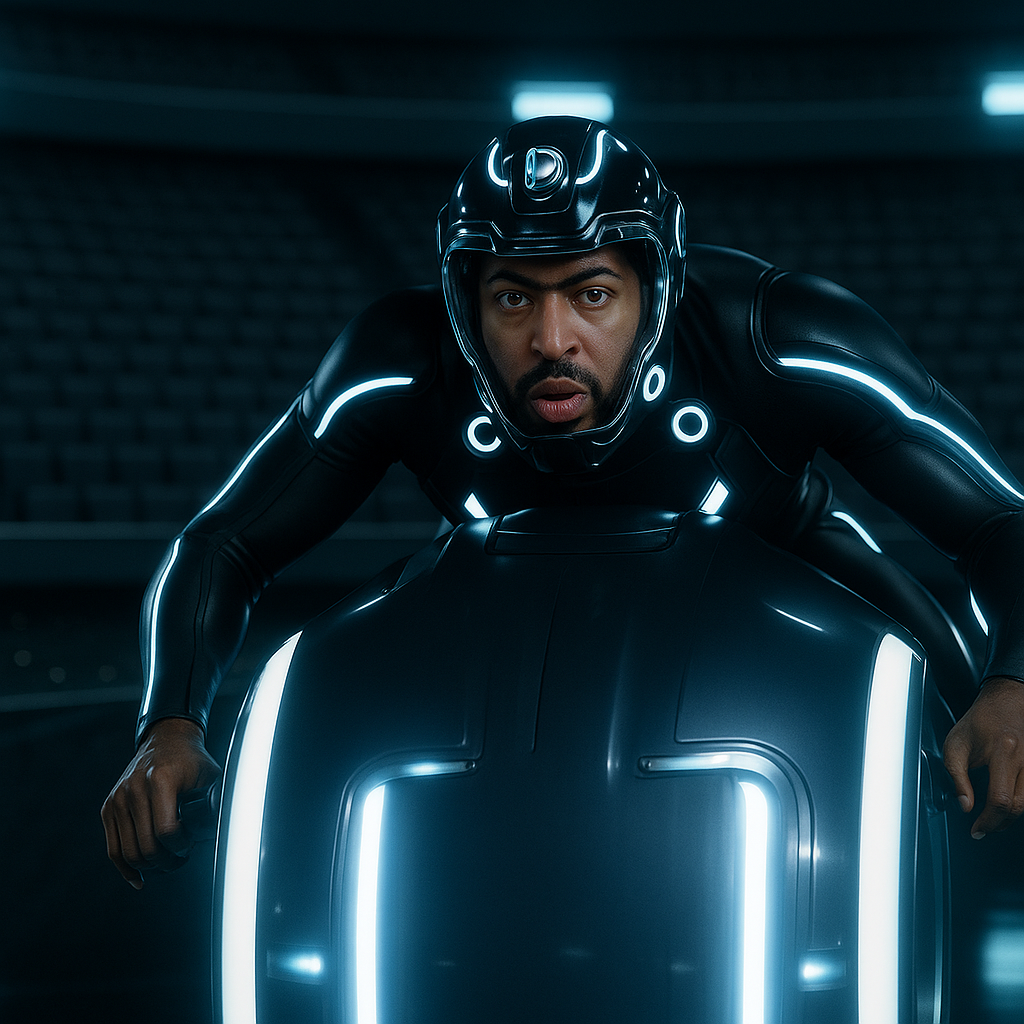
Doesn’t matter how epic the contest is if nobody cares to watch.
To prevent Kevin Flynn from interfering, the MCP restricts all users with Group 7 access, leaving dozens of ENCOM employees frozen at their desks, unable to do their jobs. In Tron, this is the moment where the mask slips. The problem isn’t power. The problem is purpose. The MCP forgot who it was built to serve.
Fans are the end users of NBA teams.
They invest time, money, emotion, and identity with no leverage beyond loyalty. They buy tickets before the wins arrive. They wear the jerseys during the losses. And when they speak up, they’re not asking for perfection. They’re asking to be heard. So when fans revolt, it’s rarely because the team is losing. It’s because the team has stopped listening.
We’ve seen this play out over and over.
In Phoenix, fans didn’t turn on Robert Sarver because of one bad season — they turned because ownership treated embarrassment like a business model.
In New York, fans don’t boo the team because of a Tuesday night loss. They revolted when the franchise stopped listening to its own identity, most visibly during the Isaiah Thomas era, when years of tone-deaf leadership eroded trust in the brand itself. The noise only quieted once the team began operating sanely again.
And in Dallas, the revolt is happening right now.
Nico Harrison was fired this year not simply because of results, but because decision-making had become isolated and opaque. When he traded Luka Dončić to the Lakers, Mark Cuban — the figure most fans still associated with continuity and institutional memory — didn’t even get a phone call. That wasn’t just a controversial move. It was a signal that the organization had stopped treating its own stakeholders as part of the conversation.
It doesn’t matter how epic the lightcycle battle is. If the stands are empty, who cares?
3. Adapt or Die
“They’ll train you for the games, but… well, I hope you make it okay.”
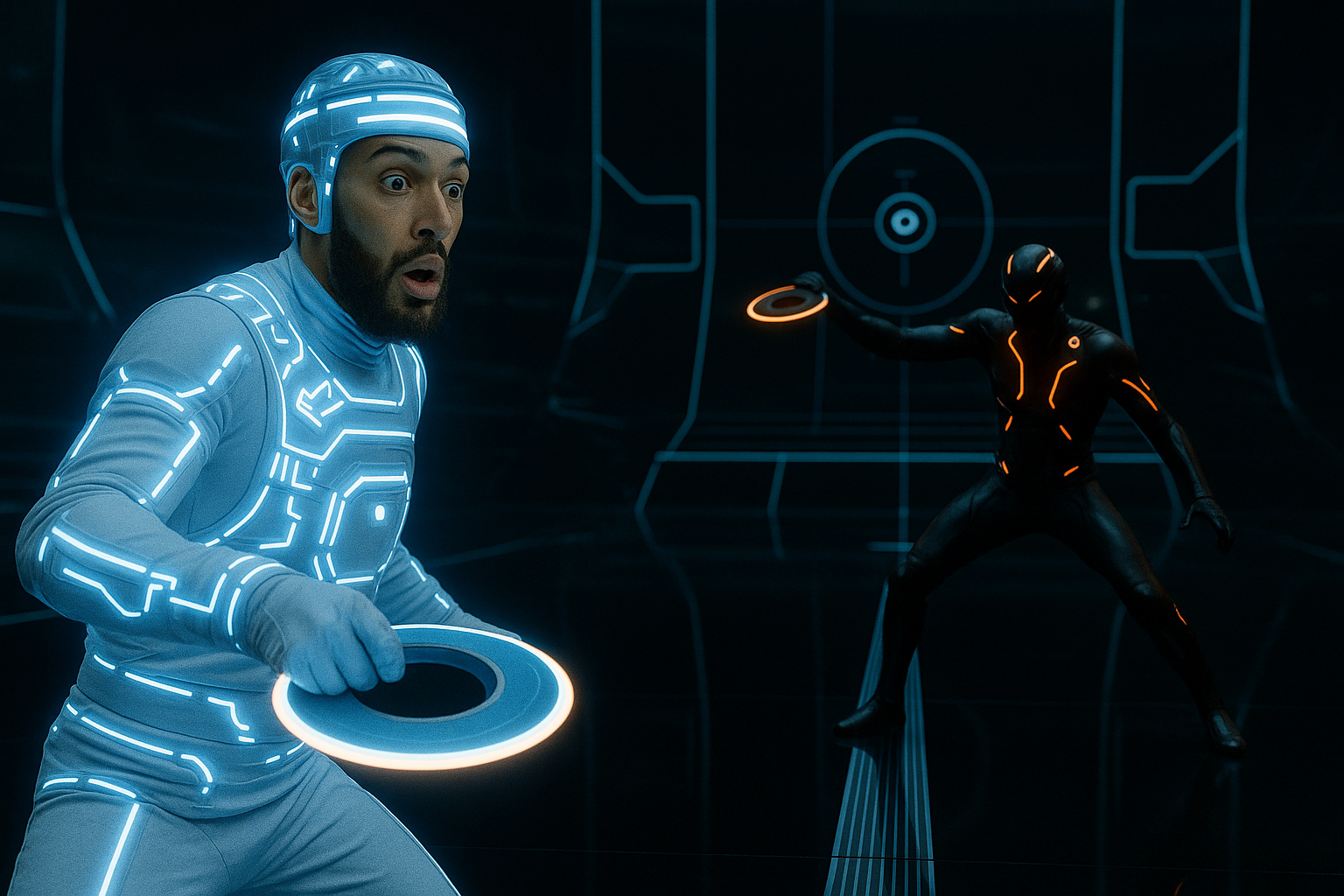
In Tron, this is the quiet warning. No villain speech. No prophecy. Just an acknowledgment that the system is changing, and whatever prepared you for yesterday may not prepare you for what comes next.
Basketball works the same way.
Every era has its assumptions — about where shots should come from, how offense should flow, what positions are supposed to do. And every era eventually breaks those assumptions. Teams that survive aren’t the toughest or the most tradition-bound. They’re the ones that recognize the shift early and adapt.
We’ve watched this play out repeatedly over the last decade. The league moved toward spacing, shooting, and decision-making speed. Organizations that adapted — Golden State rethinking shot selection, Miami redefining roles, Denver building an offense around a center who passes like a guard — didn’t just keep up. They redefined peak basketball.
Others didn’t.
They trained hard for a version of basketball that no longer existed. Bigs without spacing. Offenses that stalled in the midrange. Defensive schemes built for players the league had already moved past. The result wasn’t just losing — it was irrelevance.
Adaptation doesn’t mean abandoning identity. It means refining how you implement your principles. San Antonio didn’t stop being San Antonio when it let the ball fly around the perimeter.
A Games warrior still training on 1982’s jai alai Breakout and flat, two-dimensional lightcycle battles would get annihilated the moment he stepped into Legacy’s gravity-flipping disc fights and fully three-dimensional arenas.
The games always change. And the system doesn’t care if you’re ready.
4. In the Pursuit of Perfection, Understand Imperfection
“The thing about perfection is that it’s unknowable. It’s impossible… but it’s also right in front of us all the time.”
What Does Tron Have to Say About Love and Romance?
Nothing. Which is impressive, considering the trilogy tried three separate times to compute an answer.
Tron keeps returning to the same unsolved problem: what does it mean for metaphors to fall in love? And every time, the system throws an error.
Romance in Tron never develops, never complicates, never resolves. You can almost still hear the crumpled up pages where the writing team tried to make it work before tapping out.
But, in Tron’s Director’s Cut, we learn that there was a deleted scene where two programs, Iori and Tron, hook up. The lights dim. A Barry White MIDI plays. Software becomes hardware. Bits are bumped.
Sex for programs. In a kids movie.
Once you know that scene exists, you can’t unknow it. Because if those programs are getting busy, now I have follow-up questions. What other programs are hooking up on my computer? Who’s getting action? Who’s been alone since Windows 95?
More importantly — why did anyone think this was a good idea?
In Tron, Flynn realizes too late that he programmed CLU to pursue the wrong goal; to design the perfect system. That imperfection was something to erase.
Basketball punishes that mindset immediately. Every player has edges and limits. Systems that pretend otherwise become brittle, fragile. They ask players to do the thing they’re worst at in the name of consistency, favoring structure while setting someone up to fail.
Good teams adjust their system to fit the roster, bending the scheme to highlight strengths and hide flaws. They accept that the shortest path to “perfect” runs straight through the messy middle.
The best systems hold two ideas at once:
philosophical conviction — this is who we are
practical flexibility — this is how we survive reality
Stephen Curry was never a lockdown defender. So, Steve Kerr built a Warriors defense that anticipated how opponents would attack him. When teams tried to hunt Curry in pick-and-rolls — dragging him into switches against LeBron or Harden — Golden State simply pre-switched. Before the screen was even set, Curry would exchange assignments with Draymond Green or Andrew Wiggins. The offense would spend ten seconds forcing a matchup that never arrived, only to end up attacking the very defender they were trying to avoid.
Minnesota does the same thing with Rudy Gobert, just on the other end of the floor. Gobert doesn’t stretch the floor or create off the dribble, so the Timberwolves don’t ask him to. They use vertical spacing instead of horizontal spacing. Gobert lives near the rim, pulling defenders with him. His lob threat keeps help defenders glued to the paint, where he can set screens, clean the glass and rim-run off the pick and roll. He generates offense without pretending to be an offensive hub.
5. Transcendance Means Leaving Behind The Known
“There’s something at work inside my soul I do not understand. I came here to find something. Something important.”
A Completely Serious Tier List of Which Programs Are Getting the Most Action
S-Tier (Absolutely Thriving, Red Flags Everywhere)
Adobe Photoshop – Talented, expensive, emotionally unavailable, somehow involved in everything. You know better. You do it anyway.
Fruity Loops – Lives at 3am, smells like energy drinks, creates bangers, never texts back. Immense pull.
A-Tier (Consensual, Healthy, Surprisingly Fun)
Spotify – Knows your moods better than you do. Always down. No judgment.
Chrome (with 47 tabs open) – Messy polycule energy, but somehow everyone’s on board.
B-Tier (Fine, Functional, Goes Home Early)
Microsoft Word – Dependable, respectful, not exciting but shows up when it matters.
C-Tier (Dry Spell, But It’s Temporary)
Excel – Frustratingly believes everything is a date, except when you’ve actually scheduled one. Freak in very specific circumstances.
D-Tier (Actively Not Helping Themselves)
Drivers Folder – Absolutely an incel. Furious that no one appreciates “how important it is.” Thinks it’s entitled to attention. Writes manifestos.
System32 – Deeply repressed; once attempted vulnerability before blue-screening his therapist.
F-Tier (Should Not Be Perceived)
Antivirus Software – Cockblocks constantly, no vibes, zero trust. Messages you at 3am just to remind you that he exists.
Printer Drivers – Never lets go of things, lies, disappears, puts toner on your credit card without asking.
The most difficult moment in any system isn’t collapse. It’s when the system no longer has anything left to teach you.
Ares doesn’t leave the Grid because it’s failing him. Inside it, he’s dominant — the most advanced program ever created. The system works perfectly for him. That’s precisely the problem. No friction, no opportunity to learn from failure.
So he leaves, to live as a fish out of water in the real world. To discover what he doesn’t yet understand.
That’s what transcendence actually looks like.
In basketball, this is rare — and often misunderstood. We’re conditioned to believe players leave only when situations break down. That they run from their problems instead of facing them. But the most interesting exits happen when things are still working.
LeBron leaving Cleveland for Los Angeles wasn’t about unfinished business. He had already won. He had already proven everything there was to prove. The system still functioned. It just wasn’t asking new questions anymore. LA wasn’t safer. It was harder — culturally, structurally, historically. He chose growth over comfort.
Michael Jordan’s baseball detour is an even stranger example — and that’s why it matters. It didn’t work. He wasn’t particularly good at it. But it revealed something essential: Jordan wasn’t chasing dominance, or trying to maximize a paycheck. He was chasing challenge, understanding the limits of his abilities.
Jalen Brunson’s leap in New York is another version of the same choice. In Dallas, he was excellent, efficient, and capped. The system worked for him — but it didn’t need him to define it. Luka already did that. Brunson could have stayed comfortable as a secondary engine, maximized efficiency, collected his numbers. Instead, he stepped into an environment that demanded something harder: leadership. In New York, Brunson didn’t just score more. He organized the offense, set the emotional tone, absorbed pressure, and became the thing the system revolved around. That leap wasn’t about usage. It was about responsibility. He didn’t leave because Dallas failed him. He left because there was more inside him than the system was asking for.
Transcendence isn’t about winning elsewhere. It’s about refusing to calcify.
Systems exist to develop people, to amplify them. When they stop doing that — when they become comfortable, flattering, predictable — staying isn’t loyalty. It’s stagnation.
6. Boundaries Must Be Tested
“This is it. Come on. Gold-3 to Gold-2 and 1. I’m getting out of here right now — and you guys are invited.”
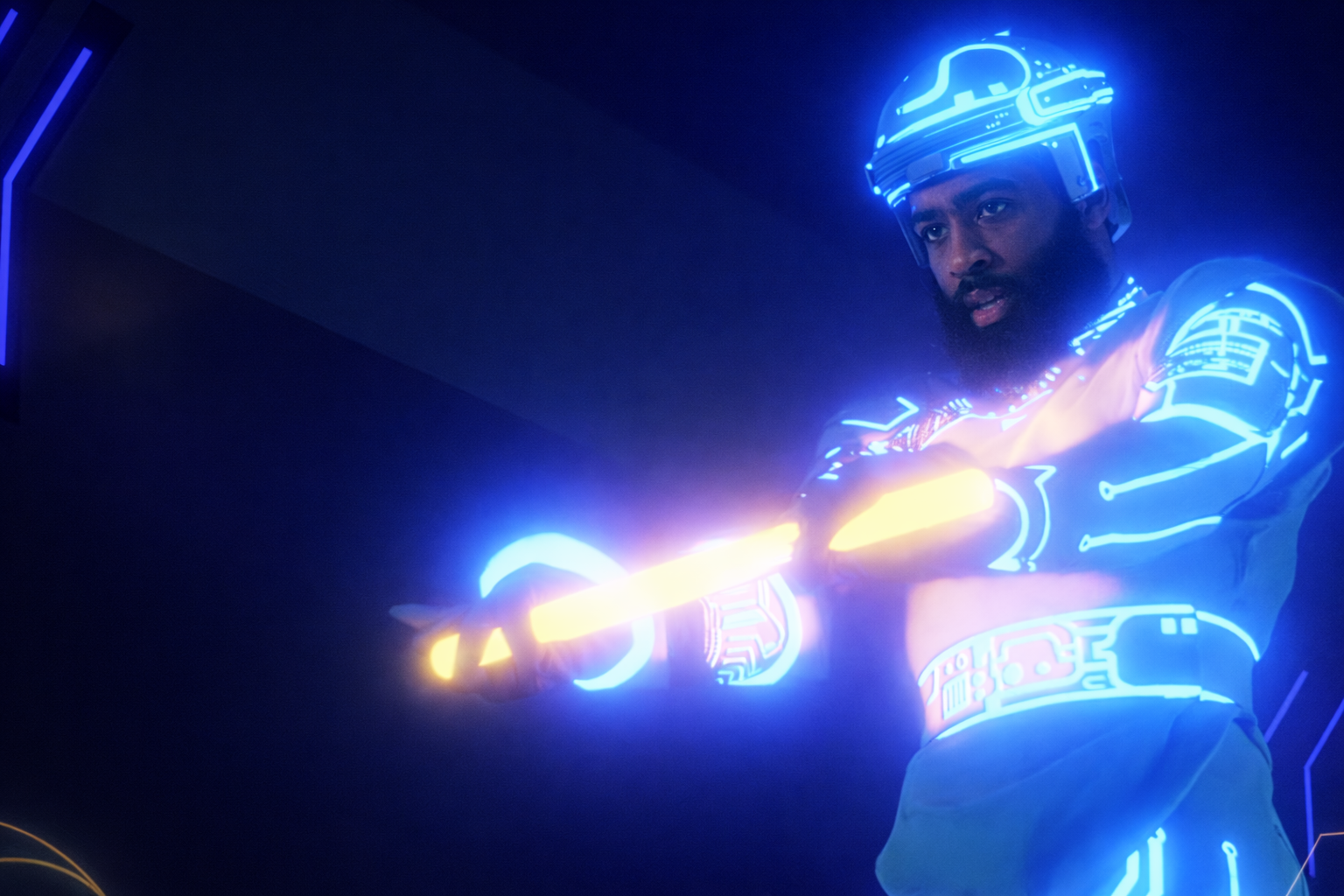
Every system advertises rules. Very few reveal their true limits willingly.
In Tron, no one escapes the lightcycle arena by mastering the game as it’s presented. Flynn doesn’t win by driving faster or cutting tighter lines. He wins by discovering that the wall itself is negotiable — that the real boundary isn’t the track, but the assumption that the track can’t be broken.
Basketball works the same way.
Teams don’t learn who they are by memorizing principles. They learn under pressure, when something bends. Playoff basketball is where this becomes unavoidable, because every action is scouted, every tendency hunted, every assumption tested. What survives that environment isn’t theory — it’s truth.
The smartest players understand this intuitively. They don’t just follow the rules. They constantly probe them — not only to find where the boundary is, but to find where it is today.
James Harden didn’t accidentally revolutionize footwork. He learned exactly where the gather ends and the dribble begins — how far he could carry the ball without triggering a travel. And he learned that those lines shift. What’s whistled in November isn’t always whistled in May. Early fouls and turnovers weren’t failures; they were data points, mapping how a particular game, crew, or moment was being called.
Draymond Green operates the same way on defense. He tests how physical help can be before it draws a whistle. Dillon Brooks does too — sometimes overshooting, sometimes recalibrating — but always collecting information. A foul isn’t just a penalty; it’s feedback about where the line currently sits.
That’s the difference between rule-breaking and rule-testing. One ignores the system. The other listens to it.
Boundaries aren’t fixed objects. They’re living conditions, shaped by context, enforcement, and pressure. The players who shape the game aren’t the ones who accept limits at face value — they’re the ones willing to discover which ones are real, and when they move.
7. Yes or No Beats Maybe
“Positive and negative, huh? You’re a Bit.”
“Yes.”
“Another mouth to feed.”
“Yes. Yes. Yes.”

“Pretty good driving, huh?” “No.”
When the clock is ticking, complexity is the enemy.
In Tron, the Bit is ridiculous — a sentient yes-or-no coin floating around offering binary advice. It’s comic relief. It’s also quietly one of the most honest ideas in the trilogy. When everything is moving too fast to think, clarity matters more than sophistication.
Basketball at the highest level works the same way.
Great offenses don’t ask players to solve equations in real time. They reduce decisions to simple reads: shoot or swing, drive or kick, switch or stay. Motion offense isn’t about chaos — it’s about stripping choices down until hesitation disappears.
Gregg Popovich built an empire on this idea. His best Spurs teams didn’t overwhelm defenders with options; they overwhelmed them with decisiveness. The read was immediate. The pass was automatic. By the time the defense processed what happened, the ball was already gone.
The Warriors took it further. Their offense looks complex on the whiteboard, but on the floor it’s brutally simple: react instantly to advantage. Steph relocates. Draymond reads the help. Klay shoots without dipping the ball. No second-guessing. No dead air. The system works because players aren’t asked to decide what to do — they’re asked to recognize when to do it.
Nikola Jokić may be the purest example. His genius isn’t just vision; it’s decision speed. Catch → scan → yes or no. If the help steps, pass. If it doesn’t, score. There’s no deliberation, no pose, no rehearsal. The tree is shallow by design — and devastating because of it.
Paralysis by complexity is real. The more options you present under pressure, the slower everyone becomes. Defenses feast on hesitation. Shot clocks don’t forgive uncertainty.
The Bit gets it. Positive or negative. Go or don’t. When the moment demands action, maybe is the only wrong answer.
8. You Can’t Buy Coherence
“Last year, we launched Encom OS 12. This year, we’re launching Encom OS 12.1. It’s got a new logo. And we’re charging twice as much for it. Now, what’s the difference between Encom’s version and the one I put on the web for free? The version I put on the web actually works.”

Too small.
Tron: Ares didn’t fail because it lacked talent. It failed because it didn’t know what it was.
Instead of starting with a clear idea — a story, a tone, a reason to exist — Disney tried to reverse-engineer coherence out of star power. Cast Jared Leto. Hire Trent Reznor. Reboot continuity to bring in new fans. Add retro fan service for the die hards. Our market data says it worked for the Avengers movies.
It bombed to the tune of a $132B loss.
Basketball fans have seen this movie before.
The Nets tried to shortcut structure with Durant, Harden, and Kyrie. The Suns tried it by adding Durant and Beal to Booker. The Lakers have tried it more than once. Big names, massive payrolls, instant credibility — and yet, when the games slowed down, nothing held. Roles blurred. Possessions stalled. Every problem was solved the same way: give the star the ball and hope.
Hope isn’t a system.
Talent can raise a ceiling, but it can’t build a foundation. Without clarity — about identity, hierarchy, and purpose — star power just makes the cracks louder.
The best organizations do the opposite. They decide who they are first. They build something coherent, something sturdy. Then they add stars who make that structure sing.
You can’t buy your way out of a bad blueprint.
And no amount of neon fixes a script that doesn’t know what it wants to say.
TRON, 1982 - 2025 — May It De-Rez In Peace
At some point, if you’re paying attention, you realize this was never really about basketball either. Basketball is just a clean place to see these patterns play out — the feedback is immediate, the pressure is public, and the consequences don’t lie. Systems that work reveal themselves quickly. Systems that don’t expose people just as fast.
But the same rules apply everywhere else. In work. In marriage. In parenting. In friendships. In any place where people are trying to build something together without a manual.
You learn that not everyone is meant to play the same role, and that pretending otherwise helps no one. That leadership isn’t about credentials or volume, but about taking responsibility for direction when the moment calls for it. That organizations — families included — don’t exist to serve themselves. They exist to serve the people inside them, and they decay the second they forget that.
You learn that the world changes faster than your assumptions do. That clinging to systems because they once worked is just another way of refusing to adapt. That perfection isn’t found by erasing flaws, but by designing around them honestly.
You learn that growth sometimes means leaving a place that still works, because it no longer challenges you. That choosing discomfort over familiarity is often the price of becoming someone new.
You learn that boundaries move. That mistakes aren’t failures, but information. That under pressure, clarity beats cleverness — yes or no almost always wins over maybe.
And eventually, if you’re unlucky enough to have power or success, you learn that none of it can save you from a bad foundation. That throwing resources at confusion only makes the confusion more expensive. Coherence can’t be purchased. It has to be decided.
That’s the quiet trick Tron pulled off.
It wrapped all of this in neon and spectacle, then slipped in a very old idea: systems are only as good as the people they’re built to serve — and people are more than the roles they’re assigned.
So yes. Tron is dead.
But it really did have something to say, while it was still glowing.
End of line.

Todd / 120 Proof Ball
If you liked this piece, you’re part of the problem.
