
The Trial of the Sacred Foam
The Absurdity of the Criminalization of Mascot Violence
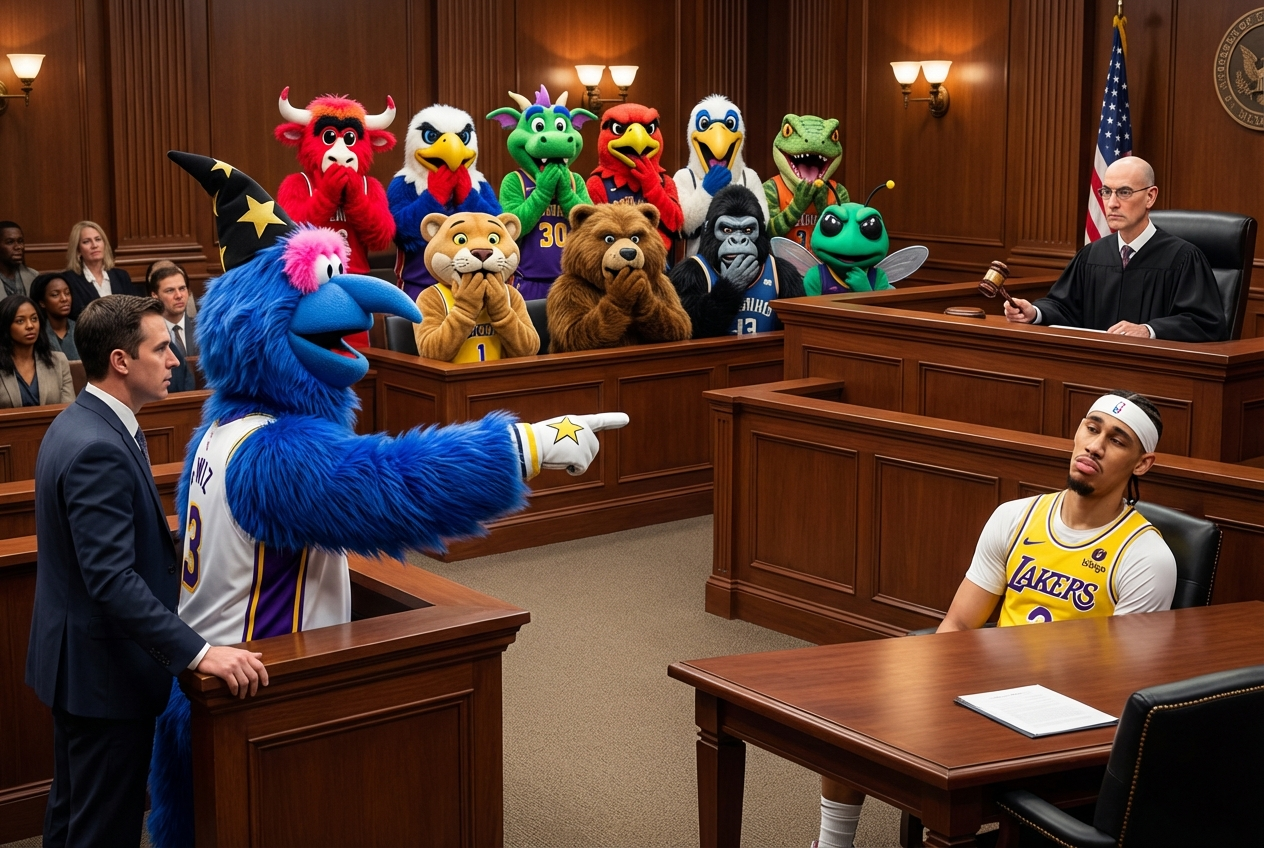
I was halfway through a completely reasonable afternoon—coffee consumed, blood pressure stable, faith in the social contract hanging on by a thread — when I learned that Jaxson Hayes had been suspended one game for bumping a mascot.
A mascot.
Not a ref. Not a fan. Not even a bench player pretending to stretch while secretly hating everyone. A seven-foot-tall corporate hallucination made of foam, felt, unresolved childhood trauma, and whatever unholy curse binds a human soul to wear a 40-pound animal head indoors under television lights.
And for this… we suspend a man.
Now look. I understand the facts as they’ve been presented. A cheerleader ended up with a broken bone. Words like injury, reckless, and liability were thrown around. Words that immediately suck the oxygen out of what should have been a moment of slapstick nonsense.
But before the compliance department starts drafting a thesis, let’s remember something: Mascot mayhem is as old as sports itself.
The Mascot Is Not a Person
This is where we’ve lost the plot as a society. A mascot is not a civilian. A mascot is not an employee in the traditional sense. A mascot is not protected by the same unspoken Geneva Convention that governs normal human interaction.
A mascot is an idea. A mascot is provocation given form. A mascot exists for three reasons and three reasons only: To distract, to mock, to test the limits of how much nonsense the human spirit can endure before lashing out.
You don’t bump a mascot. You answer it.
The Phillie Phanatic learned this when Tommy Lasorda once chased him around like a man in a live-action cartoon. History did not gasp. History adjusted its glasses and said, “Well. That escalated appropriately.”
Mascot Chaos Is Cultural Literacy
Take Berni the Bear of Bayern Munich. Berni does not exist to sit quietly and clap politely. Berni looms. Berni gestures. Berni celebrates goals directly into the existential space of the opposing bench. Occasionally, a player will lightly sweep Berni’s legs in what can only be described as a theatrical tap, the kind that would send Bugs Bunny spinning in place before popping back up unharmed.
And what happens?
The crowd laughs, the match continues, and Berni stands up, wipes off the invisible cartoon dust, and resumes being The Bear.
Because when you put on the suit, you enter the realm of slapstick physics. You are padded. You are insured. You are spiritually aware that someone may bonk you with an imaginary rubber mallet.
This is not malice. This is ritualized nonsense.
Even the Europeans understand this.
The Slippery Slope of Foam Accountability
If this stands, where does it end?
Technical fouls for eyebrow raises at mascots?
Mandatory whimsy seminars because you didn’t applaud the gorilla’s interpretive dance?
A congressional inquiry into why a bobcat startled a power forward?
Are we really prepared to treat mascots like porcelain teacups instead of the chaos gremlins they were designed to be? Because once we do that, we might as well ban rally towels, kiss cams and whatever interdimensional being the Clippers unveil each season
The Sentence
If punishment must exist, let it be dignified and absurd.
Instead of suspension:
Jaxson Hayes must apologize to the concept of whimsy.
He must sit next to the mascot for one full quarter, in costume, no eye contact allowed.
The mascot gets one ceremonial foam shove in return — the kind that produces a cartoon “boing” sound in your head.
Balance restored. Universe aligned. We move on. Because if we start protecting mascots from the very chaos they manufacture, we are no longer a serious sporting society. We are a bubble-wrapped one.
Bonus: Top Three Mascots Who Most Deserve a Bonk
There are many mascots in professional sports. Some are charming. Some are delightfully unhinged. Some appear to have escaped from a children’s birthday party and never found their way home.
After extensive television-based research and approximately $27 worth of questionable life choices, I present the rankings.
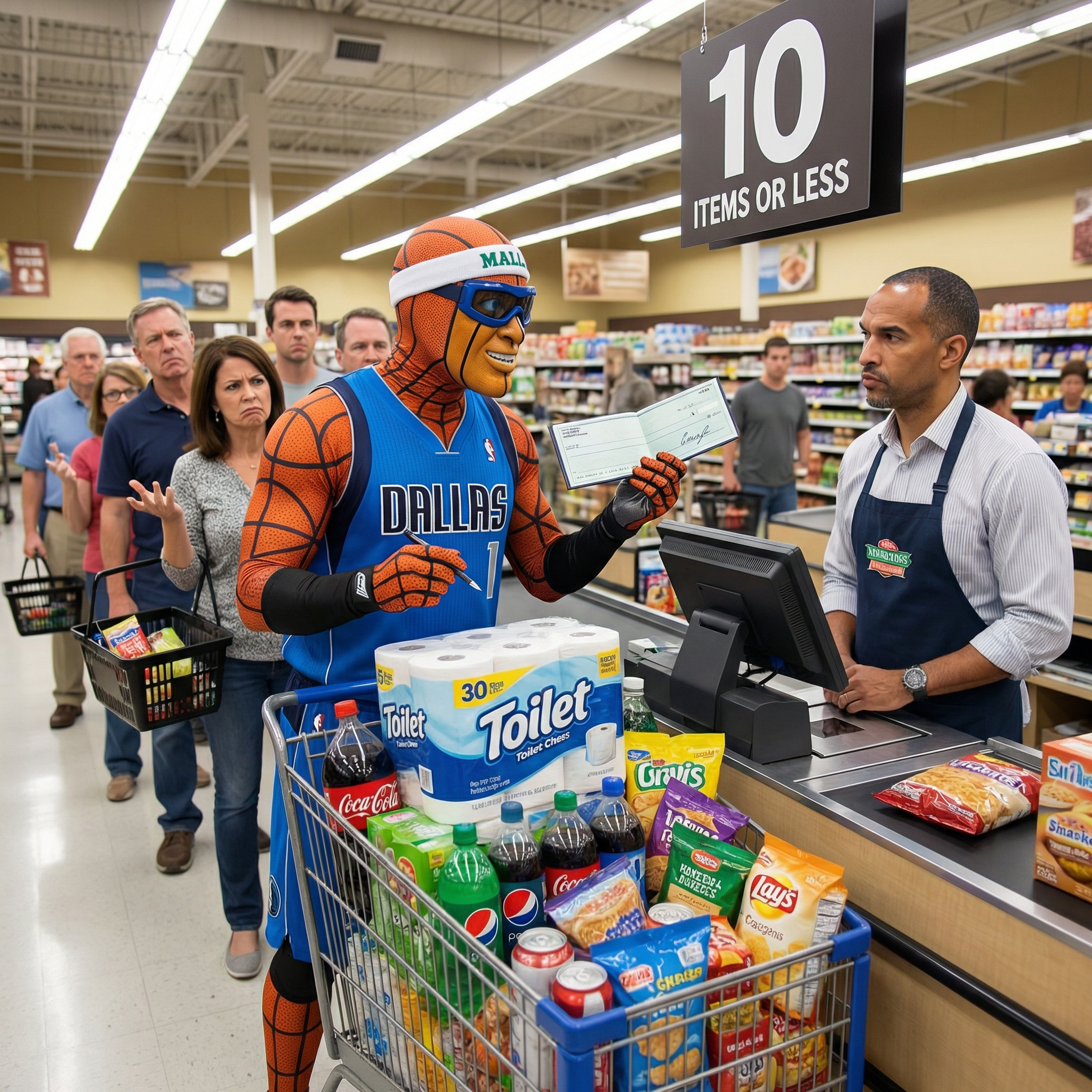
#3: Mavs Man
Mavs Man looks like he lost a bet with a Spirit Halloween manager and decided to commit to the bit.
Even at rest, he radiates the energy of someone about to explain cryptocurrency to you.
This version earns a light foam mallet tap. Educational. Corrective. Accompanied by a squeaky sound effect.
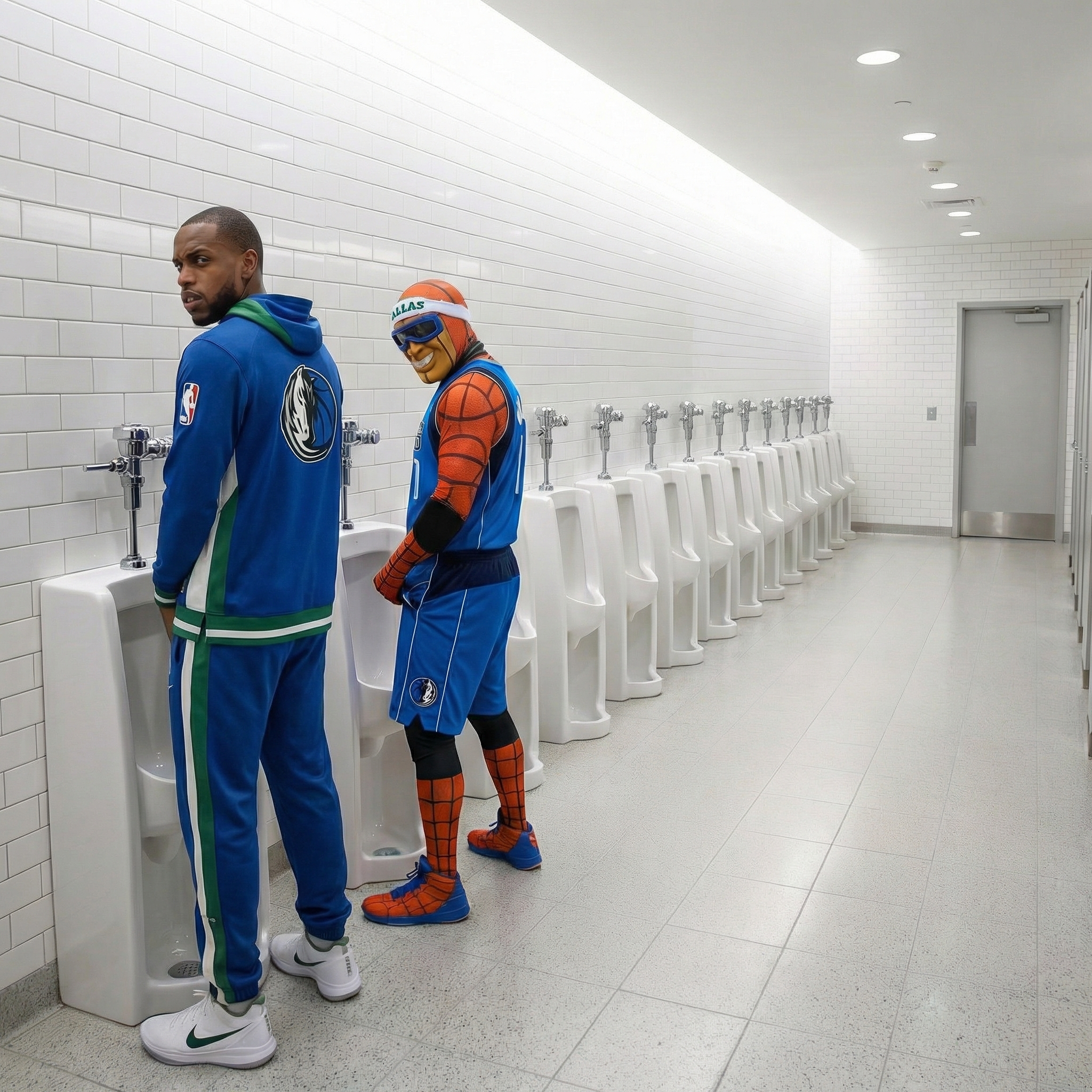
#2: Mavs Man
Once he starts moving, it’s chaos.
The jogging. The half-dancing. The inexplicable shadowboxing during free throws.
This is mascot interference of the highest order.
He’s not entertaining the crowd; he’s auditioning to be the main character in a sport that already has Cooper Flagg.
He’s the kind of guy who isn’t done moving until he takes the urinal right next to you, despite eighteen other more humane options being perfectly viable.
This version earns a firmer bonk , the kind that makes cartoon birds briefly circle his oversized head before disappearing.
Followed by a timeout and a juice box.
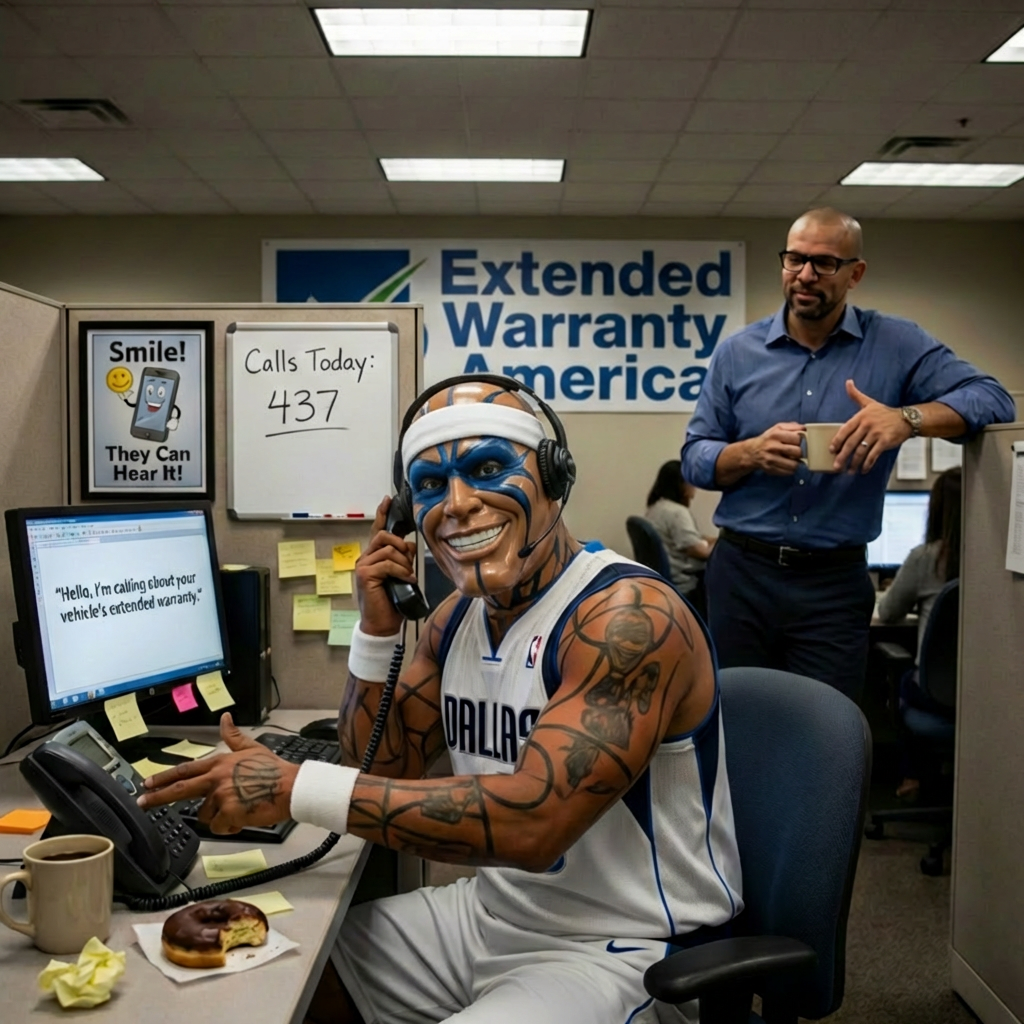
#1: Mavs Man
When he locks eyes with the broadcast camera and begins flexing, nodding, and demanding validation, he becomes a masterclass in theatrical overstimulation like he’s about to ask you about your car’s extended warranty.
This is not fandom. This is performance art powered by unchecked confidence and jorts.
This version earns the ceremonial oversized inflatable hammer — the kind that folds in half on impact and makes a sad bicycle horn noise.
To be clear: this is not advocacy. This is aesthetic evaluation.
Mascots exist in the liminal space between hype, chaos, and inflatable nonsense. If they are going to hover behind players and wave foam paws like caffeinated woodland spirits, they must accept the ancient law of sports:
Thou shalt be teased. Thou shalt be bonked. Thou shalt not wear jorts without commentary.
Now if you’ll excuse me, I need to ice my shoulder from the last time a giant bird attempted an aggressively enthusiastic high-five.
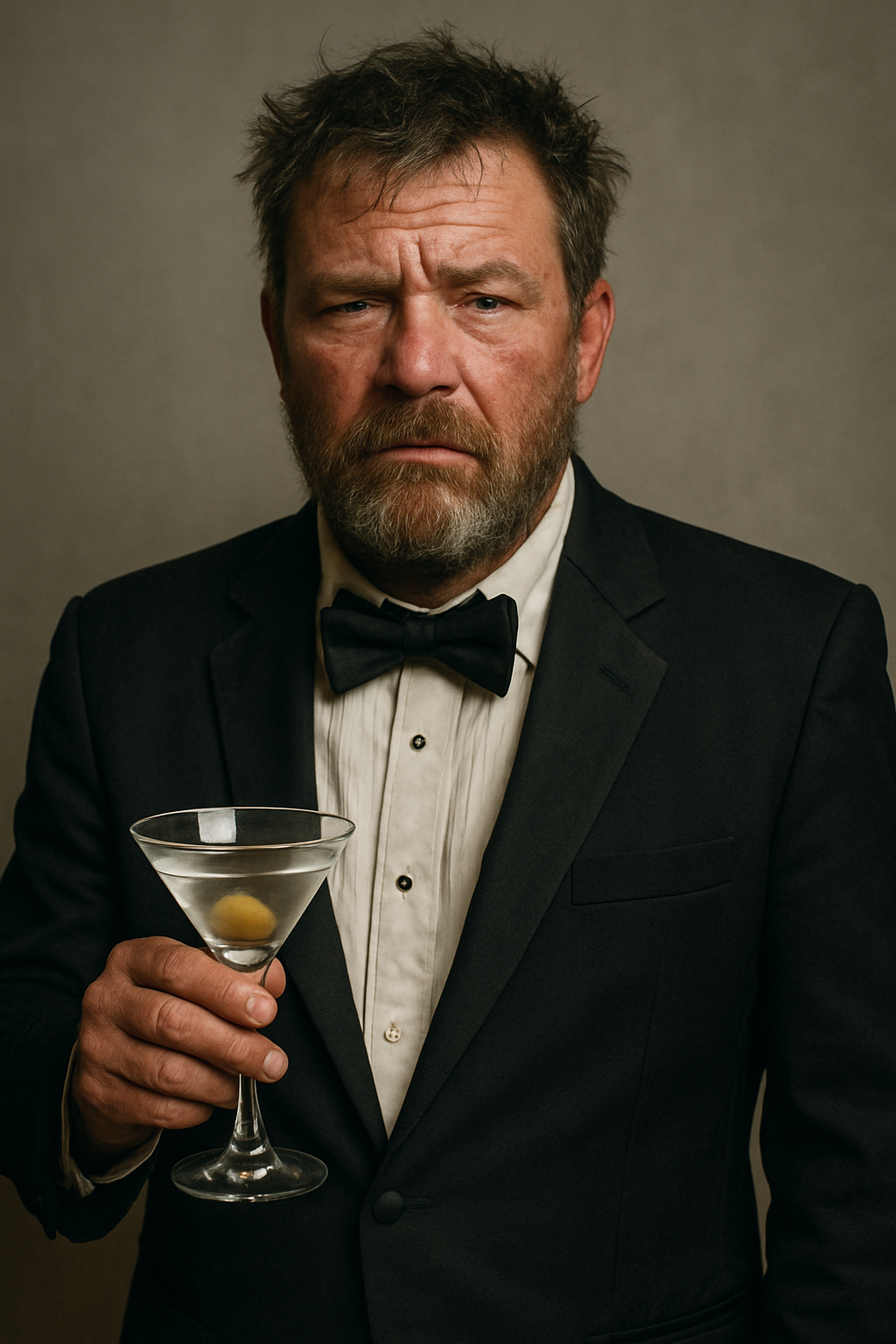
Torsten / 120 Proof Ball
Proof that the internet was a mistake.
YOU’VE READ THE TRIAL,
NOW JOIN THE JURY.
This is what we do at 120 Proof Ball: put sports’ weirdest sacred cows on the stand and cross-examine them until the truth staggers out.
Mascots, floppers, cursed jerseys, fan delusions — if it lives in the arena and makes you insane, it’s getting a hearing.
