
Little Flop of Horrors
Part I of Fixing Soccer, A Three Step Guide to Fixing The World's Most Beautiful Game
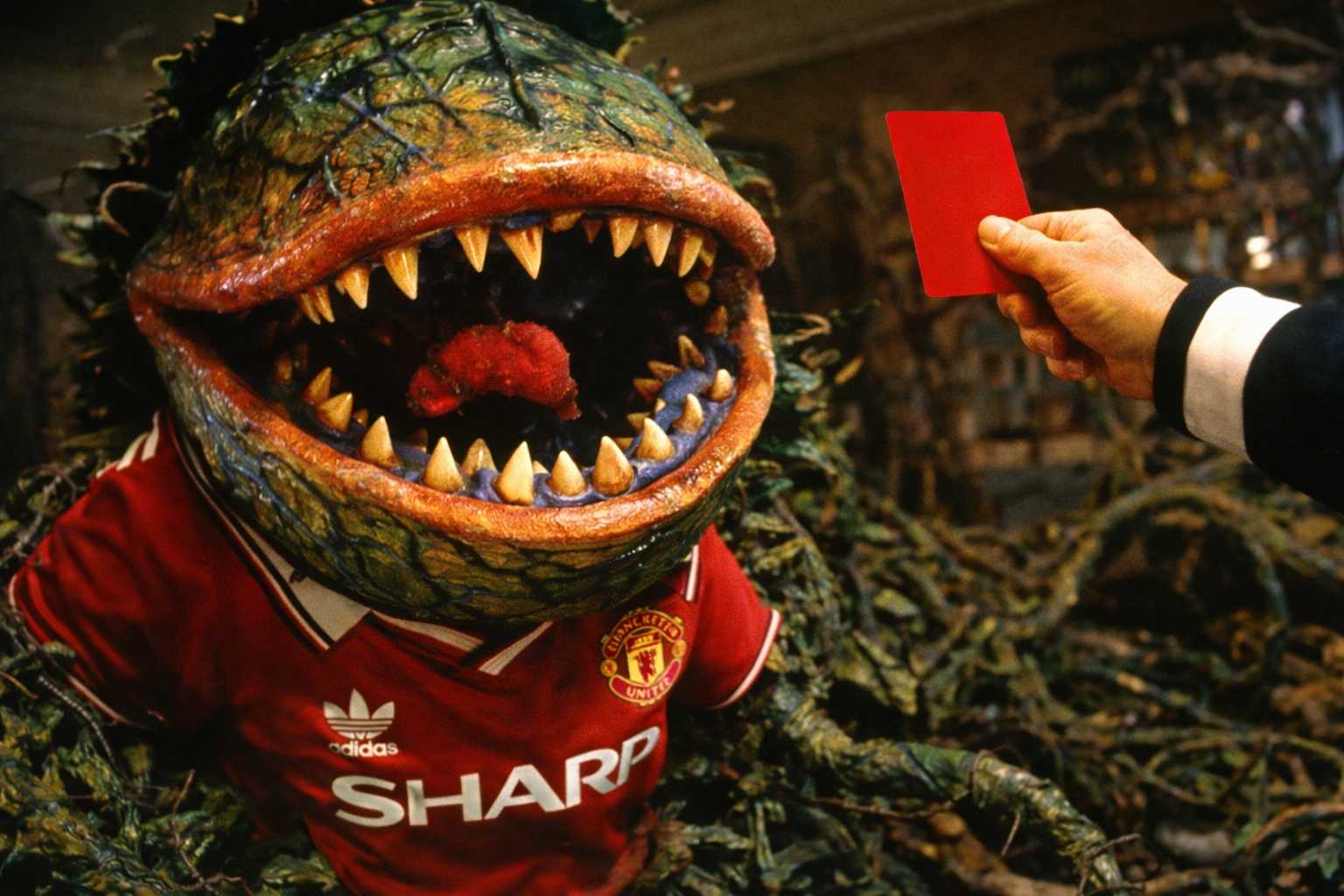
Finally an Audrey that can win an Oscar.
You will never convince me otherwise.
There is no game on earth as majestic, as tribal, as myth-making as soccer. It is the only sport where entire governments shut down, where cities breathe in rhythm with 90 minutes of grass and leather, where a single goal can spark joy riots or national mourning. It is religion without the tax exemption.
Never mind that in the United States it still finishes a distant fifth in popularity. That’s a cocktail of cultural stubbornness, intellectual laziness, and an attention span trained by RedZone dopamine loops. But here’s the thing: tens of millions of Americans love this sport anyway. And in 2026, when the World Cup hits our shores — alongside our northern and southern accomplices, Canada and Mexico — this country is going to lose its collective mind.
Every match will sell out. Sports bars will look like storm shelters before a hurricane. The arrest rate for “public intoxication while screaming at a television” will spike like Bitcoin in 2021. It’s going to feel like March Madness in Las Vegas if everyone replaced caffeine with mushrooms and replaced beer with absinthe.
And the U.S. might even be good. Not win-it-all good, but legitimately dangerous. Key players in form. Talent peaking at the right time. Weston McKennie finally being the beautiful synthesis of fit, motivated, and trusted at one of the world’s biggest clubs.
And then what?
Let’s say we make a quarterfinal. Maybe even a semifinal if the draw breaks kindly and the soccer gods are hungover. The country flirts with the sport. Ratings pop. Jersey sales spike. A few suburban dads start correcting the bartender: “It’s a pitch, actually.”
Then the tournament ends. And the interest fades. Again.
People say it’s inevitable. They call it the Plight of Sisyphus — push the boulder every four years only to watch it roll back down the cultural hill. I disagree. The problem isn’t inevitability. The problem is structural rot. Fix a few foundational cracks. Kick a few flies out of the ointment. Repair the parts that actively repel new fans.
So let’s start with the most obvious one.
The Problem: Flop, Drop and Roll
Nothing — and I mean nothing — enrages the testosterone-marinated, Miller High Life-soaked American sports fan like diving.
A world-class, hyper-trained, Olympic-caliber athlete theatrically collapsing because someone’s elbow brushed his aura. It looks ridiculous. It feels dishonest. It undermines the violence, beauty, and grit that make the sport compelling.
It is, in the bluntest possible terms, beta behavior. It’s telling the world you’re in an open marriage but only your wife gets to take advantage of that freedom because you’re satisfied with just her, and you’re completely comfortable with her getting her needs met elsewhere.
And here’s the kicker: the women’s game largely avoids this nonsense. Not perfectly, but noticeably less. Which means this isn’t human nature. It’s cultural permission. The reality of this isn’t limited to soccer. Women in general are simply tougher in athletic competition - or at a minimum, less willing to compromise themselves. You see it in baseball too. Just take the following two verbatim quotes I just completely made up, from play by play announcers who don’t actually exist.
”Ragans is now up to 67 pitches through five innings and coming up on his third time through the order, so Quataro will have his bullpen ready. He’s pitching on seven days rest so fatigue might be a factor.”
”You have to wonder if fatigue might be setting in for Brittany. She’s pitched in every game this college softball world series, including 317 pitches in a 24 inning complete game yesterday, and is already up to 266 pitches today. Plus her dog died yesterday so you can’t really tell if she’s sweating or sobbing.”
It’s embarrassing. For years, FIFA and domestic leagues have tried to combat simulation with yellow cards. The theory? Humiliation plus caution equals deterrence.
Reality? It hasn’t worked. Because the math still favors deception.
The Proof That the Pudding Is Poisoned
This weekend’s Serie A match between Inter Milan and Juventus handed us Exhibit A. Juventus’ Pierre Kalulu was sent off after receiving a second yellow for allegedly fouling Inter’s Alessandro Bastoni to halt a promising attack. By the book, if the foul happened, it’s a yellow.
Only it didn’t.
If there was contact at all, it was the kind of touch you’d use to check whether a cake is done baking. Bastoni flung himself to the ground like he’d been struck by divine smite. And when the referee bought it? He celebrated like he’d scored.
A man was ejected. A marquee matchup was altered. The integrity of competition was compromised.
Vitriol poured onto referee Federico La Penna. And yes, the mistake was catastrophic. Yes, referees are not really people — much like mascots, and deserve most of the verbal battering they get… as long as it stays only verbal.
But here’s the uncomfortable truth: refereeing soccer is already borderline impossible. Full speed. Limited angles. An absolutely massive playing surface that they are responsible for covering nearly every inch of. Human reaction time. Now add a system that actively rewards deception.
You want perfection from officials while simultaneously refusing to change a system that incentivizes players to perform dishonestly. It’s absurd.
And what’s the deterrent? A yellow card. Which accumulates slowly enough to make the gamble worth it. If you can trade a low-probability caution for a high-impact red card on your opponent? That’s net expected value, plain and simple. Tell you what, if I learned that most major teams paid stat nerds six figures to crunch stats on optimal pitch locations to fake an injury, my level of surprise would be negative eleventy billion.
And so players keep diving. Because the system says it’s not only smart, but there’s almost no downside.
The Change We Need (Don’t Hold Your Breath)
In a perfect world? If a player pretends to be struck in the face and his opponent is unjustly sent off, that player should then be forced to receive the hit he simulated.
Broken orbital? Them’s the breaks. You fake the pain, you earn the pain. Rolling around on the grass like you’ve just been struck by lightning? Guess what, now you can spend the entirety of the next rainstorm performing your best Ben Franklin impression.
Barbaric? Maybe. But what are we if not cavemen with more advanced exfoliation techniques than our ancient ancestors?
So how inappropriate is it really to mete out severe corporal punishment for the offense of pretending someone assaulted you to win a free kick. Besides, Nathaniel Hawthorne would have suggested a permanent forehead tattoo and I’m apparently the lunatic?
But fine. Civilization insists on restraint.
The Actual Fix
Make blatant simulation punishable by a straight red card. Immediate ejection. Three-match suspension. Do not pass Go. Do not collect $200. Sit there at the end of the bench in your shame, and watch others play.
What this ostensibly does is shift the risk entirely to the player. You want to gamble on deception? Fine. But now the stakes are existential. Look at it this way. Let’s say you’re on one of those Japanese game shows where conestants’ physical ramifications for failure involve a stastical probability of brain damage greater than zero. In front of you are ten opaque cups. Under 9 of them are $100 bills. Under one of them is a firecracker primed and ready to take out your retina. You’re not doing this, right?
Now flip the odds. You have 50 cups in front of you. Under 30 of them is nothing. Nothing good. Nothing bad. Just emptiness as deep as my soul. Under 19 of them is a magic device that will transport you to wherever Sydney Sweeney currently is. And under one is a spring loaded mini catapult with poo in the payload. You’re playing that game, right? The odds of taking a turd between the eyes are far outweighed by either a neutral result or seeing awesome boobs.
Because here’s the secret: players aren’t idiots. They respond to incentives. Change the math and behavior changes overnight.
Right now: Massive potential reward. Minimal downside.
Flip it.
Better: Massive downside with minimal odds of comparable upside.
Watch the theatrics evaporate. Maybe not immediately. But quickly. It wouldn’t take much more than three or four guys getting publicly humiliated for the world to take note.
Best of all, the VAR structure to helpfully prevent referees from wrongfully yeeting someone for perceived simulation is essentially already in place. Let’s say that Neymar, already legendary for his infantile histrionics, was actually fouled and that really is a compound femur fracture poking through his shorts. Easy fix. As a straight red card offense, the VAR can summon the referee to the video monitor and have it corrected.
And While We’re Here… Fine Them Properly
A $25,000 fine to someone making $20 million a year is pocket lint. Tie fines to salary percentage.
Five percent for the first offense. Ten percent for the second. You get the picture. Here’s why we know this works. Remember that story from 30 something years ago about the lady who burned her… uh… self with McDonalds coffee and won a lawsuit for like half a billion dollars? People, a lot of them anyway, were outraged. It’s her own damn fault, they’d scream! How can you reward her like that!? Well, it’s simple. The jury did not reward her. They punished McDonalds. You see, the fast food giant had already been fined on several occasions for brewing their coffee too hot. This matters because of science, also known as the class I paid my younger Argentine brother Guillermo to attend for me in high school and not raise his hand under any circumstances.
The hotter you brew your coffee, the more actual coffee you can extract per bean. And in the fast food universe, volume is king. So as long as you’re able to sell a few hundred thousand more cups daily, who cares if you get fined $5k. You’re still making hand over fist. Who cares if you get fined $10k because you didn’t listen the first time. And if the tenth time costs you $50k, does it really matter, considering you made that up in extra coffee sales by noon? But change the math and make it a few hundred million? Suddenly it’s in the company’s self-interest to not create a massive public health hazard.
Take a look at Kylian Mbappé’s $500k weekly paycheck and tell me that a $25k fine stings. Ok, now multiply that by ten. Are we getting anywhere yet?
You want to preserve the integrity of competition? Make dishonesty financially stupid.
Why This Actually Matters
You cannot sell the world’s most beautiful game to a skeptical country and then ask them to applaud interpretive falling. It’s not the way the American sports fan’s mind works. You cannot market gladiators and then showcase drama students.
The issue isn’t scoring. It isn’t draws. It isn’t even the formerly cut and dried, now impossibly obtuse offside rule. It isn’t the lack of violence.
It’s authenticity.
Soccer at its best is territorial warfare. Tactical chess at full sprint. Ninety minutes of lungs burning and precision tackles. National pride tied like a yoyo to the deft feet of its most skillful practicioners. Soccer at its worst is forensic ankle analysis and moral philosophy conducted in 240 frames per second. A fanbase mired in terminal ennui with the knowledge that executionary superiority comes second to sleight of body when determining a match’s outcome.
If 2026 is going to convert skeptics, the product must be honest. Punish simulation harshly. Reward resilience. Make deception costly in every interpretive connotation of the word. The sport is too magnificent to let melodrama continue to define it.
We still have work to do. Here’s a sneak peek:
Part II: time-wasting and the dying swan routine in stoppage time.
Part III: VAR. Bring a helmet, as long as it doesn’t honor your deceased compatriots.
Pour another drink. Kick back. Share this with your friends as we could use the advertising revenue. We’ve got repairs to make before kickoff and there’s more to come.

Torsten / 120 Proof Ball
Proof that the internet was a mistake.
