
Tag It and Baguette🥖
The Knicks have to solve Victor Wembanyama.
The Spurs have to solve *gestures wildly at all of it*.
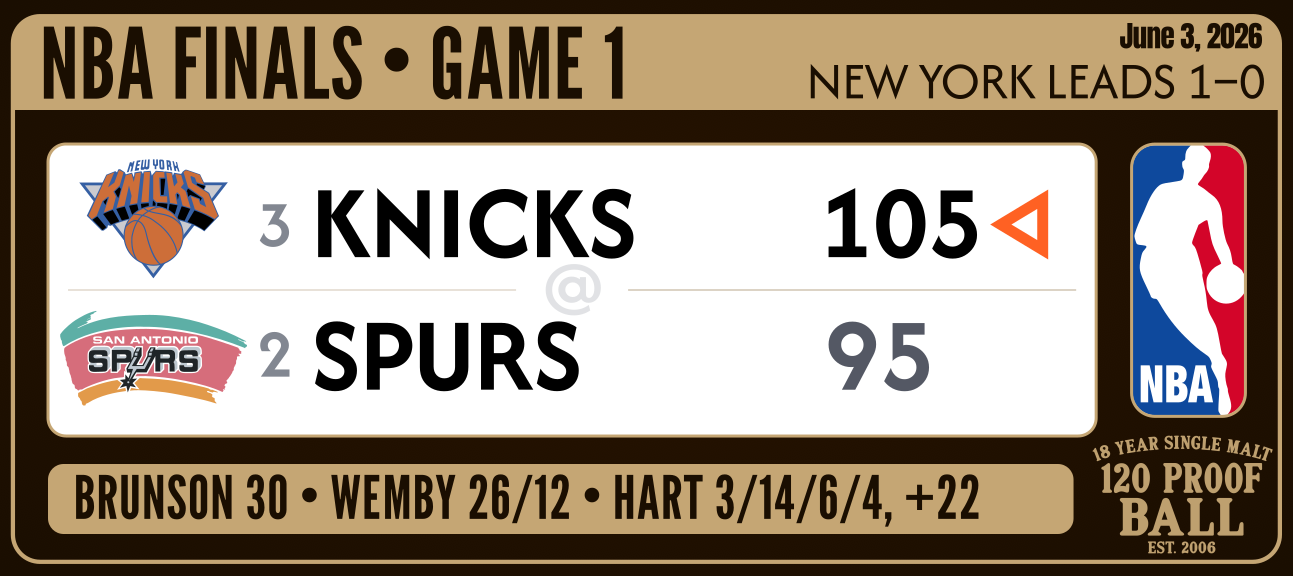
Game 1 had been billed as Jalen Brunson VS. Wemby. New York VS. The Future. This was less complicated than that.
The Knicks walked into San Antonio with a full adult basketball team. The Spurs walked in with Victor Wembanyama, a beautiful dream, and a supporting cast that, by the fourth quarter, started to look like a group project where one kid did all the work and everyone else ate crayons.
I’m not being unfair, or oversimplifying. This is The Finals.
There’s this moment that Finals rookies face at some point in every Finals. Remember the beginning of Saving Private Ryan when the Allies storm the beaches at Normandy? You know, the truly awful “war is hell” part. Time slows down, somebody cries, “They’re killing us and it’s not fair,” and half the audience makes a mental note never to enlist?
In that moment, the game of basketball is testing a roster. Which hero can rise above the moment? Who will, despite the machine gun nests, rally his troops — convince them they must get over the next wall?
In that crucible of a moment, I can promise you this: Keldon Johnson is not being played by Tom Hanks.
Look, I like Keldon. He’s a well-rounded, perfectly useful NBA player. The league is full of perfectly useful NBA players. They keep teams alive in February. They swing Wednesday night games in Charlotte. They help you get through a road trip when your star has a sore ankle and your coach is pretending not to panic.
Finals basketball is not February. Finals basketball is where perfectly useful walks in, sees the lighting, hears the music change, and realizes it has been invited to the wrong dinner party.
The Spurs are not bad. They’re early. The Finals test for that.
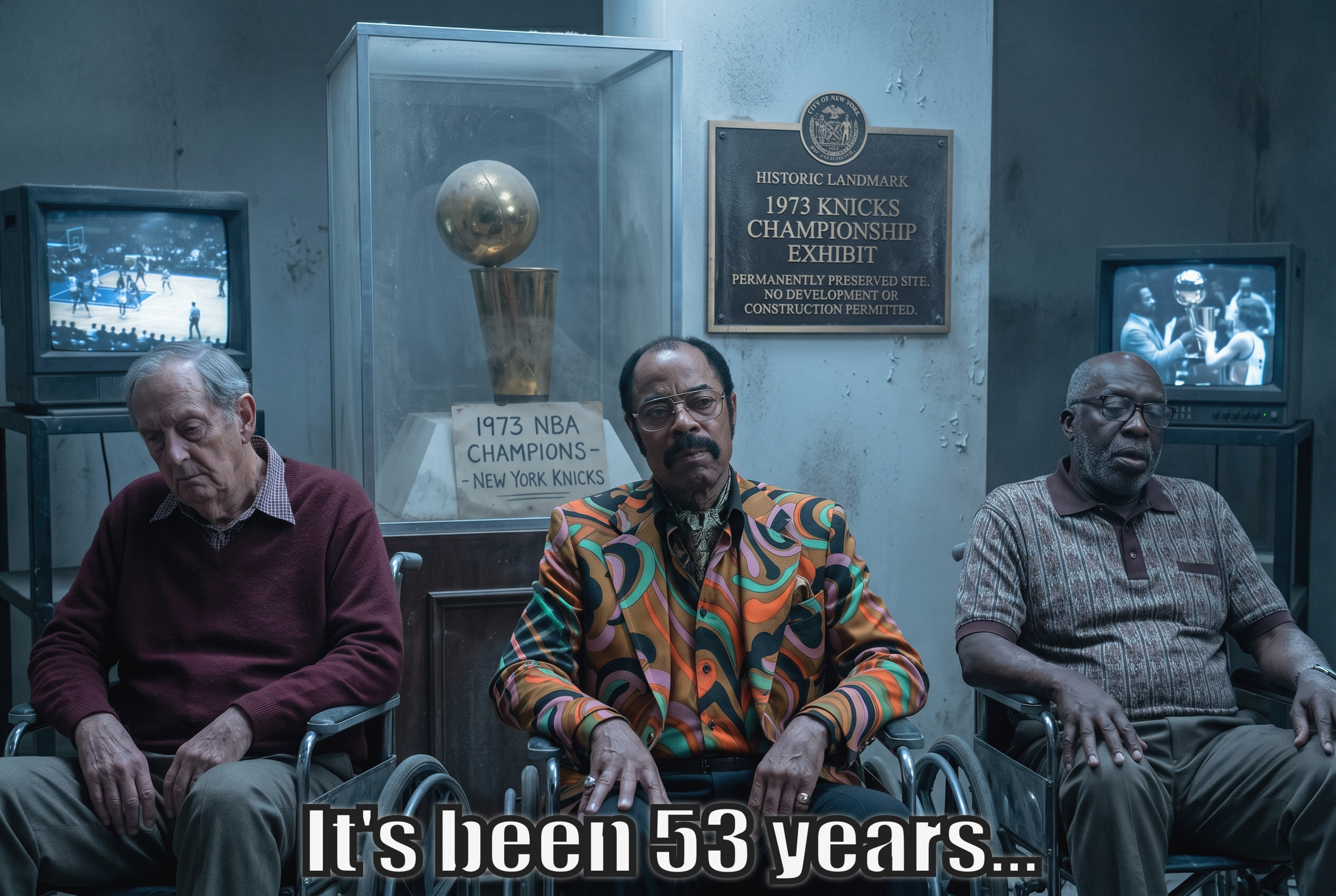
The Knicks Were Not Brunson and Friends
Brunson was huge because Brunson is huge in the exact way New York needs him to be — emotionally, structurally. He gives the Knicks their shape.
Every good team needs somebody who can walk into the fourth quarter, pick up the game like a folder, and say, “Okay, this is mine now.” But the difference between New York and San Antonio was not that Brunson was better than Wembanyama.
No, this wasn’t just a floor general, he was accompanied by his crew of battle-ready specialists.
Karl-Anthony Towns spaced the floor, rebounded, made grownup decisions, and generally spent the night looking like somebody had finally told him where the load-bearing walls were. OG Anunoby gave New York the kind of two-way utility that shows up in the possessions that decide things. Mikal Bridges existed as both a basketball player and a reminder that the Knicks have wings for days. Josh Hart turned the box score into a municipal complaint. Miles McBride gave them pressure. Mitchell Robinson gave them wrestling minutes.
New York’s problem is terrifying, but identifiable: Where is Wemby? What is he taking away? How do we make him work? When can we attack him? When can we attack the space around him? How do we survive the alien parts?
San Antonio’s problem is less elegant: Stop Brunson. Don’t overhelp on Towns. Track OG. Find Bridges. Keep Hart off the glass. Don’t let McBride pick up your guards and make the possession feel like an airport interrogation. Match New York’s physicality. Survive the fourth quarter. Answer Mike Brown. Make shots under pressure. Don’t look young. Don’t be young. Don’t let everyone notice you are young.
That asymmetry is the series.
Honestly, When Did KAT Become Infrastructure?
Karl Anthony-Towns has a reputation in the playoffs. Up until a minute ago, come May he is a seven-foot matchup problem who often becomes his own matchup problem.
You knew the talent. Everybody knew the talent. Towns could shoot, score, rebound, pass, stretch a defense, and look like the most skilled big man in the building for three possessions at a time. Then the fourth possession would show up, accompanied by at least one of KAT’s Four Horsemen of Playoff Misfortune: Foul trouble, shooting inconsistency, mental lapses on defense, or passively vanishing on offense. Before you know it, Anthony Edwards is doing the internal math of whether to clap encouragingly or just stare at the floor until the timeout ended.
This version of Towns is different enough to matter. The Knicks have not turned him into a superhero. They have turned him into a support beam. That might be the single most important change in his career. He doesn’t have to win the night by himself. He just has to space, rebound, punish the matchup, make the next read. Be large, skilled and reliable.
That sounds simple until you remember it is Karl-Anthony Towns in June. But in this Knicks structure, he makes sense. This is the Mike Brown part showing up before we even get to Mike Brown.
Veteran teams do not need every player to become the best version of himself. They need every player to become the most useful version of himself. That’s what Towns looked like for weeks now.
The rickety beam got inspected, reinforced, and now? The building is throwing a rooftop party.
Shades of Starks
Victor Wembanyama’s line (26 points, 12 rebounds, 2 assists, 1 steal, 3 blocks) matters until you realize that Josh Hart’s 3 points, 14 rebounds, 6 assists, 4 steals, and +22 plus/minus was, in practice, antimatter.
Hart’s line was so New York it gentrified the visitor’s bench at halftime. It would not be caught dead buying property in New Jersey. If you put Josh’s line into Google Translate and convert it from New Yorker into English, the output is: “Hey tourist, go f*** yourself.”
That is not a stat line. That is a guy spending three hours ruining somebody else’s evening. Hart scored three points and somehow felt like one of the most important players on the floor, which is the most Josh Hart thing imaginable and also the most New York Knick thing imaginable. New York basketball has always had a special place for players whose contributions look less like highlights and more like evidence in a civil case.
Loose balls. Deflections. Rebounds. Steals. Extra possessions. Annoyance as a public service.
Hart is the most New York Knick since John Starks. It feels like the game matters to him in the same unreasonable way it matters to the crowd. Knicks fans do not merely appreciate that. They recognize it. They can smell their own. There have been better Knicks since Starks. More talented Knicks. More important Knicks. But Hart has that thing. That grimy, stubborn, possession-by-possession refusal to be impressed by your credentials.
For most, a 3-point game is a quiet night. Josh Hart’s 3-point game was a home invasion. And that matters because it gets to the center of why New York feels so dangerous.
Wembanyama’s production was visible. You could point to it. You could understand it. Star does star things. Cameras follow. Announcers nod. Everyone updates the future-of-the-league spreadsheet.
Hart’s production was invisible until it wasn’t. Then suddenly the Spurs were down, the Knicks were in control, and his plus-minus looked like Exhibit A.
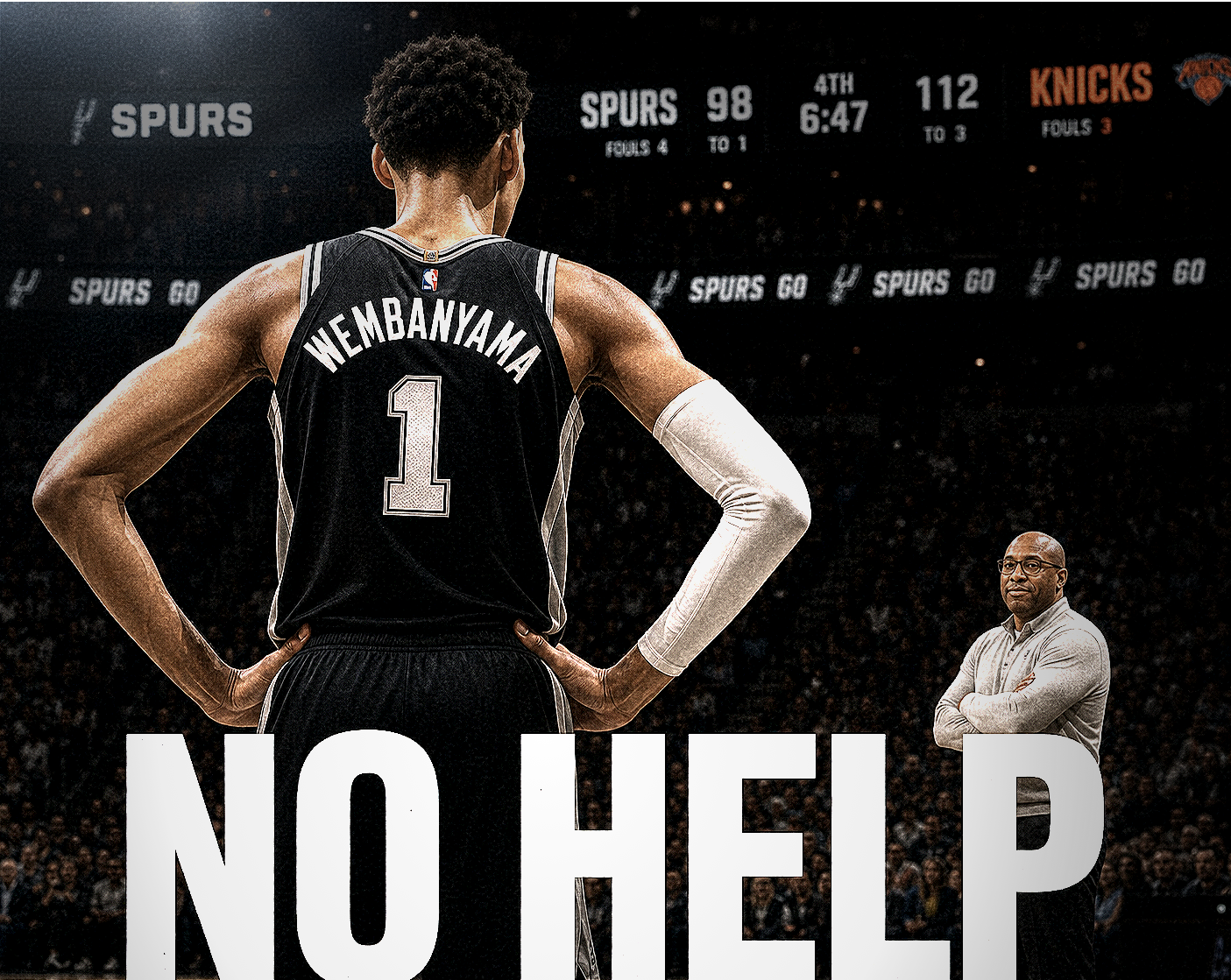
The Original No-Help Coach
Mike Brown has been here. No, like, he’s probably having distinct deja vu tonight. He has seen this exact movie from the other side of the theater.
In 2007, Brown arrived in the NBA Finals with a 22-year-old LeBron James and a Cleveland Cavaliers team that had no business being there if we are being honest in the way people only become honest after enough years have passed.
That team was tough. It defended. It competed. It earned its way there. It was also LeBron and a collection of guys who, once the Finals started, looked like they had been asked to help him move a piano up six flights of stairs. Drew Gooden, who was on that team, later more or less said the quiet part out loud: that was the least talented team LeBron ever dragged to the Finals.
There are critics. And then there is one of the dudes from the roster looking back and saying, “Yeah, we were the problem.”
That matters. Because 2007 became the prototype for the modern “LeBron has no help” conversation. The NO HELP meme arrived later. It got louder in other years. It eventually became part of the entire LeBron discourse-industrial complex, which now produces takes, countertakes, documentaries, and probably small-batch candles.
But the template was Cleveland in 2007. A young generational superstar arrives early. His team is inspired, competitive, overmatched, and not quite fully built. The opponent is older, smarter, deeper, meaner, and more structurally complete. While the young superstar is brilliant, the series is still not fair. And the team doing the teaching? The San Antonio Spurs.
Nineteen years later, Mike Brown is standing on the other side of the lesson. Frankly, this is the whole article.
Not Brunson’s 30. Not Wemby’s 26 and 12. Not even Josh Hart’s box score being stamped onto a folded slice of pizza.
Mike Brown is the bridge.
In 2007, he was the coach with the young alien superstar and not enough grownups around him. Ninetime years, he’s the savvy vet coaching the grownups.
That is brutal. That is beautiful. That is the kind of basketball symmetry that makes you wonder whether the league has a writer’s room and whether that writer’s room has been drinking.
Brown knows what an ahead-of-schedule superstar looks like because he coached one. He knows what an ahead-of-schedule roster looks like because he coached one. He knows what an ahead-of-schedule coach looks like because he was one.
Brown was not Gregg Popovich in 2007. He was still figuring out how to be Mike Brown. He was young. When he looks at this Spurs team, he is not guessing. He’s remembering — he knows the shape of it.
He knows the overreliance on the star. He knows the role players being asked to do one thing too many. He knows the possession where everyone looks at the best player and silently says, “Please.” He knows the way a first Finals can speed up a young team’s brain until a simple read becomes a pop quiz in a language they only started learning last semester.
That is why the Mike Brown angle is not a cute coaching footnote. It is the pillar, and that pillar is load-bearing. The original no-help coach may now be coaching against the first no-help Wemby Finals team. The cruel part for San Antonio? Mike may understand their problems better than they do.

The First Time Leaves a Mark
This is where we owe Victor some mercy. Because the easiest bad take after Game 1 is to turn this into a referendum on Wembanyama. Was he ready? Is he overrated? Did New York expose him? Can he be the guy?
Losing your first Finals does not mean you are not the future. It usually means you just met the present.
LeBron got swept in 2007 by the Spurs. It was an origin scar. A necessary humiliation. A reminder that being the best player in a series is not always the same thing as having the best team in a series.
Shaq got swept in his first Finals in 1995. He was already a force of nature, but Hakeem Olajuwon and the Rockets were a finished product with championship answers.
Kevin Durant got to the Finals in 2012 with Oklahoma City, scored like a monster, and lost in five because Miami had LeBron, Wade, Bosh, scars, structure, and the desperation of a team that had already been embarrassed the year before.
Hakeem reached the Finals in 1986 and ran into Larry Bird’s Celtics, which is less a basketball opponent than a final exam administered by mustaches and grudges.
The list goes on.
There are exceptions, sure. Magic Johnson broke the grading curve as a rookie. Kareem showed up with Oscar and put the league on notice. Michael Jordan won his first Finals, but only after the Pistons spent years shoving him into the bushes and telling him to come back with a better answer and more help.
Most legends do not skip the lesson. They endure it. This series can be both a Knicks statement and a Wembanyama growth chapter. Those things are not in conflict. In fact, historically, they tend to travel together.
Being ahead of schedule is a compliment until June turns it into a problem.

The Future is French
The future is enormous. The future blocks shots from angles that should require a permit. The future bends game plans, terrifies guards, and makes otherwise sane basketball people start saying things that sound like basketball heresy. The future is real, French, and can step over two rows of chairs at a time.
The Knicks are not arguing with that. They are just telling the future to take a number.
That is the part that makes New York feel so dangerous. They are not trying to win a mythology contest. They are not trying to prove Brunson is a bigger basketball idea than Wembanyama. They are not trying to out-alien the alien.
They are trying to win the series. Doing it the old fashioned way. Winning possessions. Hustle plays and rebounds. Switching at the right times. Not helping off the wrong shooter. Not panicking when Wemby transcends mere mortals for a quarter.
Brunson controlling the fourth. KAT being a support beam. It means OG and Bridges and Hart moving with a hive mind and stinging like hornets. It means Josh Hart putting up lines that are so New York, the fourth steal tried to charge you $38 for parking.
It means Mike Brown looking across the floor at a young superstar with not enough Finals-ready help, feeling sympathy, and offering zero mercy. Nineteen years ago, Brown walked into the Finals holding the hand of the future. This year, he is coaching the team that gets to tell the future to wait its turn.
That does not mean Victor Wembanyama is not coming. He is coming. Everybody knows he is coming. The Knicks just looked at Game 1 and said: Not tonight. Tag it and baguette, boys.
SPORTSWRITING WITH RECKLESS INTEGRITY

If you made it this far, you already know what we do here. We write about greatness and delusion, triumph and collapse, and the strange emotional hold sports keeps on people who should probably know better.
Drop your email and once a week we’ll serve you something from the top shelf — no cheap shots.

Todd
120 Proof Ball
If you liked this then you’re part of the problem.
