
How the Knicks Rose
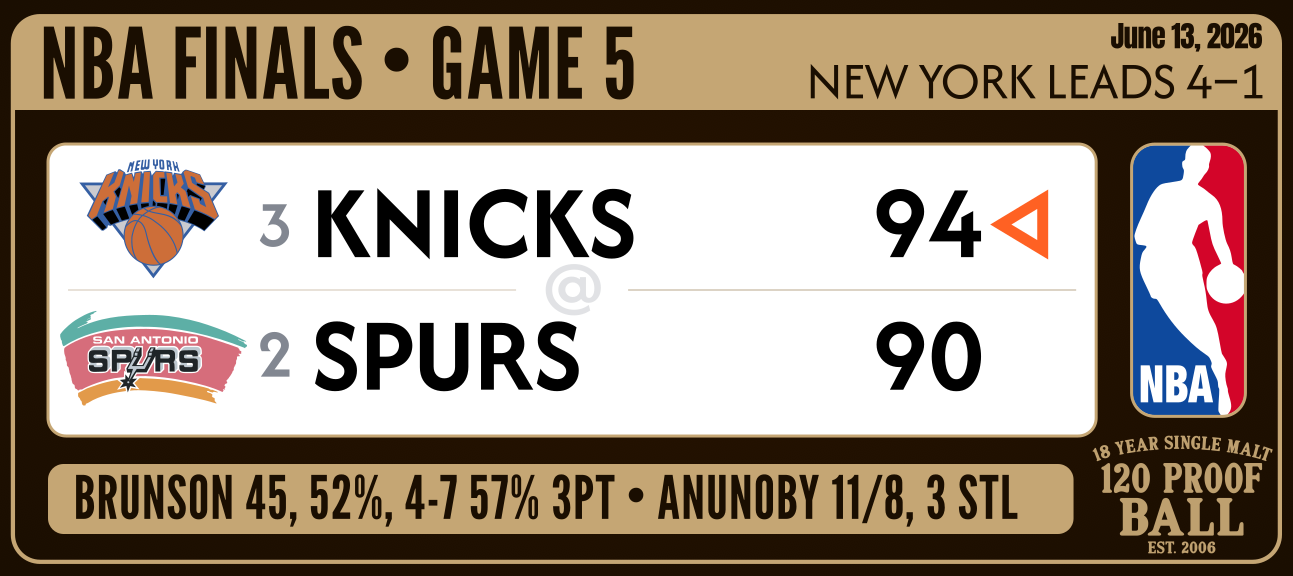
The players completed their ascent. The front office deserves flowers.
Jalen Brunson gets the parade. Obviously. He gets the Finals MVP. He gets the standing ovations. He gets his name yelled into the New York night by people who have been emotionally preparing for this since Nixon’s resignation. Jalen deserves the celebrity status, the murals, the “where were you when” treatment, and whatever municipal honor comes with dragging the Knicks across the finish line for the first time in 53 years.
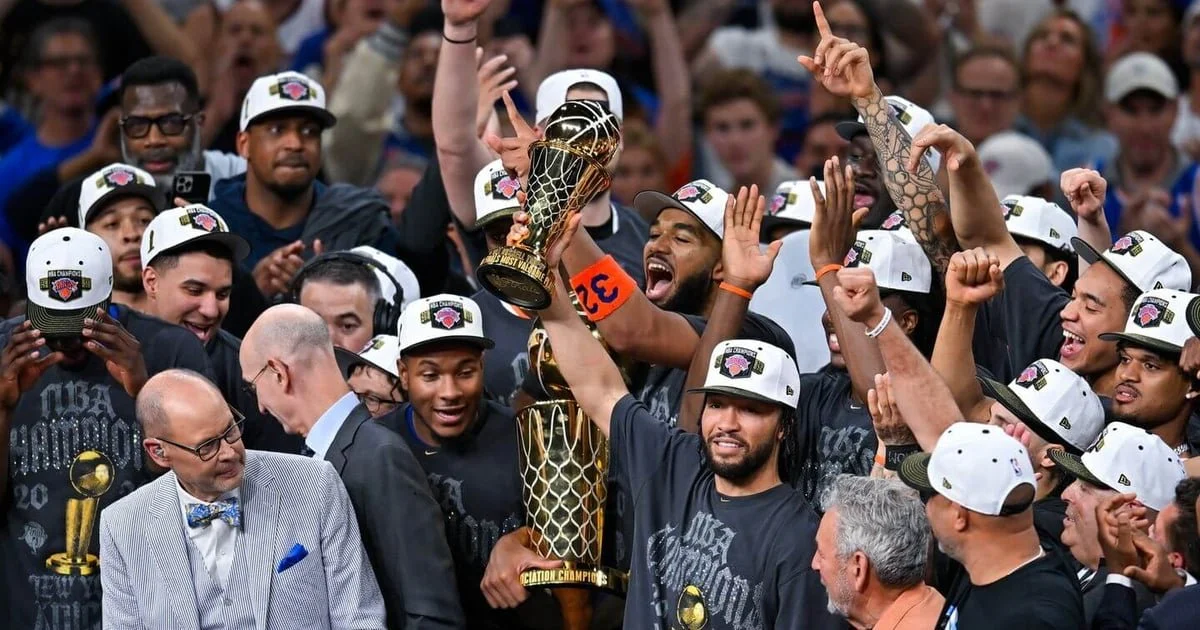
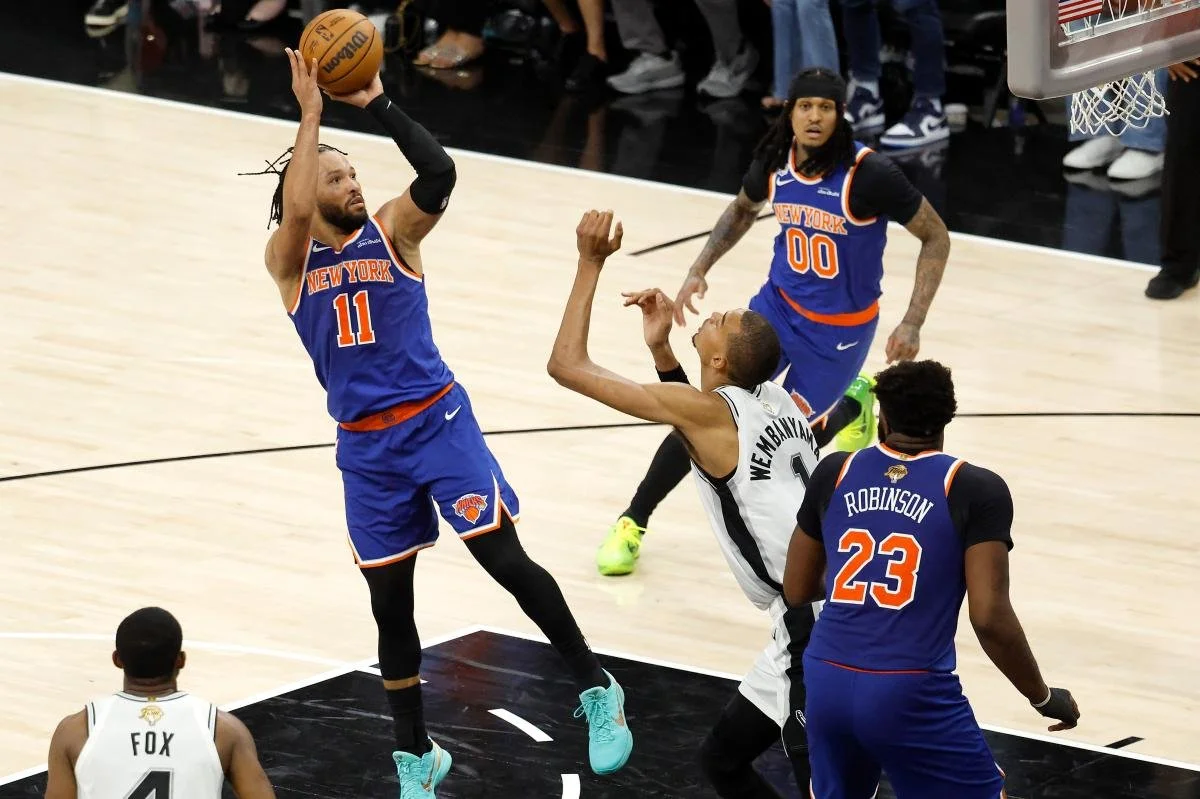
He earned all of it. Forty-five points in a closeout game will do that. He met the moment. On the road. Against Victor Wembanyama. After the Knicks had spent all night trailing — they did that New York thing where they force their fans to experience chest pain before exhilaration.
This is not a Brunson coronation column. There. Are. Many. Already. This is about the man who set the plan in motion that allowed the Garden to bloom.
The Knicks did not win because they found five guys who could all score 25. They won because Leon Rose built a roster where nobody needed to. They won because the front office finally did the thing this franchise had spent most of the century treating like advanced calculus: it picked a basketball identity, kept it pinned to the wall, and kept acquiring players who made the picture clearer.
The Knicks did not chase headline names. They collected NCAA champions, Olympians, and NBA All-Stars. That is why this team feels different — legible, even. Not just blessed by whatever god saw fit to forgive the Andrea Bargnani trade. The Knicks did something that sounds outdated these days: they rejected the notion that if you take the best player available at all times, you can fix any fit problems by simply having valuable assets to move. They acquired players on fit, optimized for compatibility with the mission.
This was not a superteam, or your fantasy basketball roster. No, this is more akin to the 2004 Pistons. We’ll come back to that.
Traditions Can Change
The modern Knicks’ roster strategy has resembled a Manhattan subway platform at rush-hour: too many bodies, no clean spacing, and everyone pretending this was normal while quietly trying to leave for their actual destination.
The old Knicks question was simple: “Can he create his own shot?”
The better question was sitting right there the whole time: “Does that shot help us?”
Not every player was bad. Not every idea was insane in isolation. The problem was the organizing principle. They paid for names before roles. They equated scorers with salvation, which is how franchises end up lighting cap space on fire for decades.
This is not just a Knicks problem. Plenty of NBA teams skip the identity step. The lazy way to talk about organizational vision is to point at the Spurs, the Heat, or the Lakers. Yes, congratulations, the culture/identity do the thing. Lovely. Very instructive. Someone alert the press.
The more useful way is to point at the teams that never seem to know what they are building. Take Chicago. The brutally honest version of the Jordan-era Bulls plan was Michael Jordan, Scottie Pippen, and enough playoff competence to make it nasty. Not complicated, but clear. Nice work if you can acquire one GOAT and convince the second fiddle to spend seven years being underpaid on an all-timer bargain contract.
Since then? The Bulls’ organizational identity meetings go something like this:
“What identity are we building towards?”
“Well, who’s gettable this summer?”
Rose’s Knicks are different. But then again, so is Leon Rose.
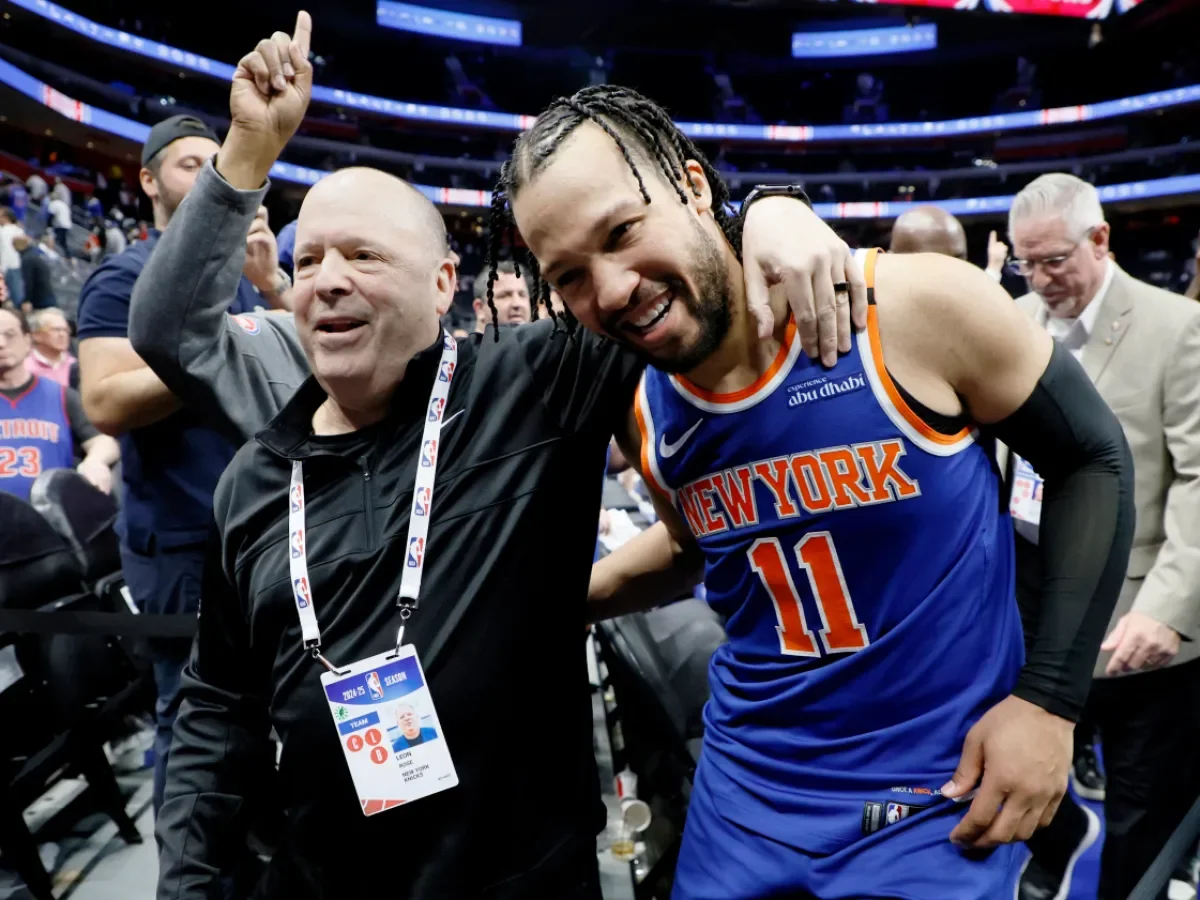
Leon Rose: Built Different
Leon Rose did not arrive in New York as a normal front-office executive. He arrived as a relationship machine with a law degree, a coaching whistle, and thirty years of networking. That matters, because the Knicks’ title was built like a relationship map that somehow became a basketball team.
Rose’s origin story is almost too neat, which is annoying because sports writing should not get handed symbolism this clean unless it has to give something back. He was a South Jersey guy. He played basketball at Dickinson. He got his law degree from Temple, worked as an assistant prosecutor, and coached high school ball and small-college ball. He was local, connected. More basketball-adjacent than basketball-powerful.
Then he became an agent. His first client was Rick Brunson. Thirty years later, Rick would be seen at game 5 of the Finals yelling at Scott Foster that Victor’s size 21 foot ending up under his son Jalen’s foot was intentional.
Leon Rose’s first client becomes the father of the franchise player. Rose becomes Knicks president. Jalen Brunson becomes the organizing principle. Rick Brunson joins the staff. The Knicks, a franchise that spent years trying to buy shortcuts, get rebuilt through one of the longest relationship loops imaginable. Sports is stupid and perfect sometimes.
Rose later became a power broker, representing or working around some of the biggest names in the sport: Allen Iverson, Carmelo Anthony, LeBron James, Dwyane Wade, Chris Bosh, Chris Paul, Karl-Anthony Towns, Devin Booker. He was part of the player empowerment machinery, and that can earn you goodwill in circles that matter.
In March of 2020, James Dolan was looking for a new GM for the Knicks. He looked at what the Golden State Warriors had done with Bob Myers, and what the Los Angeles Lakers had done with Rob Pelinka. The "super-agent turned president" model was the trendy new paradigm. James was a believer in relationships as currency, so he reached out to one of the most connected agents he knew.
Nine days after taking the role of President, the NBA shut down for five months to sort out the pandemic. Normally, a mid-season hire is a disadvantage, but this was serendipity for Leon. He studied the team, built out his staff, and overhauled the scouting department. He reached out to Tom Thibodeau, lined him up as the next Knicks head coach.
Operating with an almost ghostly silence in a city that demands constant noise, Rose turned the Knicks into a tight-lipped, corporate family business. He proved that in a modern league obsessed with transactional data, the ultimate market inefficiency was still a beautifully constructed relationship loop—one built brick by brick, phone call by phone call, all the way to a banner hanging from the ceiling of Madison Square Garden.
“[Jalen] is a competitor, a leader, and a playmaker whose drive and dedication to the game fit perfectly into the culture we are building here.” - Leon Rose
Skate to Where the Puck Will Be
Jalen Brunson — Guard, Villanova
Acquired July 12, 2022. Free agent signed to 4yr/$104M.
Brunson was the first great bet. Dallas priced him like the player he had been, letting him walk in free agency after a failure to agree on contract terms. A second round draft pick, Jalen had never been the best player on his own NBA team. Rose priced him like the player he was about to become. That’s how you change a franchise — by being right before the herd is paying attention. If everybody can see a player’s value, it’s in his price.
Brunson is an offense organizer disguised as a bucket-getter. He can start the action from the middle, either side, either elbow, either hand. He does not need the screen to be perfect because half the time he does not even use the screen the way the defense expects.
He’s basically like a superhero with the powers of footwork, leverage, hesitation, shoulder pressure, and leaving everyone on defense yelling at someone else.
If the defense plays drop, he lives in the pocket and turns the midrange into rent-controlled property. If it switches, he backs a bigger defender into a series of miserable little choices. If it sends help, he finds the release valve: cutter, roller, above-the-break shooter, corner spacing, whatever the possession is offering. If it stays home, he gets to his spot and makes the entire building hold its breath.
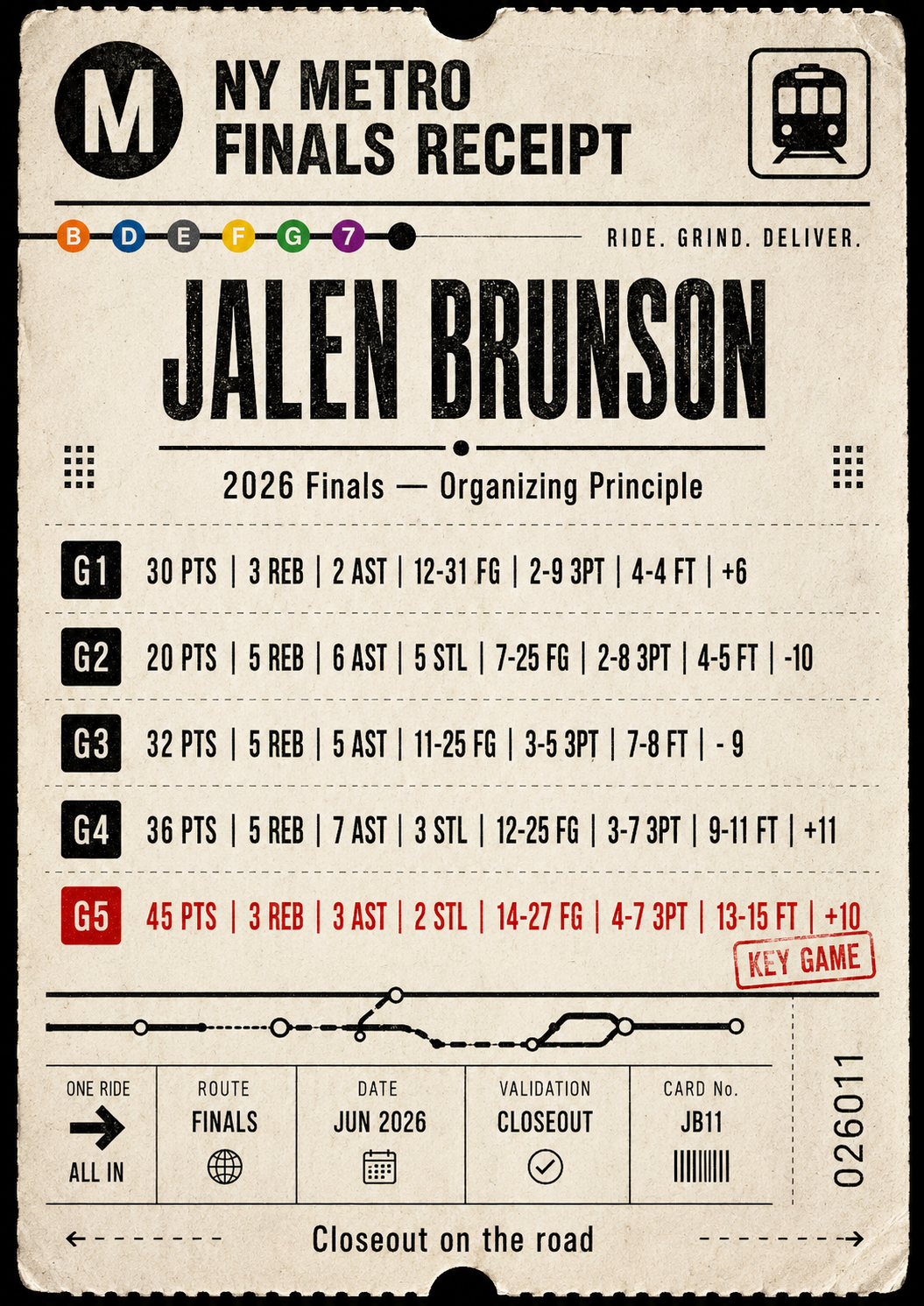
In the Finals, his scoring number was ridiculous: 32.6 points per game. That’s a higher mark than Steph Curry’s Finals MVP in 2022. The efficiency was lower: 42% from the floor, 39% from deep. This wasn’t logo-ball theater. Brunson was army-crawling through the possession mud. He absorbed the worst shots. He took the late-clock grenades.
For a moment, it looked like KAT might outshine Brunson against the Spurs; after the Knicks went 2-0 on the road, Towns had a real Finals MVP case. He gave the Spurs problems: spacing the floor, keeping the defense honest and franticly closing out. Brunson learned and adapted as he settled into the series, putting up 32 and 36 in games 3 and 4.
Halfway through Game 5, KAT fouls out and somewhere the basketball gods cracked a window and yelled, “Don’t worry, it’s still Karl.” So, Brunson steps up, pouring in 45. He led the series with 22 clutch points, the most by any player in the Finals over the last 15 years, and carried a preposterous 53.3% usage rate in clutch time. When the game stopped being a team sport and turned into five men trying to survive one possession, the Knicks knew where the ball was going, the Spurs knew where the ball was going, the ushers knew where the ball was going, and Brunson still kept getting to his spots. This was Leon’s bet: he wasn’t signing a point guard to run the offense, but one who could become the offense when the parade was on the line.
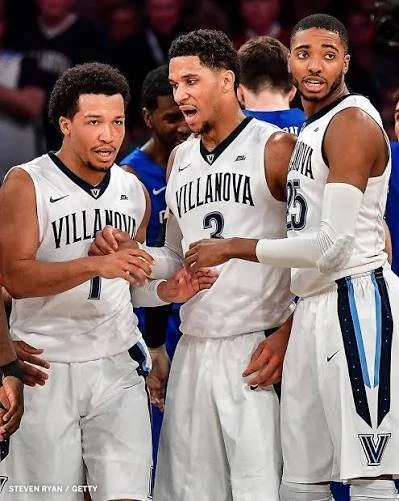
“[Josh] fits the DNA of what we want a Knick to be." - Leon Rose
The Culture, Embodied
Josh Hart — Wing, Villanova
Acquired February 9, 2023 via trade:
Knicks get: Josh Hart, Bojan Dubljević, Daniel Díez
Blazers get: Cam Reddish, Ryan Arcidiacono, Svi Mykhailiuk, a protected 2023 first-round pick, and some draft-rights adjustments.
By the 2023 trade deadline, the Brunson Knicks were no longer a science project. Brunson set the tone while Julius Randle provided the muscle. The Knicks were 30-27; in the playoff chase. They needed a winning guy who didn’t need the ball.
Hart was that guy. He rebounds like a forward, pushes the ball like a guard, and moves without the ball like he has restless leg syndrome. Leon and his team made and inquiry and got the trade done.
The trade also offered addition by subtraction. Cam Reddish saw himself as a rising star, took no-pass threes, often misunderstood the moment, and could disappear for long stretches. The tools were there, but the upside was still hypothetical.
Hart was not theoretical. He was also no stranger to Brunson, having won an NCAA championship with him at Villanova. Chemistry usually takes time. There are no easy shortcuts. Well, Leon Rose found one: the power of friendship.
Hart is low-usage value with a New York accent. He can score three points and still win his minutes by turning every loose ball into a small claims case. He is a mad alchemist who only knows how to refine hustle and disrespect into possessions.
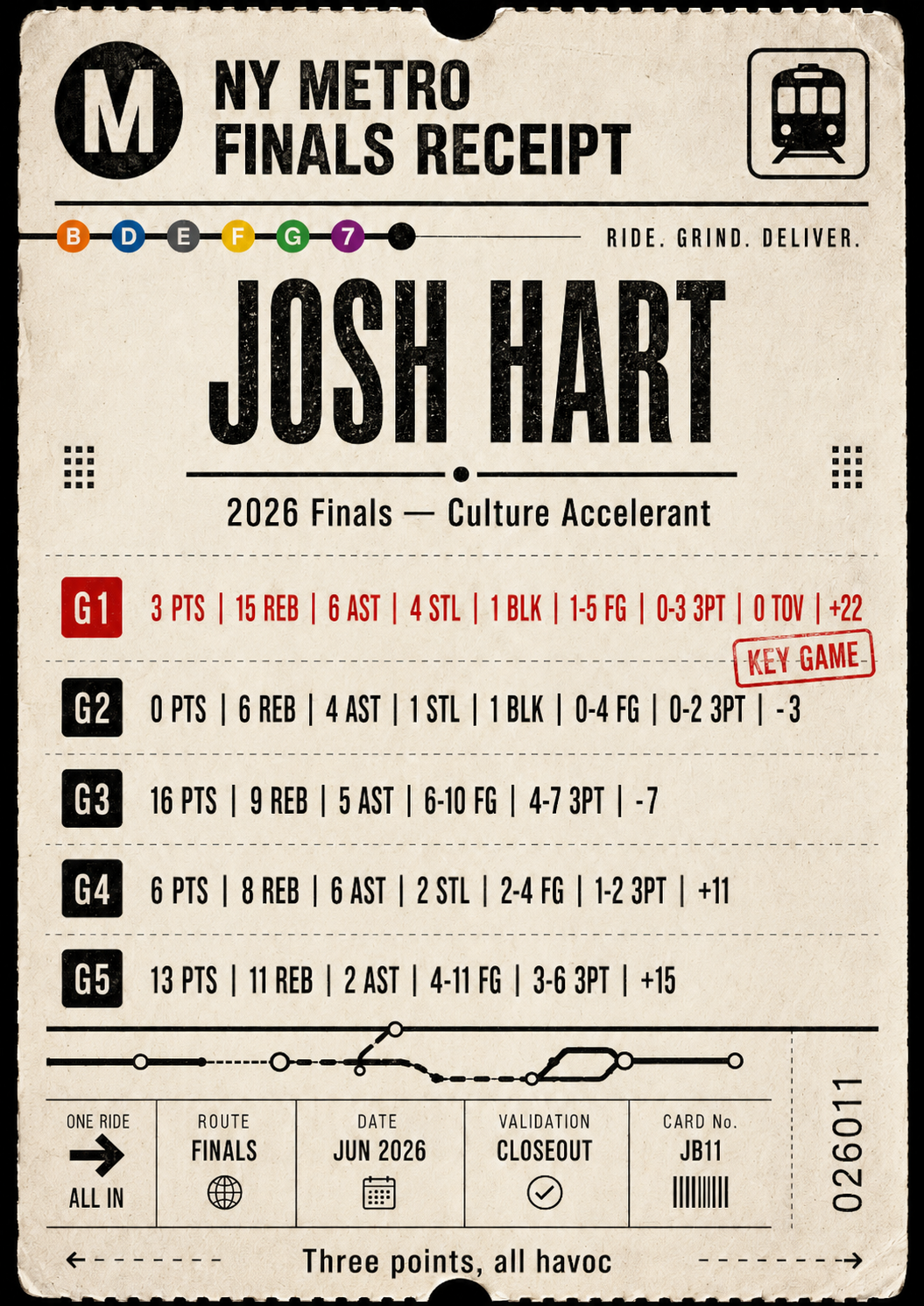
And in the Finals, that became the whole point. Game 1 was the Josh Hart legal brief: three points, 15 rebounds, six assists, four steals, one block, zero turnovers, plus-22. That line is so New York, Mayor Mamdani made him a director of municipal services, covering trash pickup, pest control, and traffic enforcement.
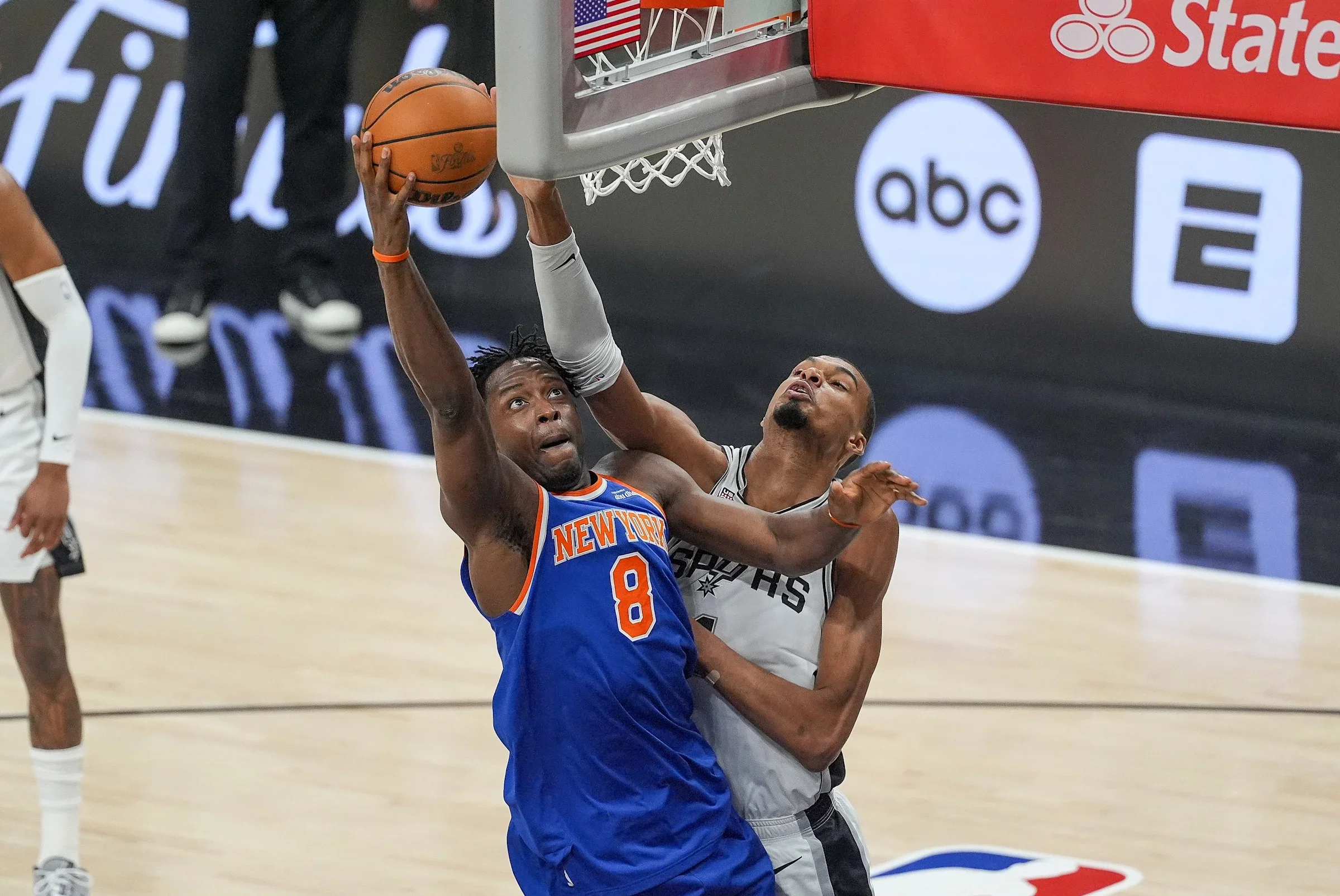
"OG’s complete skill set as a premier two-way wing, elite perimeter defender, and floor-spacer will blend seamlessly into our roster.” - Leon Rose
The Fixer
OG Anunoby — Forward, Indiana
Acquired December 30, 2023 via trade:
Knicks get: OG Anunoby, Precious Achiuwa, and Malachi Flynn
Raptors get: RJ Barrett, Immanuel Quickley, and a 2024 second-round pick
The Knicks started 2023 stuck in the mud. Three scorers all wanted the ball, between Barrett, Randle and Brunson, and the defense was giving up 144 to the Clippers, 146 to the Bucks and 130 to the Raptors in a two-week stretch.
So, Rose traded points and promise for a defensive anchor and usage sanity. OG is not complicated. He guards the best wing. He hits open threes.
As will become a theme, Leon also got addition from subtraction. RJ was a player who wanted the ball (25% usage) and when he got it, he would sometimes tunnel vision a drive. And his shooting percentages were slumping as his new role as third-option spot shooter didn’t play to his strengths. It was a rare trade where both sides seemed to win: RJ’s shooting improved sharply in Toronto, while the Knicks went 20-3 with OG in the starting lineup.
In the Finals, OG was huge. Game 1 he frustrated the Spurs’ attack while putting in three triples. He hits all five of his free throws in game 2, in a game decided by one point. Game three: 28/5/1/2 on 69% shooting. And somehow that wasn’t the series highlight.
Game 4. Thirty-three points. Seven threes. Ten-for-15 from the field. A full-court chase-down block on Fox with the Knicks down one, which made the final play possible. He then runs the length of the floor the other way, soaring in to put back Brunson’s long bomb.
That was OG, in a single, critical game. He was the leader in Finals MVP betting markets shortly after the game.
The possession broke. He fixed it.
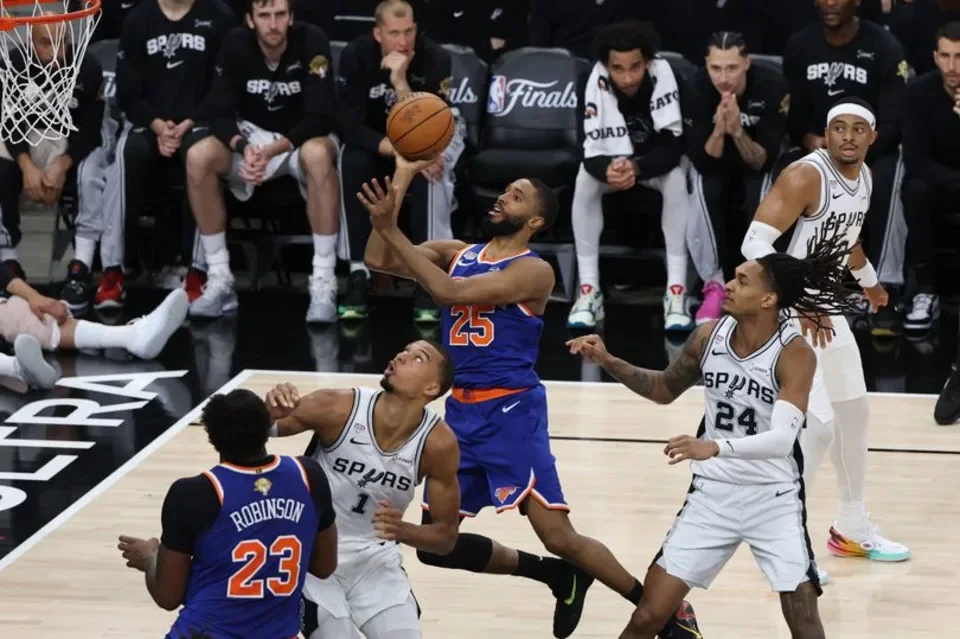
"Mikal represents the precise combination of elite durability, defensive excellence, and offensive versatility that wins in this league.” - Leon Rose
Expensive For a Reason
Mikal Bridges — Wing, Villanova
Acquired July, 2024 via trade:
Knicks get: Mikal Bridges, Keita Bates-Diop, a 2026 second-round pick, andrights to Juan Pablo Vaulet.
Nets get: Bojan Bogdanović, Mamadi Diakite, Shake Milton, five first round picks, a 2028 pick swap, and a second-round pick.
Bridges cost the Knicks so many picks that when OKC’s Sam Presti heard the news, he started breathing into a paper bag before asking if the bag had swap rights.
The 2023-24 Knicks had gone 50-32, reached the second round and made everyone feel something dangerous: belief. But injuries and workload exposed the next problem. The Knicks needed more wing durability, more two-way competence, more shooting, more defense. Real depth. Prime time depth. Bridges was a completion move.
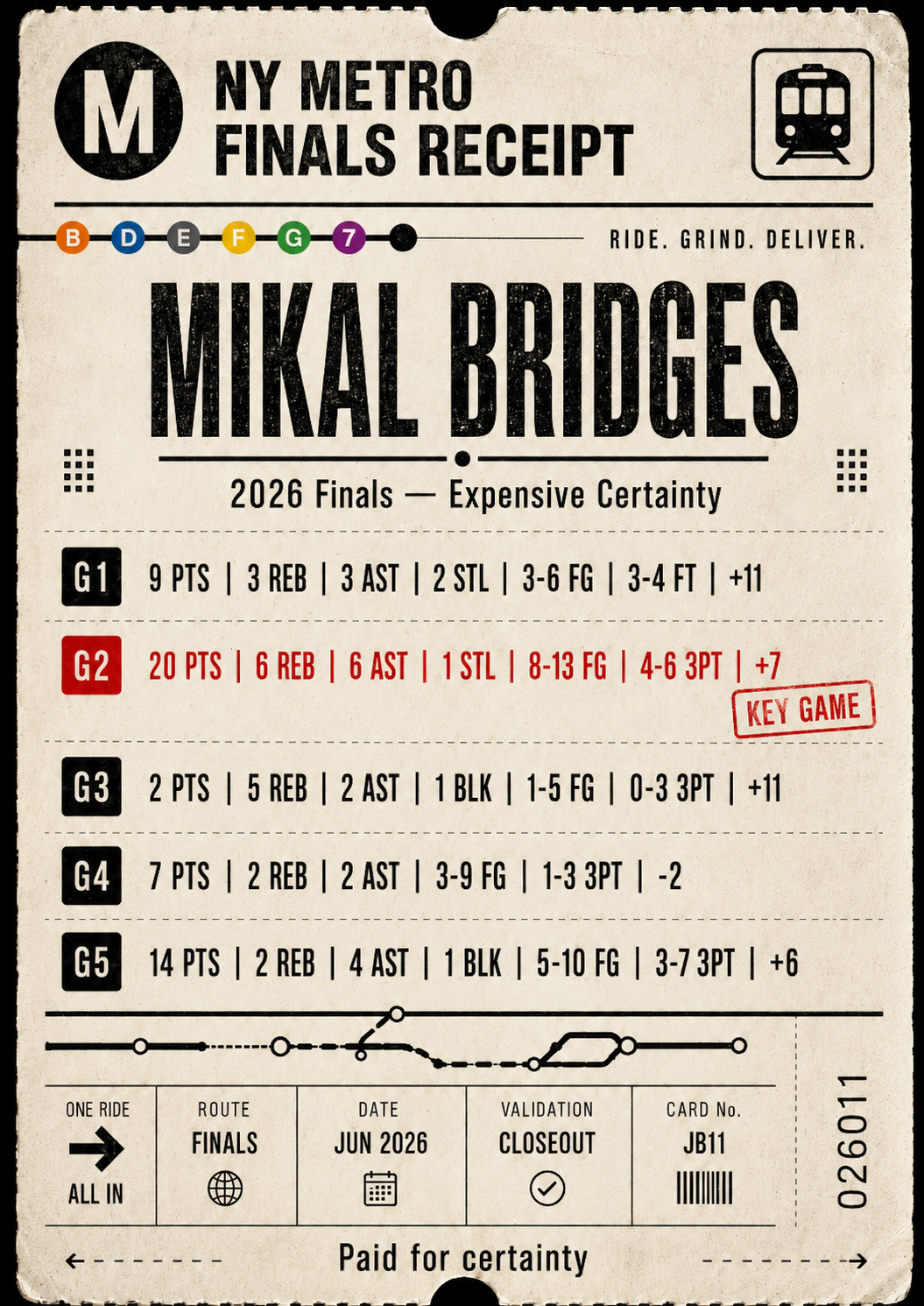
Bridges fit because his skill set does not pick fights with the roster. He can guard real assignments. He can space. He can attack seams. Again, Leon acquired a guy with pre-installed compatibility software: winning a pair of NCAA titles Villanova with Brunson (and one with Brunson and Hart). The Nova Knicks, as it were.
As for the first round picks traded to Brooklyn? Two became Nolan Traoré and Ben Saraf, while three more and a swap are still pending. Brooklyn may still win pieces of the spreadsheet someday. Fine. Congratulations to the spreadsheet. But so far, Brooklyn has a guard who shoots under 32% from outside and another who plays basketball one-handed. The Knicks have a title.
In the Finals, Bridges delivered: 8 three-pointers on 42% shooting, including three of them in his 39-minute Game 5 two-way gem of a performance. He also blew open Game 2 with 20 points and four threes.
Bridges may not be a star for the Knicks every night, but they have Brunson and KAT for that. Playoff teams need guys who can each carry a night or two a week. Bridges fits that bill.
And even when Bridges’ shot wasn’t falling, the rest of his value traveled. He hit zero threes in Games 3 and 4, but still finished those nights a combined plus-9 with seven rebounds, four assists, a block, and no turnovers.
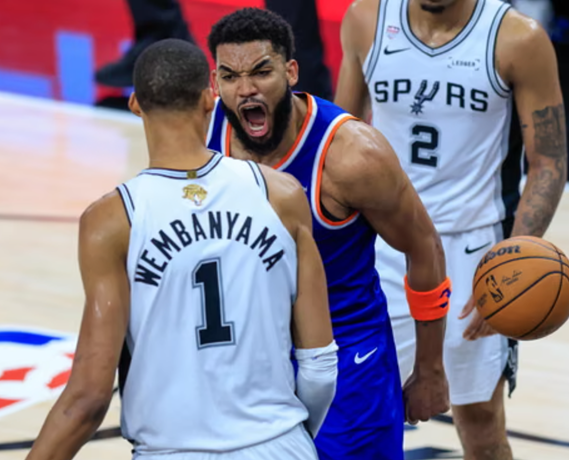
"Karl-Anthony Towns is an elite talent whose unique combination of size, skill, and shooting at the center position will elevate our team's versatility.” - Leon Rose
Changing the Shape of Things
Karl-Anthony Towns — Center/forward, Kentucky
Acquired September 27, 2024 via trade:
Knicks get: Karl-Anthony Towns (from MIN) and James Nnaji (from CHA)
Wolves get: Julius Randle, Donte DiVincenzo, Keita Bates-Diop, a future first-round pick
Hornets get: Second-rounders and cash
After a strong season and adding Mikal Bridges, the Knicks could have stopped there. But when Isaiah Hartenstein left for OKC and Mitchell Robinson’s ankle surgery recovery was delayed, New York's center position suddenly cratered to just Jericho Sims and Precious Achiuwa.
Complicating matters, Randle was due a massive extension. But, Julius was the emotional engine of the Knicks, an All-Star, a rare facilitator power forward who also grabs offensive boards. And sending DiVincenzo too? That hurts — he already fits the Thibs/Knicks hard-nosed vision.
But Towns can push people around the floor too. But rather than muscle them, he made them move with the threat of long range efficiency. A seven-footer who can shoot from three does not just add points. He changes where the big man stands. He changes where the help comes from. He changes how much room Brunson has before the second defender arrives. He changes what counts as a bad closeout.
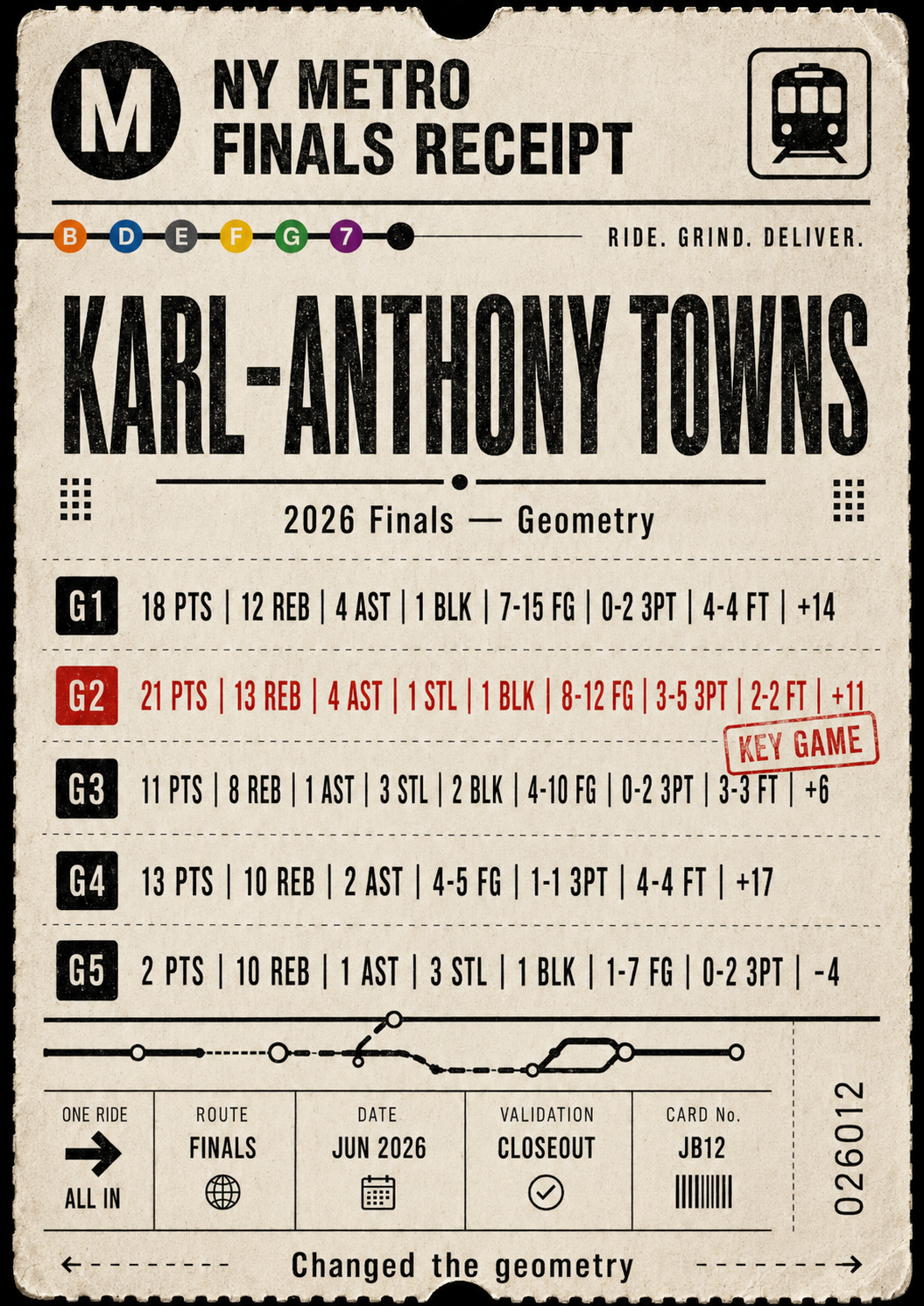
Importantly, they didn’t ask more of KAT than he could deliver on. The Knicks did not need Towns to become the emotional center of the team, or close fourth quarters. They already had Brunson. He didn’t need to man the paint alone on defense, with OG and, later, Robinson sharing the work. Just stretch the floor and clean the glass.
KAT understood the mission. In Game 1 of the Finals he set the tone immediately, manning Wemby up; Victor would go 2-11 shooting on him. Then, KAT would make him work on the other end, backing Wemby down under the basket to demonstrate that the paint was still a legal place to score points even with the Alien present.
Game 2 saw KAT throwing fire. 66% from the field, 60% from three. A huge second-half dunk on Wemby’s head. By the fourth, the Spurs are sending desperation double teams at him, and his final highlight was to split the double team with a cross court bullet to Bridges for a wet three.
By Game 4, he was living rent-free in Victor’s head. Two minutes into the second half, Victor swings an elbow into KAT’s chin, picks up a Flagrant 1 and finds himself one flagrant away from a automatic league suspension. On the bench, a hot mic picked him up telling his teammates, “KAT isn’t Chet, I need some f*ing help out there.”
Remember when I said that this Knicks team’s best comp is the 2004 Pistons? Well, adding KAT is the same moment as when the Pistons added sweet shooting big Rasheed Wallace to a team that already had Billups, Hamilton, Prince and Ben Wallace. The identity was already there. Now they’ve changed the shape of the thing.

The Bones of the Thing
There is one more Rose move that does not fit neatly into the transaction ledger. The coaches. Tom Thibodeau gets flowers here. Actual flowers. Not the backhanded internet kind where everyone says “credit to Thibs” and then spends six paragraphs on how he has a shelf life.
He turned the franchise into a professional basketball operation again. He gave them defense, accountability, conditioning, physicality, adult supervision, and the general understanding that the other team is allowed to miss if you contest the shot.
Thibs teams have always wanted to choke off the middle of the floor, load the strong side, push ball-handlers away from comfort, and turn the paint into a kill zone. It’s not glamorous; nobody gets a mural for forcing one more sideline dribble. But it teaches a roster where the help is supposed to be, what the big is supposed to show, when the low man has to rotate, and how to beat a team with positioning rather than burst speed.
That skill did not leave the building when Thibs did. The Knicks’ title team still had Thibs in its bones: the rim protection habits, the verticality, the rebounding violence, the insistence that every possession had to be physically negotiated. Even as the roster changed, the baseline expectation remained. If you were going to play for the Knicks, you were going to guard, rebound, know the shell, and survive the film session afterward. James Dolan said in January, "The team is really built on the shoulders of Tom Thibodeau.”
That was true. It also was not the end of the job. This is where Rose had to make the kind of decision executives love to avoid because there is no painless way to explain it. Thibs had done what he was hired to do.
But the job had changed. The Knicks were no longer trying to become serious. They were trying to become complete. That required a different kind of risk: moving on from a coach who had succeeded, because the team’s needs had evolved past what he provides.
Mike Brown arrived with a renovation permit. The defense stayed. The habits stayed. The rebounding violence stayed.
More movement. More counters. More ways to leverage Towns’ positioning as a 4D sudoku puzzle. More trust in Bridges and OG as connective pieces. More ways for Brunson to be the center of the offense without every hard possession becoming a civic emergency.
Mike Brown did not arrive to tear out Thibs’ foundation. He arrived to install windows. The habits stayed. The physicality stayed. The rebounding stayed. The rim-protection rules stayed. But Brown gave the finished roster more air: deeper rotations, more trust in the bench, more ways to reduce the nightly Brunson emergency load, and more movement before the defense could build its wall.
That mattered over 82 games. The Knicks went 53-29, and they did it without treating every Tuesday in February like an elimination game. Brown gave the stars room to breathe and the role players room to become more than emergency glass-break options.
The offense changed shape too. More early offense. More secondary breaks. More quick decisions before the possession became Brunson against the tax code. Towns became more than a stretch big standing around as architectural theory. Brown used him in high-post actions, handoffs, pick-and-pop sequences, and five-out spacing that made his shooting less like a luxury and more like the load-bearing wall of the whole thing.
That helped Brunson as much as it helped KAT. Brown did not make Brunson less important. He made Brunson harder to trap. He moved him off the ball more. He let him catch with the defense already tilted. He used screens, cuts, and misdirection to make opponents guard Brunson before Brunson even had the ball. That is how a star saves energy without surrendering control.
And defensively, Brown modernized without betraying the source code. Thibs had built the paint protection. Brown kept it, then leaned into the perimeter length Rose had acquired. OG, Bridges, Hart, and the rest of the Knicks could switch, swarm, recover, and make the three-point line feel crowded without abandoning the glass.
That is the coaching arc. Thibs made the Knicks serious enough to matter. Brown made them flexible enough to finish. Rose made both calls.
And, I think Leon saw something else in Mike — hunger. Mike had paid his dues long enough, knew the tactics learned from experience, and was ready to stamp his own ticket. Mike had won as an assistant coach, but scars as a head coach: LeBron in Cleveland, Kobe in Los Angeles, the Sacramento revival, the Sacramento exit. This one’s different.
Good show, old chaps.
The Finals Shortchange the Full Story
The Knicks’ Finals were a knife fight. Their playoff run was Simon Cowell judging Thursday-night karaoke at a Bronx bowling alley with a three-drink minimum.
That distinction matters, because if you only watched the last round, you saw a tough series. You saw the Knicks repeatedly having to climb out of five first-quarter holes against San Antonio. You saw Wembanyama’s french version of intimidation. You saw the Spurs, young and fearless and occasionally terrifying, keep finding ways to build leads they were not quite old enough to protect.
Jose Alvarado
Because This Publication Has Standards
No sane person builds a Finals argument around Jose Alvarado’s Games 1 and 4 per-36 line.
Fortunately, this is not a sane publication.
Across those two games, Alvarado played 26:35 and produced fifteen points, six rebounds, four assists, and one steal. Scale that properly to 36 minutes, and you get 20.3 points, 8.1 rebounds, 5.4 assists, and 1.4 steals on 60 percent shooting.
Naturally, after 30 seconds of research and no meaningful peer review, I have determined the closest statistical comp is 1993-94 Scottie Pippen, who averaged 22.0, 8.7, and 5.6 in his first season without Michael Jordan.
Is this responsible? No.
Is comparing Jose Alvarado’s 26-minute Finals sample to peak Scottie Pippen the kind of thing that should get a publication investigated by the Department of Basketball Sanity? Yes.
I’m just saying, that he’s an underappreciated heart guy, at 6’0” to be putting up Pippen-esque lines in the Finals only to watch 8 other guys get the credit first.
I’m looking forward to Jose’s post NBA life, where Jalen Brunson’s son is casually dating Jose’s ex-wife while acting like that’s totally normal.
But the full postseason profile tells a different story:
The Knicks were the best offense in the playoffs.
They were the best defense in the playoffs.
They were first in net rating.
They were first in effective field goal percentage.
They were elite on the offensive glass.
They were 9th in pace — this was not a track meet hiding weak spots. This was a confident, intentional, modern, violent basketball machine that shot like the 2020’s and rebounded like the 1980’s. Efficient with a refund policy. If the first shot missed, the possession was not over. It became a negotiation. Between Hart, Robinson, Towns, OG, Bridges — somebody was going to demand a hustle-based mulligan.
Look, the characteristics above aren’t just a “title team aspirational checklist.” They’re what it looks like when raw ability, skill mastery and pride are fused with physical training, strategic planning and good old fashioned preparation. And that brings us to the streak.
For thirteen straight playoff games, the Knicks did not lose. Thirteen.
The old franchise record postseason streak was six — they doubled it and kept going. The all-time record was fifteen. At the Knicks’ twelve-game mark, the Knicks had already outscored opponents by more than the 2017 Warriors did during their entire league-record 15-game postseason joyride.
Read that again. Maybe sit down first.
The Knicks almost caught the longest playoff winning streak ever, and for a while they were outscoring the KD-Steph Warriors at a more violent pace. Knicks culture with a body count.
The 2026 Knicks produced the most dominant postseason run in franchise history. Full stop.
A WORD ON SAN ANTONIO
Not too many words, because the Spurs had their own series and Wembanyama had his own coming-attractions trailer, and we already did that dance. But they deserve the right note. As we wrote in Tag It and Baguette 🥖 last week, the Spurs are early, not fundamentally flawed.
That is the important distinction. Their own coach basically said so after Game 5. Mitch Johnson did not dress it up: “We weren’t ready to win an NBA championship. The better team won.”
Correct. That is not an excuse. That is the cleanest possible diagnosis.
San Antonio had moments where the future looked extremely rude. Wembanyama bent the court just by existing. De’Aaron Fox gave the Knicks stress headaches. The Spurs kept finding leads, angles, bursts, and stretches where you could see the next version of the league starting to form in real time.
But the Finals do not care about your best five minutes. They bill you for your worst three.
Wembanyama knew it. He said, “This is the biggest lesson of my life, the biggest learning moment. I can't tell you exactly what the lesson is. But we're learning from that.”
Uh, Victor, that’s basically the story of my life, and I don’t know what the lesson is either. But I feel seen.
He then sounded personally offended that there are so many games before the real basketball starts again: "What I'm pissed about is there's probably a hundred games before we can be back in the Finals," Wembanyama said. "I don't know how to say it in English. But I'm going to have to hold that inside of me, slow down, wait and execute for a hundred games. [POSTGAME] Good. That is the correct level of annoyance. San Antonio should feel proud and furious. They were close enough for the pain to mean something, and young enough for that pain to become useful.
The Knicks’ clutch defense was real.
So was San Antonio’s June adolescence.
New York squeezed, and the Spurs discovered that the Finals do not merely test your playbook. They test your blood pressure.
This is also where I pause, with the humility readers have come to expect from this publication, to note that I called Knicks in five more than a week ago.
Not because I own a crystal ball. Mine would have been repossessed by 2004.
I called it because the matchup looked like a finished team against a brilliant young one still waiting on the rest of the furniture.
The Spurs will be back.
The Knicks were already inside.
So Where Do They Stand?
Now comes the uncomfortable part. Are the 2026 Knicks the greatest Knicks team ever?
No. Probably not. Fine. Let’s be adults for one paragraph. Maybe two.
The 1970 Knicks still keep the crown. Willis Reed, Walt Frazier, Dave DeBusschere, Red Holzman, the first title, Game 7, franchise mythology, full-season excellence, the whole civic inheritance. That team is not just a basketball team in Knicks history. It’s the founding document.
The 1973 team has its own argument too. Clyde, Reed, Earl Monroe, DeBusschere, Bill Bradley, Jerry Lucas, Phil Jackson, another title, and the kind of old-school depth that makes people in turtlenecks nod respectfully.
So no — I am not ripping the belt off 1970 and handing it to a team whose champagne is still wet. But 2026 makes the conversation uncomfortable. That is the honest answer.
If we are talking literal head-to-head basketball, the 2026 Knicks almost certainly win. That is not disrespect. That is time. Modern spacing is a chainsaw. Towns pulling centers to the arc, Brunson manipulating help, OG and Bridges defending in space, Hart turning missed shots into community property — asking a 1970 roster to guard that under modern rules is not history. It is elder abuse with a shot clock.
But head-to-head is not the same as greatness. You cannot drag old teams through a time machine, hand them a scouting report on five-out spacing, and act smug when they ask why the center is launching threes like it’s the All-Star Game.
Greatness is relative to era. It is dominance, meaning, place, pressure, style, memory, and what the title did to the city that won it. By that standard, 1970 still gets the crown.
But 2026 gets something else. Most skilled Knicks team ever? Yes. Best head-to-head Knicks team ever? Almost certainly. Most dominant Knicks playoff run ever? Yes. The team that makes the argument hurt? Absolutely — they went 16-3.
They closed the Finals on the road behind a 45-point game from a second round pick point guard who was the son of a undrafted NBA journeyman. If LeBron is NBA royalty, Jalen comes from a proud line of hard working plumbers.
They did not steal a title from the future. They built themselves into the team ready when the door opened. That is the Leon Rose legacy, at least as of today. There is no flawless master plan where every step was obvious in real time. This league does not work that way. Front offices miss. Trades hurt. Picks go out. Players age. Windows get expensive. Wembanyama is not going anywhere, which feels personally unnecessary.
But for one spring, the Knicks were what every franchise claims to be chasing. Not the most famous collection of talent. The clearest team in the room. The players completed the ascent. The front office deserves flowers.
And that is how the Knicks Rose.
SPORTSWRITING WITH RECKLESS INTEGRITY

If you made it this far, you already know what we do here. We write about greatness and delusion, triumph and collapse, and the strange emotional hold sports keeps on people who should probably know better.
Drop your email and once a week we’ll serve you something from the top shelf — no cheap shots.

Torsten
120 Proof Ball
If you liked this then you’re part of the problem.
