
Step Into My Office. Bring Your Playbook.
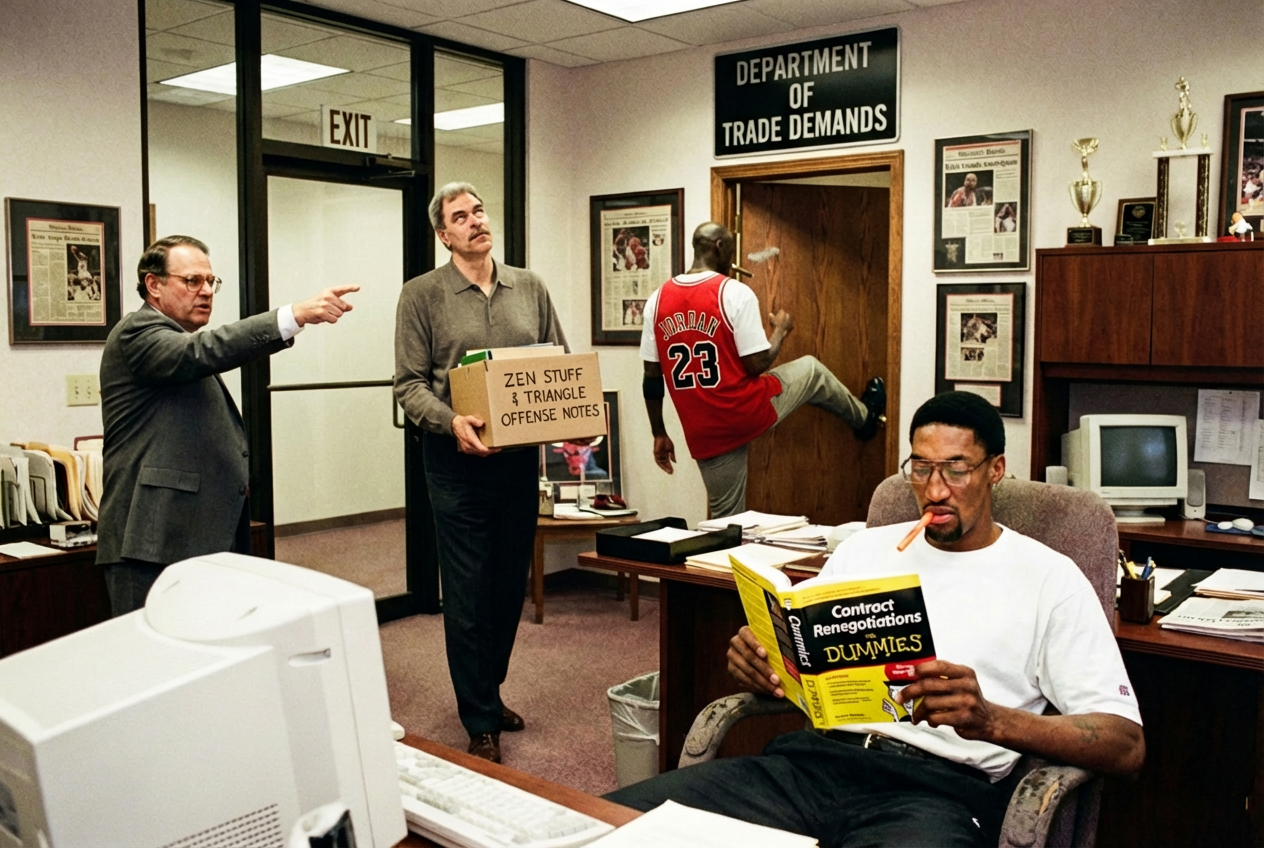
Imagine for a moment the year is 1995 and you’re an avid basketball fan. The Chicago Bulls have just been eliminated from the NBA playoffs, losing the Eastern Conference Finals in six games to the Orlando Magic. You already know this—you watched it happen before you went to bed. Depending on which dog in the fight was yours, you either turned in sour or celebratory, likely a few drinks deep either way.
Then the morning comes.
This is pre-Twitter, so you flag down your local carrier pigeon, or turn on your AM radio, or unfurl whatever crude parchment passed for journalism back then. The headline jumps off the page—inasmuch as ink made from dinosaur blood can jump.
“Bulls Fire Phil Jackson.”
Whoa. That’s a bombshell.
The man had already stewarded the Bulls to multiple championships. Short playoff series are notoriously prone to randomness. Surely losing to a team featuring Shaquille O’Neal and Penny Hardaway couldn’t doom a coach to unemployment… right?
Well, this is professional sports—where coaching careers live and die at the altar of billionaire impatience. Or thousandaire impatience. Whatever rich people were in the 1990s.
Maybe it does make sense.
The Bulls had stumbled out of the gate that season. Michael Jordan was still off playing baseball—or, if you believe Bill Simmons, quietly serving his wink-wink nudge-nudge gambling suspension, known only to him and David Stern. Never mind that the roster still featured Scottie Pippen, Toni Kukoč, and a collection of solid veterans like Ron Harper and Steve Kerr. They should have stayed afloat.
They didn’t.
Then Michael returned, sparked a late surge, and the season ended exactly where we began: elimination. The sports world, as always, was in a hurry to find a scapegoat.
Why not the coach?
Of course, this is preposterous. Even before the three-peat, Jackson was already regarded as the best coach in basketball—Tex Winter’s triangle offense, unmatched ego management, spiritual zen wrapped in ruthless competitiveness. The odds of him being fired were less than zero.
But what if—stay with me, we’re in Hypothetical Land—what if the three-peat never happened? What if those championship-caliber Bulls teams kept falling short? First round here. Conference finals there. Close calls. Bad bounces. “Randomness.” How many seasons of that before the narrative flips?
How long before “great coach” quietly becomes “why can’t this guy get it done?”
Present Day
Sean McVay is widely considered the best coach in the National Football League.
Universally admired. Scheme-savvy. Offensive sorcerer. Every defensive coordinator’s recurring nightmare. Year after year, he dissects opposing defenses with the apparent ease of taking candy from a baby—a phrase I’ve always hated, mostly because multiple fathers have beaten my ass for stealing their kids’ lollipops.
But I digress.
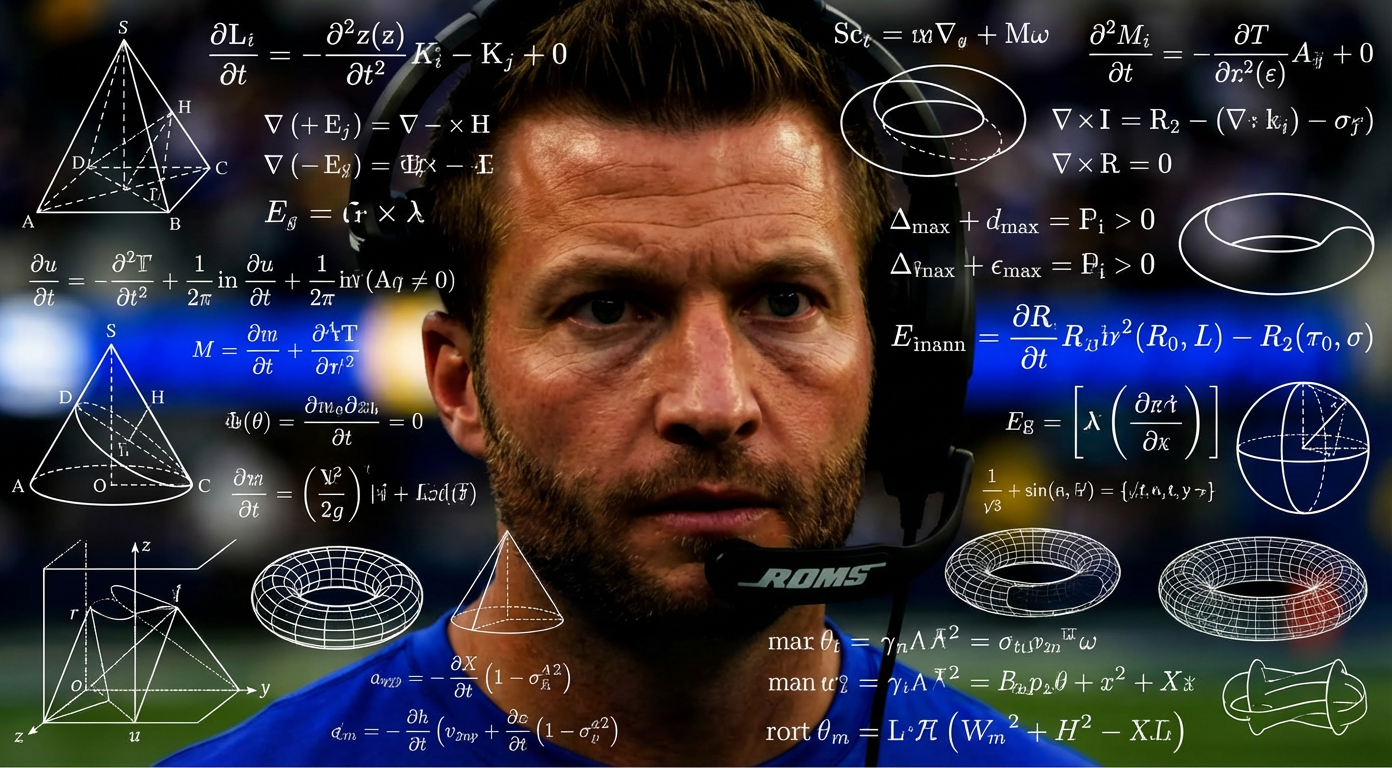
McVay is the Stephen Hawking of coaches.
So why has he won one Super Bowl in nine seasons? Why isn’t that lone Lombardi flanked by siblings?
Why did that lone title require a heroic, last-gasp intervention from Aaron Donald—possibly the greatest defensive player in football history—just to survive a Bengals team the Rams should have beaten by three touchdowns?
The answer is uncomfortable. The answer is Sean McVay. For all of his schematic brilliance, what if his actual game management is a boat anchor tied to this franchise’s championship window?
I once tweeted—paraphrased—that as long as McVay was the coach, the Rams would never win a thing. That take aged poorly, thanks to a roster so obscenely talented it overcame his worst instincts. And credit where it’s due: he pulled the franchise out of the Jeff Fisher era, a period defined by the rare combination of mediocrity and longevity.
But make no mistake: McVay is not a winner in the way history remembers winners.
He is a savant who keeps lighting his own blueprints on fire.
If You’re a Rams Fan, You’ve Seen This Movie
Just run the damn ball.
First and ten. Nine-yard gain. Field goal range.
Second and one.
Jet sweep to a wide receiver who has never successfully handled an exchange in his life. Five-yard loss.
Third and six.
Play call comes in late because McVay changed his mind. Timeout burned.
Still third and six. Obvious blitz situation.
Empty backfield. Long-developing route concept. Five linemen versus seven rushers. No hot read.
Quarterback vaporized.
Fourth and fifteen. Punt.
If you’ve been a Rams fan for nine years, you don’t need to imagine this. You’ve lived it. Ten times a season. Whether the receiver was Tutu Atwell or Jordan Whittington. Whether the quarterback was Jared Goff or Matthew Stafford.
The common denominator has always been Sean McVay.
Two weeks ago, the Rams lost the NFC Championship to a talented—but inferior—Seattle Seahawks team. McVay’s decisions directly gifted Seattle seven points and directly cost the Rams at least three.
They lost by four.
I’m no mathlete, but… This team finished 12–5 and could have finished 16–1. Kick field goals. Manage clocks like an adult. Run the ball against historically bad run defenses. It was all right there.
And therein lies the problem. McVay is a genius. And like many geniuses, arrogance is baked into the operating system.
In a league where most head coaches delegate play-calling so they can manage the entire chessboard, McVay stubbornly insists on doing everything himself. His schematic brilliance is matched only by his strategic insipidness.
Will He Be Fired?
No. Of course not. By the time he coached the Rams out of another Super Bowl, the best replacements were already interviewing elsewhere. But could it happen?
After watching Sean McDermott and John Harbaugh get pink slipped despite elite résumés, you’d be foolish to say never. Even Mike Tomlin - he of the 20 consecutive winning seasons or thereabouts - left the Steelers by “mutual consent,” which is Swahili for got shit-canned. But here’s the thing. Coaches seem to be filed into tiers. There’s the Mount Rushmore of immortality - populated by only the select view who could commit global atrocities with impunity, such is their coaching brilliance and track record. Then there’s everyone else, divided into various overlapping tiers ranging from joke punchline to universally respected.
So maybe in an alternate universe—the one where the Bulls don’t three-peat—Phil Jackson gets fired. Maybe there’s no second act in Los Angeles. Maybe immortality never arrives, condeming him to far more crowded halls of the merely excellent.
The thought is that maybe in this universe, where Sean McVay continues to outsmart himself at the worst possible moments, the coach so often spoken of in reverent tones finally meets the same fate. But he’s somehow joined Phil Jackson on the hallowed rocks of South Dakota despite having nowhere near the trophy cabinet to justify it.
It’s a lonely hill I’m on. And it’s cold out here.
But the view is excellent.

Torsten / 120 Proof Ball
Proof that the internet was a mistake.
