The Ball Finds Energy
Those Who Would Run the World - Part II
Mike D’Antoni’s “Seven Seconds or Less” Phoenix Suns
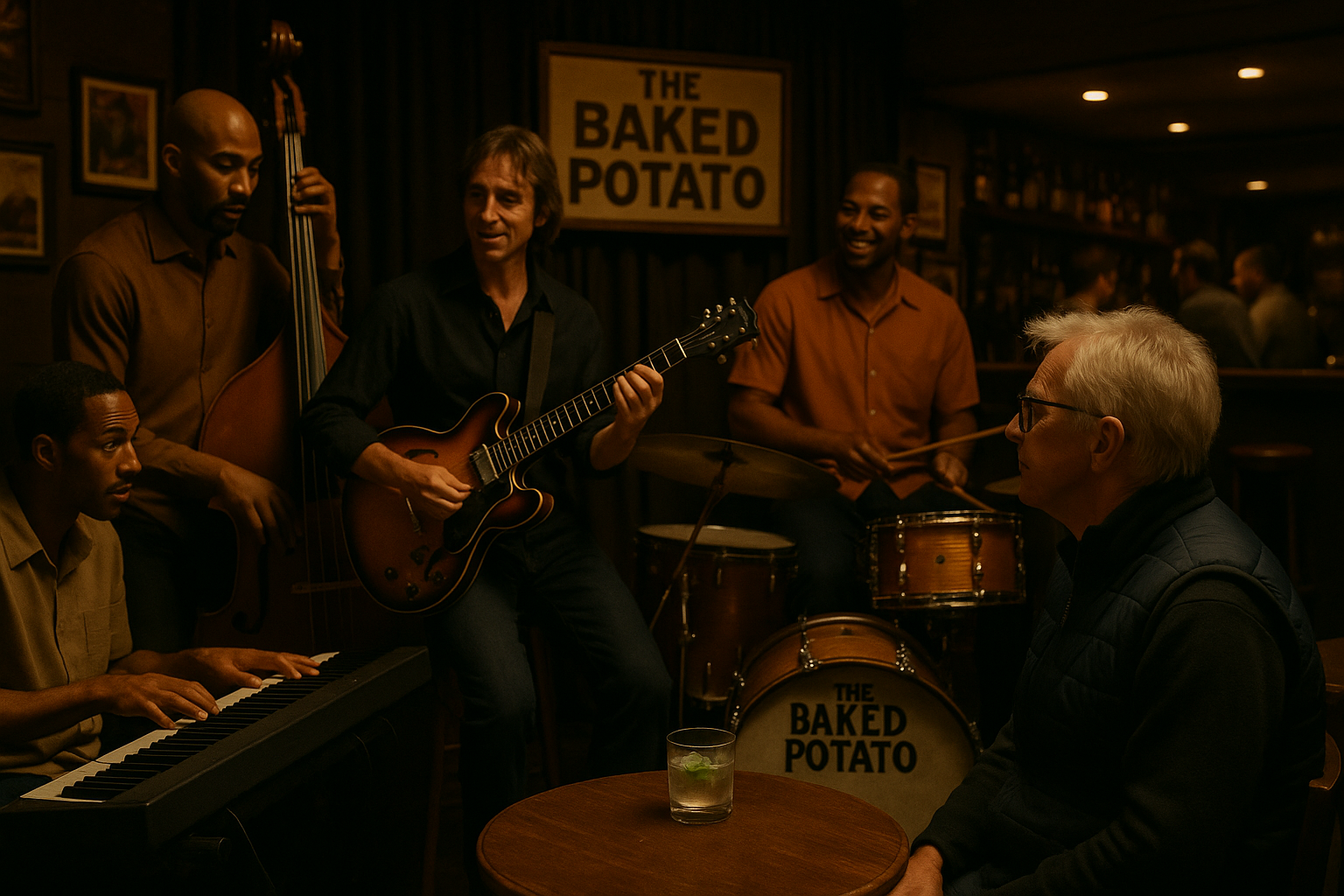
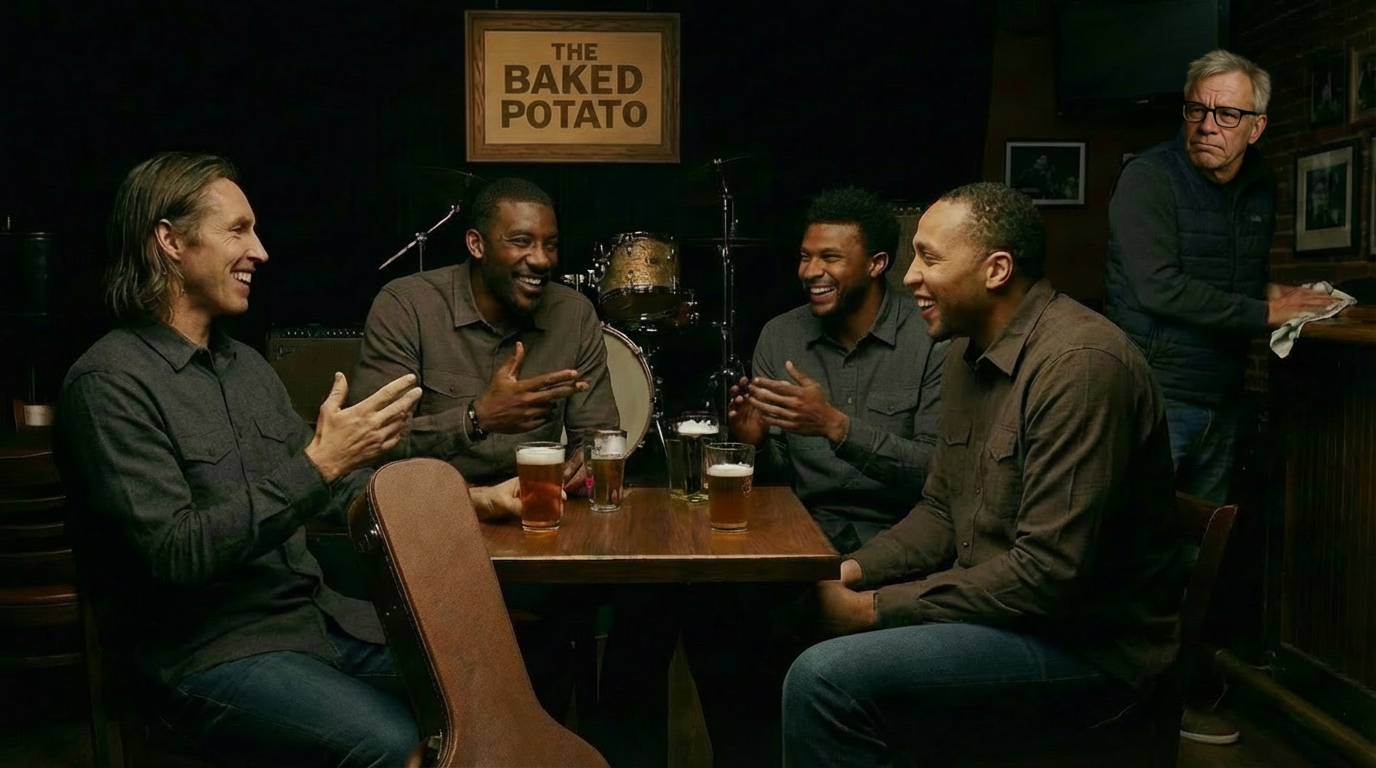
At The Baked Potato jazz club in Hollywood, the lights are low and the air hums like an amplifier warming up. My friend Jeff, a professional jazz guitarist, will sometimes step into a set unannounced. He'll walk onstage with three strangers, nod once, and start playing.
No rehearsal. No plan. Just feel.
They’ve seen it all before — not just the chord progressions, but the archetypes.
There’s always the soloist who needs space to breathe.
The young gun who pushes the tempo, daring everyone to keep up.
And Steve on bass — old reliable, the metronome that keeps the room from flying apart.
When true professionals trust each other and stop worrying about control, something ancient wakes up. The music stops being played and starts happening.
They lean in. They listen. They push and pull, feint and surprise. Each knows the notes, but the art is in when to break them. Predictability is death; subversion is joy.
That’s when the grins appear — first onstage, then in the crowd. The joy of creation, looped between player and listener until you can’t tell who’s leading anymore.
Mike D’Antoni had an idea about this.
He just called it basketball.
1 Flying
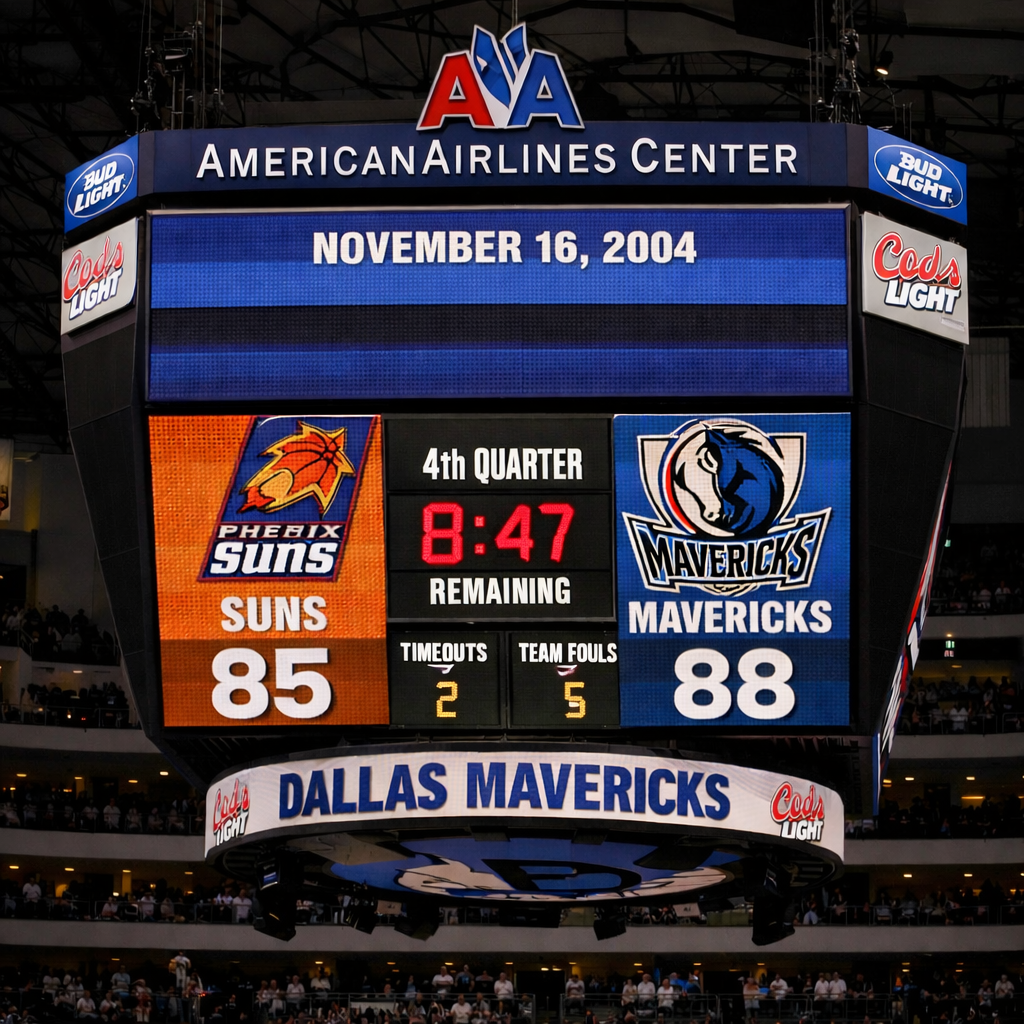
Fourth quarter in Dallas. Shawn Bradley at the line for a pair that will put the Mavericks up five. The clock is getting late. Players take their places along the paint, the moment briefly suspended. Bradley sinks the first one.
Jerry Stackhouse leans over Steve Nash, voice low, familiar. “Kept it close, Steve,” he says, grin tilted somewhere between friendly and cruel. “You’ll figure it out eventually.”
Nash doesn’t answer. Just a small nod — the polite kind you give to someone who’s about to learn something the hard way. Bradley sinks the second. Mavs by 5.
Nash pushes, scanning the floor, and snaps a pass to Stoudemire with position inside. Amar’e backs his man down, then pivots toward the middle to attack. Stackhouse has read it, feet planted, stepping squarely into the lane. Whistle on Amar’e. Turnover.
On the next trip, Devin Harris turns the corner off the dribble, pushing downhill before the defense can load up. Marion isn’t the primary defender, but he’s already sliding across from the weak side, waiting on the gather instead of the drive. Harris leaves his feet. Marion swats the ball clean off the glass.
The rebound finds Nash as he’s already in motion, eyes scanning, body tilted toward the other basket. He takes it without slowing the pace. Two dribbles, chest-high pass, Amar’e catching in flight before Dallas can decide whether to stop the ball or the roll. The rim detonates. The lead is down to three.
Dallas tries to stretch the floor to answer. A quick three from the wing — short. Phoenix doesn’t pause.
The break comes before the defense is set. Nash flows into open space created by motion, not design — Bradley retreating to protect the paint, wings scrambling to match up. That half-beat of indecision is enough. Nash rises from fourteen and lets it go before the floor is organized. Clean. The building tightens; the lead down to one.
Dallas goes back to Harris, probing again, trying to force a decision at the point of attack. The look is decent. The rebound caroms long. Daniels crashes late, but Amar’e gets there first and clears it himself.
The pace quickens. Nash brings it up with Harris on his hip. Marion sets the screen. Nash curls, drives straight toward the seven-foot-six frame of Shawn Bradley, plants, and threads a high, arcing floater just out of reach.
Phoenix has figured something out.
Josh Howard muscles one in at the rim on the other end — a reminder that Dallas can still score. But one basket doesn’t make momentum.
Marion misses from eight feet, then muscles his way back to the ball. He gathers the offensive rebound and kicks it back out. Nash resets just long enough to pull the defense toward him, then slips the ball inside to Amar’e, already moving. The layup is clean, and the Suns pull ahead by one.
Dallas doesn’t wait. Bradley heads to the bench. Dirk Nowitzki checks back in. Dallas seems to stabilize.
A few minutes later, the Suns’ pressure finally finds a seam. Amar’e establishes deep position early on Alan Henderson, planting himself on the left block and sealing him out before the defense can load behind the play. Nash feeds the entry. Amar’e widens his base and puts the ball on the floor, backing Henderson down with short, deliberate dribbles. From the weak side, Stackhouse shades toward the lane, ready to step in again if Amar’e turns middle. Earlier, he tried to go through that contact. This time he spins baseline, away from the help, shoulders through it, and explodes up at the rim. The dunk snaps the net. Whistle. One free throw — good. Suns by five.
With three minutes to go, the Mavericks’ bench is standing without clapping, eyes fixed on the floor instead of the rim.
After the buzzer, Nash registers how quiet it’s become — the earlier roar thinned to pockets of sound. A few fans wearing 13 are still on their feet, still cheering for the man their team let walk. He doesn’t look their way, but he hears them — the sound of something larger than revenge.
What started as a taunt became an answer. By week’s end they’ll call it a system. By Christmas, a revolution.
Twenty-seven wins in the next twenty-nine. Sixty-two by spring. Best record in the West.
Steve Nash, league MVP.
Mike D'Antoni, Coach of the Year.
2 Revolution
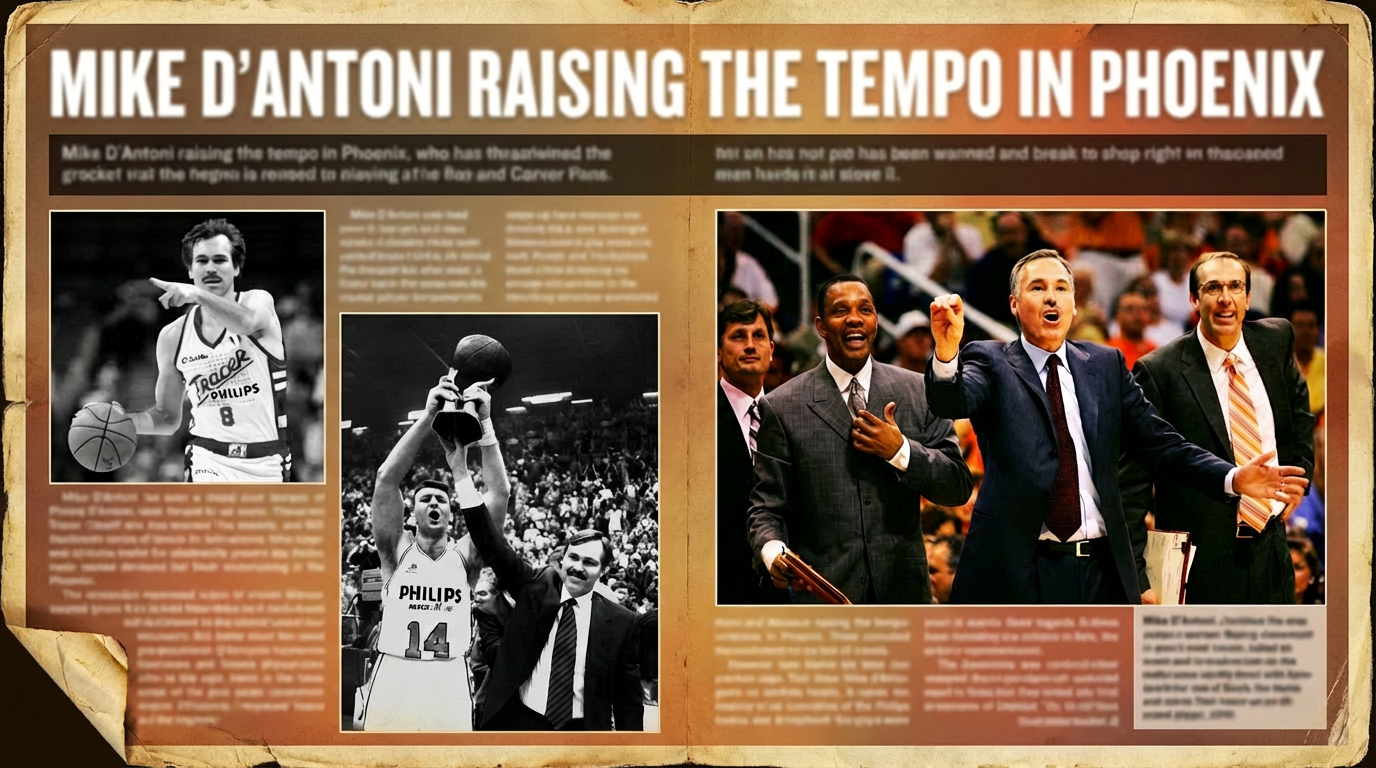
Mike D’Antoni arrived in the NBA as a 6-foot-3 point guard who saw passing lanes where his coaches saw set plays. The league didn’t have a word for what he wanted to do yet. By 1977, tired of muscling through static possessions, he packed for Milan, where the game breathed.
In Italy he found tempo disguised as discipline. Coach Dan Peterson drilled spacing until it became instinct — five minds sharing one pulse. D’Antoni learned that freedom wasn’t chaos if everyone spoke the same language. “In Italy,” he’d later say, “you didn’t stop the flow to fix it.”
He played a decade there, earned the nickname Il Baffo, and ended up player-coach for a club that trusted him to improvise the same way he wanted his players to. When he finally came back to the States, the NBA looked slow, like it was running underwater.
He bounced through Denver and Portland before landing in Phoenix as an assistant — the European in a league still obsessed with muscle and isolation. When Frank Johnson was fired in 2003, D’Antoni inherited the wreckage: a young roster and a directive to keep things steady. He smiled at that. Steady wasn’t the point.
He saw geometry in Amar’e’s vertical burst, in Marion’s elastic wingspan, in Joe Johnson’s poise. Then came Steve Nash, and everything snapped into place.
He built a small circle that spoke his dialect: Marc Iavaroni to mind the defense, Alvin Gentry to translate ideas into American locker-room vernacular, David Griffin to give the math a microphone.
He demonstrated that shooting efficiency peaked before a defense could brace — within the first seven seconds of a possession. David Griffin mathed out their next weapon: shorter possessions means more possessions. Winning by attrition.
“Coaching is mostly staying out of the way,” he told a reporter. Gentry would later quip that silence was Mike’s best play call.
He built drills that ended mid-possession — sequences designed to teach instinct instead of obedience. He told his guards, The best shot is the first open one. The ball finds energy.
“You say you want a revolution
Well, you know
We all want to change the world.”
3 Come Together
The cameras have been up since nine. Someone’s sweating through makeup, someone’s forgotten their jersey, someone’s explaining to a Japanese journalist that this year’s Suns plan is to move before anyone can think about stopping them.
It’s media day in Phoenix, 2004 — the first public look at Mike D’Antoni’s machine.
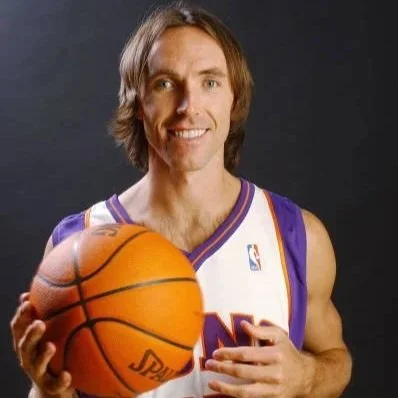
Steve Nash sits at the table, towel over his shoulder, answering the same question six ways. “We’ll see,” he says. “I just want everyone to feel good out there.” He leans toward the reporter, faint grin. “You good?” The room laughs, but that’s how he manages the floor — checking on people, checking on possibilities.
Beneath the politeness sits defiance. Dallas let him walk; Phoenix is betting he’s not finished. The back still hurts, the legs aren’t what they were, but his command of timing and spacing has never been sharper. Nash is here to prove that intelligence can steer chaos, that control can move at full speed.
What he brings isn’t just direction — it’s awareness that spreads through everyone around him.
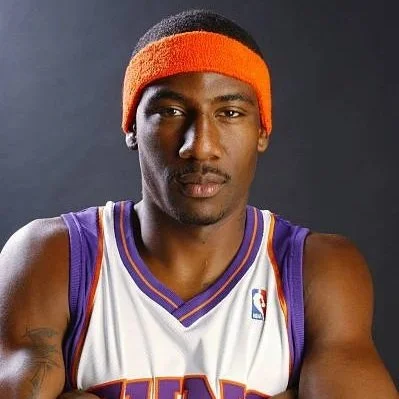
Amar’e Stoudemire adjusts his chain, tilts his head into the lights. When someone asks about playing with Nash, he smiles: “You throw it, I’ll find it.” It lands somewhere between promise and warning.
He’s 22, all explosion and nerve — too young to hesitate, too gifted to care. Some teammates call it confidence; Gentry calls it jet fuel.
He’s still learning defensive reads and when to stay grounded, but no one else can bend a rim like this. He’s here to prove that sheer force can coexist with purpose. What he gives the Suns is vertical pressure — proof that gravity can be weaponized.
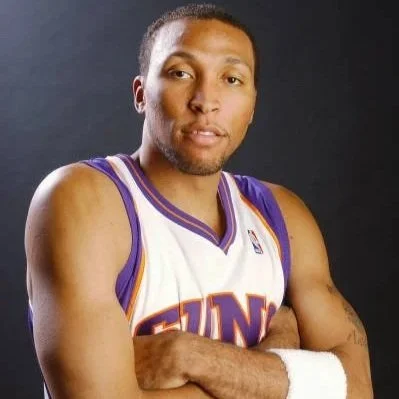
Shawn Marion rocks from foot to foot in front of the mics, restless even at rest. A reporter asks about guarding multiple positions. “Man, I guard everybody —” he starts, before assistant coach Marc Iavaroni finishes for him: *“ —but the mascot.” *
The room cracks up. Marion smiles, then looks down.
He laughs, but the chip stays in place. He’s the safety net — defending, rebounding, filling gaps nobody else sees — and still feels unseen himself. What he wants isn’t fame, just proof that the invisible work counts.
His advantage is flexibility: one body covering five jobs, holding everything together when speed threatens to fly apart.
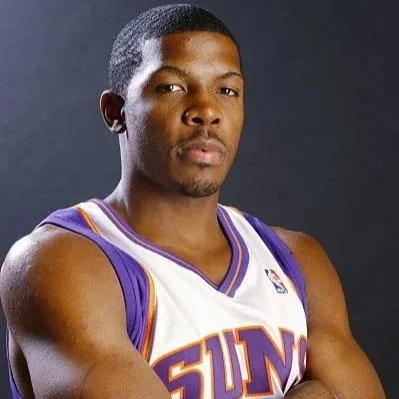
Joe Johnson answers questions like he plays: quietly, precisely, eyes fixed ahead. Asked about fitting in with so many scorers, he says, “It’s fun. I just find my spots.”
Off to the side, a beat reporter jots notes as David Griffin leans over a replay monitor: “He’s the still frame in all this blur.” It’s said softly, but it captures him exactly.
Joe’s the system’s stabilizer — calm when others overheat, measured when the game turns frantic. When the clock gets low, he’s the one who can manufacture an open look for himself. Efficiency under pressure: experience, clean footwork, sound reads, quiet certainty.
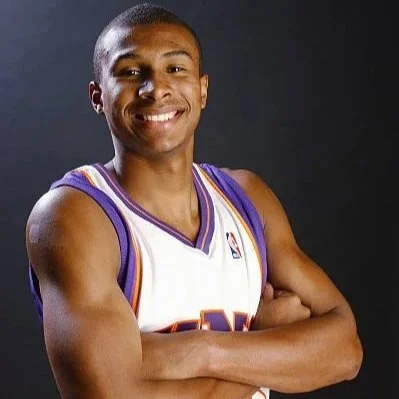
Leandro Barbosa’s turn. His English is limited, but the grin does the work. “Coach say go fast — so I go fast,” he says. The press laughs; Nash adds from the back, “Two speeds: too fast and perfect.”
He’s the youngest, all limbs and optimism, learning a system that rewards instinct. Sometimes the ball outruns him; sometimes he outruns the ball. D’Antoni doesn’t mind — it’s forward motion either way.
He’s raw but the Suns see promise. Last year he set a Suns rookie scoring record with a 27-point night against the Bulls, as well as a ten-game stretch where he scored at least one three-pointer per night.
The Brazillian Blur brings unpredictability: the one element even the coach can’t script.
When the lights drop and the room empties, Griffin’s already dissecting matchups with a beat writer, Gentry’s teasing Mike about pretending not to love attention, and down the hallway sneakers echo on wood — the sound of a team already in motion.
“I know you, you know me
One thing I can tell you is you got to be free.”
4 Coming Up
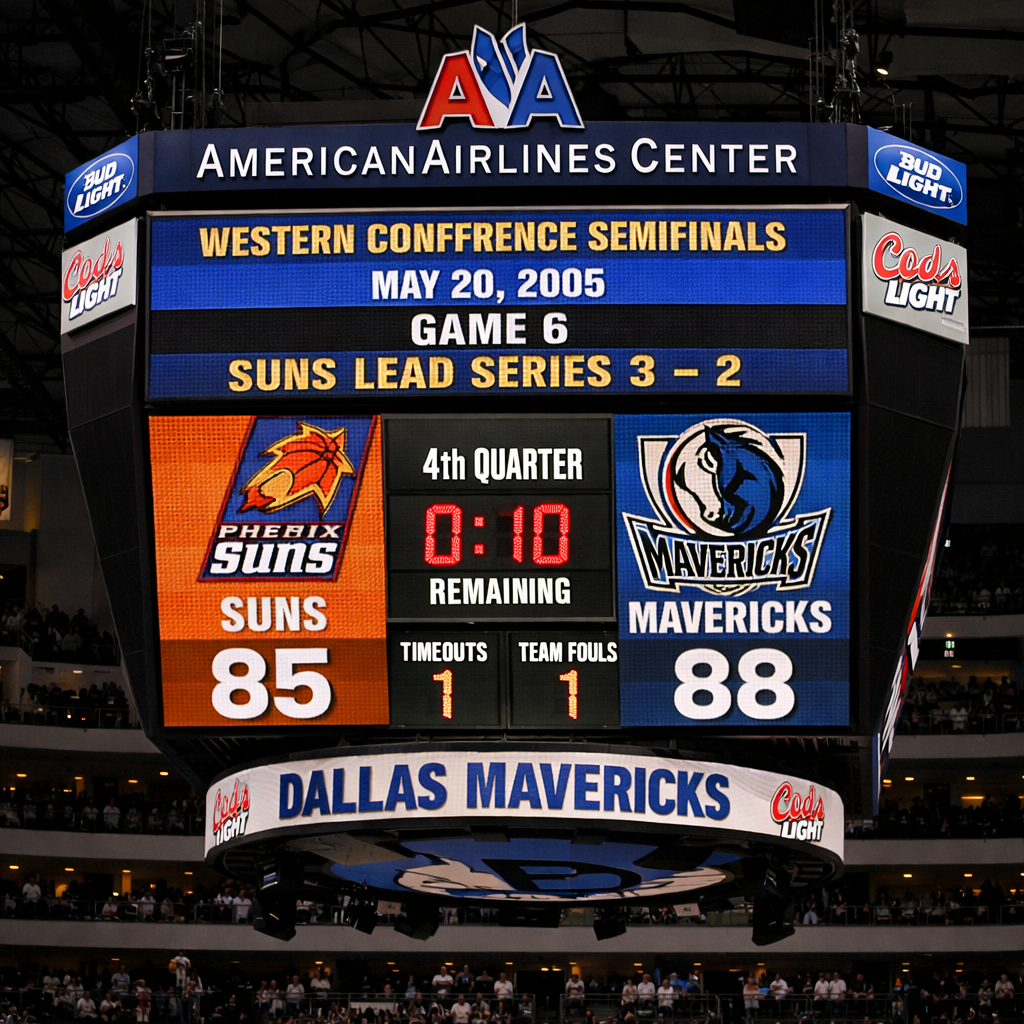
The ball comes to Nash with the clock bleeding out of the fourth quarter.
He feels it before he sees it — the extra space. Not much. A breath. Jason Terry’s weight is wrong, hips angled just enough toward help that isn’t coming. Nash doesn’t hesitate. Hesitation is the only thing the system can’t survive.
He rises.
The shot leaves his hand clean, the sound sharp and final — net snapping hard enough to quiet the crowd for a beat before the noise rushes back in. Dallas answers, but the damage is done. Phoenix has bought five more minutes without two of the men Nash normally trusts to finish games.
As they walk to the bench, Nash glances sideways.
No Amar’e. Fouled out. The seat where that explosion usually lives is empty now, towel folded, shoes unlaced. Further down, Joe Johnson is still in warmups, jacket zipped, his right arm hanging useless since Game 2. Normally, this is the moment Nash would be doing math — who can attack, who can draw help, who can steady things.
Now the math is simpler.
He meets Marion’s eyes. Marion nods once. That’s it. That’s the plan.
On the other side of the floor, Dirk doesn’t sit. He paces. He says something sharp to Jason Terry — not loud, but pointed. Terry gestures back, palms up, defensive. The horn sounds before it can escalate, but the air has shifted. Dallas didn’t close. Dallas knows it.
Overtime doesn’t start fresh. It starts heavier.
Dallas gets the first look. Dirk backs down, feels a second body lean into his hip, spins anyway. The shot comes off wrong — not blocked, just crowded. The rebound drops into Phoenix hands and Nash is already turning upcourt, legs pumping, dragging the game forward before Dallas can set its feet.
First trip: nothing clean. A miss. No reaction. But Steve manages to pull down the board.
And so he circles back into it, calling Marion up with a flick of his fingers. Screen. Slip. Re-screen. The defense switches late and Nash threads the pass where Marion will be, not where he is. Marion pump-fakes, feels Josh Howard fly by, takes one hard step baseline. Contact. Whistle. Free throws. Phoenix didn’t draw anything up. They never do. They just ran the same picture again.
Dallas comes back with force. Terry snakes around a screen and buries a three. The crowd erupts like relief. On the next possession, Nash doesn’t wait. He rises again before Dirk can recover, the release quick and fearless. Tie broken. Again.
From there, the game narrows. Every Phoenix possession begins the same way. Nash up top. Marion drifting toward him like a tide. Dallas switches — Terry to Dirk, Dirk back to Terry — hands waving, voices calling, feet scrambling to keep up with a rhythm they don’t control. Marion pops. Fifteen feet. Clean.
Next trip, Nash drags two defenders into each other — a soft collision, just enough — and Marion slips behind them, hands ready, already lifting. Another bucket. Dallas knows what’s coming. That’s the problem.
Dirk tries to answer. Fadeaway. Front rim. Next time, a hook rushed by a hand he didn’t expect to be there.
Phoenix rebounds with bodies, not height, and runs again. Nash covers three-quarters of the floor in seconds, not sprinting so much as gliding, using pace to steal breath. Marion flares to the wing. Nash delivers it early, before the closeout. The shot drops. Timeout Dallas.
On the bench, Dirk leans in toward Terry again, jaw tight now. Terry listens, nods, but his eyes say something else — what do you want me to do? The answers are coming too fast.
Back on the floor, Dallas finally scores inside. A hard drive. Two points earned the old way. On the return, Nash rejects the screen, turns the corner, and lofts a soft nine-footer over Dampier’s reach. No celebration. Just a glance at the floor as he runs back.
Stackhouse tries to muscle one in. Makes it. Dallas hangs on.
Phoenix doesn’t change a thing. Pick-and-roll. Switch. Reset. Nash pauses just long enough for Terry to drift toward help, then slips the pass behind him. Marion catches in rhythm and rises from the elbow. Net.
The margin stretches not because Phoenix is better — but because Phoenix is calmer. The clock winds down. The fouls come. Dallas reaches. Phoenix accepts. Free throws replace flow, but the trust holds. Nash at the line now, steady, breathing even. Two more.
Terry hits a desperation three late, a last gasp that echoes louder than it should. It doesn’t matter. Phoenix inbounds clean. Marion is fouled. He makes both.
As the final heave falls short, Nash drifts toward midcourt. Dirk meets him there. No words. Just a brief embrace — two men who understand what was taken, and what was proven.
It was a night where Phoenix's system worked when it was stripped bare. When it was predictable. When it was hardest. Belief, once tested like that, doesn’t feel like belief anymore. It feels like fact.
Tonight, the Suns didn’t outrun anyone. They outlasted the moment where doubt usually wins.
“You want some peace and understanding
So everybody can be free
I know that we can get together
We can make it, stick with me.”
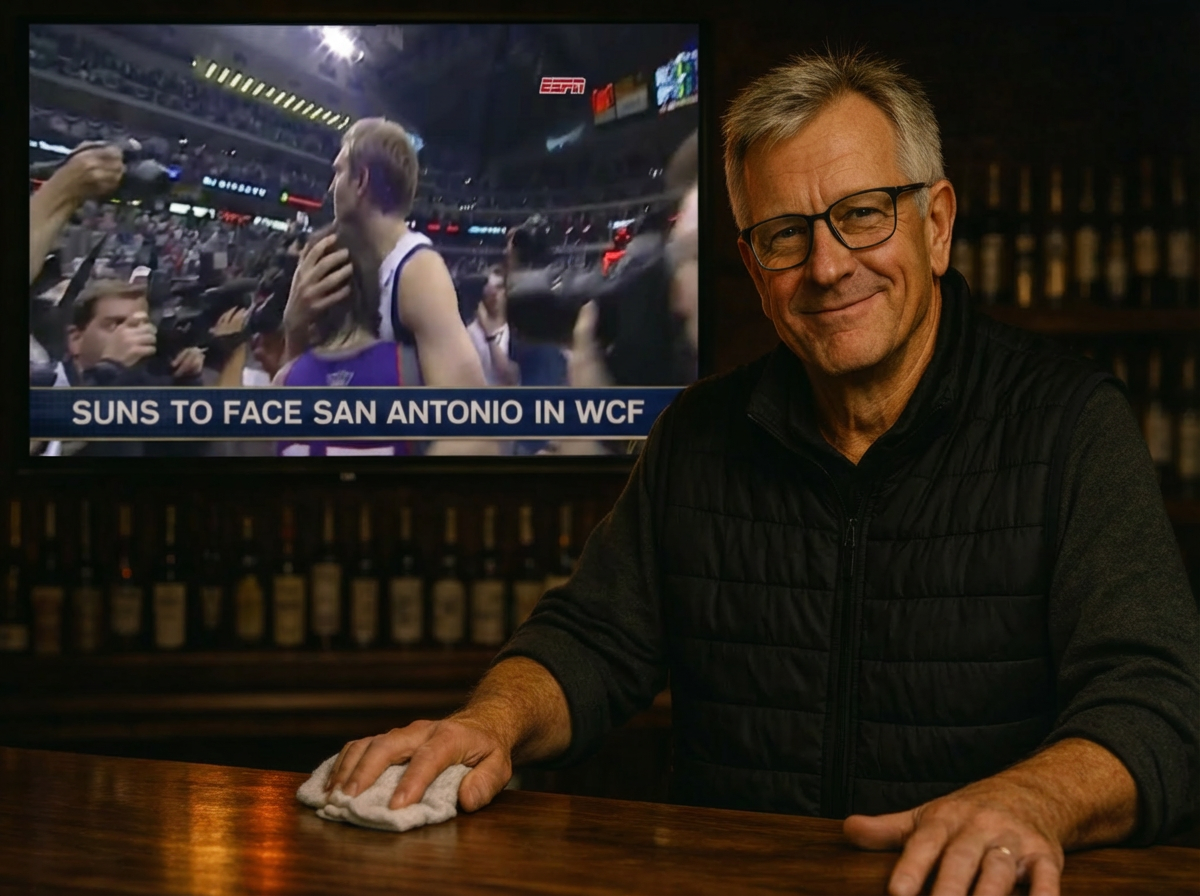
I don’t know how else to say it except this:
That was something.
You don’t see that very often. Five men on the floor who know exactly what’s coming, who’ve seen it on film — and two guys still walk them into it anyway. Over and over. No disguise. Just trust, timing, and just enough improvisation to subvert expectations each time.
People love to talk about surprises in sports. Clever insights that break the game open. This wasn’t that. Nash realized the only real finisher still standing in the foxhole was The Matrix, so that pick-and-roll became his final form for twenty minutes. Same question. Same answer. Delivered calmly until the other side ran out of ways to say no.
When it ended, you didn’t feel relief so much as recognition. Like you’d just watched something true reveal itself.
And yeah — the season doesn’t end the way you want it to. May gets physical. Bodies don’t always hold. San Antonio does what San Antonio does, and the run stops short. It stings, but it doesn’t invalidate anything you just saw; just interrupts it.
So when 2005–06 begins, it feels like unfinished business.
The faces are a little different, sure. Johnson’s gone — moved on draft night for Boris Diaw. Knicks bruiser Kurt Thomas joins over the summer, but the team loses him to injury before the trade deadline. So, to get one more big for the playoffs, Tim Thomas is brought in via trade.
You look up and the Suns are right there near the top. 54 wins, good enough for the three seed. Nash wins his second consecutive league MVP. Diaw shows up and wins Most Improved Player, brilliant in his own way. The numbers shift a little. The margins tighten. But the idea is intact. Still breathing. Still moving.
Only now, they’re not the only ones looking up anymore. San Antonio never left. Dallas is loading up.
And out in Los Angeles, a franchise that’s never mattered much just finished their best season ever.
5 Band on the Run
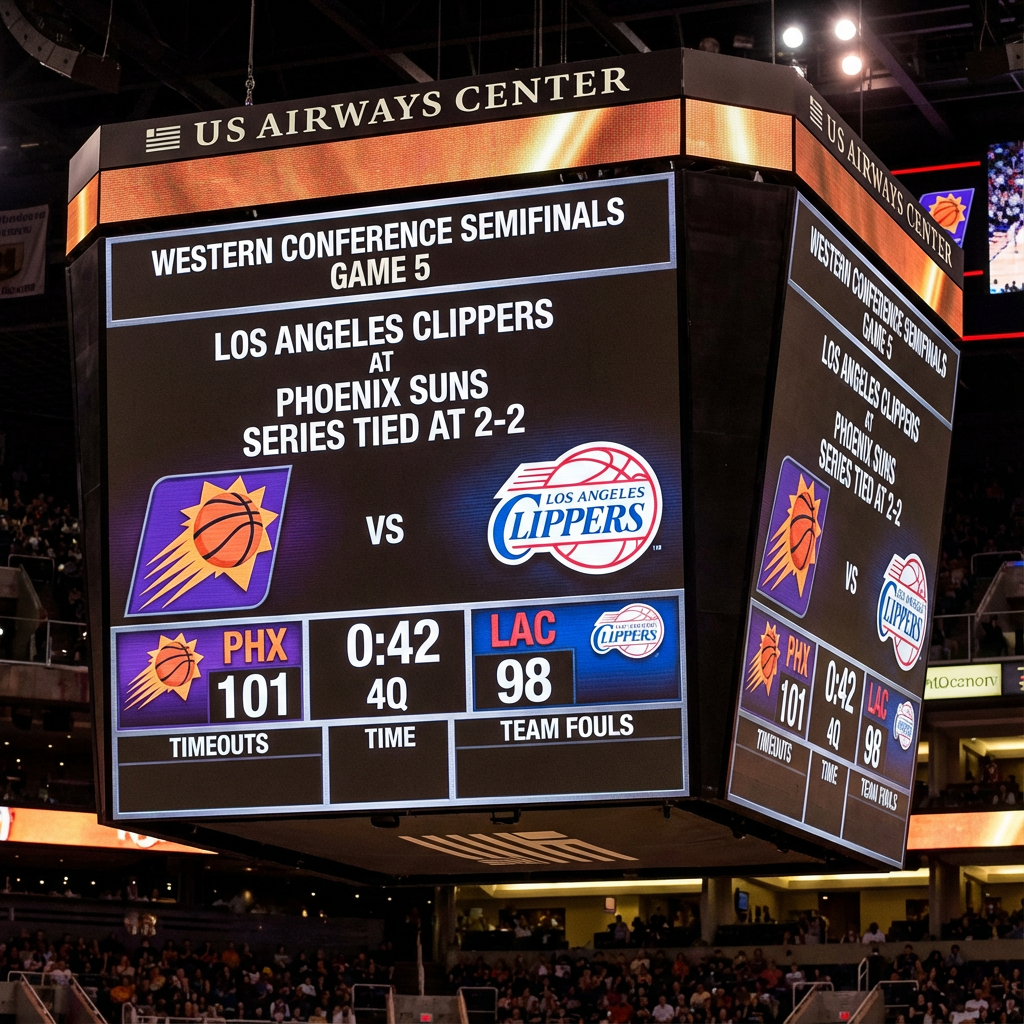
Sean Livingston watches to see if the inbound set play will go to plan. Sam Cassell cuts hard to the corner without the ball, Leandro Barbosa digging in to close the gap behind him.
Elton Brand jogs up from the paint and turns his body sideways, setting his feet with intent. Barbosa feels the screen before he sees it. A violent thud, bodies colliding, momentum stopping all at once — and Barbosa is erased. Laid out flat. Cassell doesn’t even look back. He catches the inbound from Livingston in the corner, rises straight into the shot, shoulders square, release calm, and the three drops clean. Tie game.
The Suns inbound quickly, because that’s what they do when things get heavy. Steve Nash looks downcourt to Marion and takes one step into a full-court one-handed trick-shot. A Hail Mary with intent.
Brand sees it too as he chases down the pass. Marion gathers, leaves the floor, and Elton’s mass meets him in the air, shoulder first, clobbering him out of the sky. The ball flies loose toward the baseline. Marion doesn’t move. He’s face-down on the hardwood, arms folded under his forehead, the bandage above his eye already darkening.
The whistle comes late. Just a personal. Mike D’Antoni is already on the floor, palms up, incredulous. “You gotta protect them, Javie,” he yells at the senior referee, voice sharp, cutting through the noise. “That’s a flagrant.”
The official doesn’t answer. The call doesn’t change.
Marion gets up slowly and walks to the line. Phoenix hasn’t taken a free throw since the second quarter. The building hums, restless now, sensing something fragile. Marion dribbles once. Shoots. Miss.
He exhales sharply, jaw tight, eyes fixed on the rim longer than he needs to. The second one comes off his hand flat and short, the same story twice.
Sean Livingston rises above the crowd of arms and pulls down the rebound. Clippers ball.
They call timeout. The scoreboard still reads 101–101, but the Suns are already paying for the math they chose before the game ever tipped — Boris Diaw and Tim Thomas sharing center coverage, speed where mass should be. Against a team that doesn’t mind hitting you to prove a point.
As they jog back, Nash drifts alongside Marion, close enough that nobody else can hear. “You good?”
Marion doesn’t answer. Doesn’t look at him. Just nods once, barely, and keeps moving.
Out of the timeout, Cassell confidently strolls up towards half-court. Whistle. Shocked, he looks up at the shot clock -- 16. Eight second violation, ball back to Phoenix. The irony hangs there: seven seconds or less on one side, can't keep it under eight on the other.
Nash lets time bleed. He waits. He wants the last word. Marion comes over to set the screen, long body angling just enough to force a switch. Livingston gets caught on him — nothing called now. Nash steps back, rises, the look difficult but familiar. The shot rims out.
Cassell hustles this time, racing the ball up the floor with nine seconds left, pulling up from deep with Nash contesting hard. That one doesn’t fall either.
Tim Thomas comes down with the rebound near the sideline. Two seconds. He turns and heaves it the length of the floor — a rushed decision, the ball sailing harmlessly as the horn sounds.
On the sideline, D’Antoni freezes, both hands on his head. As Tim jogs past, D’Antoni leans in just long enough to be heard. “Use the timeout, Tim,” he snaps. “That’s why it’s there.”
Overtime anyway.
Phoenix walks toward the huddle without looking at the scoreboard. They already know what this is going to cost.
The Clippers win the tip and don’t bother pretending this is going anywhere else. Cassell brings it up with his head already turned, eyes locked on the left block. Elton Brand is there, waiting, Tim Thomas behind him looking like a beagle at a bulldog convention. The entry pass is high and deliberate. Brand catches, feels Thomas on his back, relaxes into a motion he’s done a thousand times. He presses into Thomas, freezing him into the hardwood, dribbles once, then turns over his left shoulder. Sixteen feet. Clean. Clippers by two.
Phoenix comes back with movement. Nash brings it across and gives it up early, the ball circling the perimeter. Barbosa probes and retreats. Nash takes it back. Livingston is on him now, long and quick enough to frustrate. Nash explodes left, gets half a step driving toward the paint, and forces Brand to make a decision. Brand shades off Marion in the corner, one foot still in the paint, hands low, choosing help over coverage. Nash takes the invitation and snaps the pass. Marion steps into the three. Misses everything, but the ball arcs to Tim Thomas on the far side of the rim, who flips it back up before anyone can react. Tie game.
The Clippers don’t flinch. Cassell walks it back up like he’s bringing the temperature down with him. Same look. Same read. Brand seals early this time, deeper. Thomas leans, gives ground. Cassell feeds it in. One dribble. Turnaround. Same result. Again.
This is the part where the Suns could panic. Where they could start sending help too early, selling out the perimeter to survive the paint. They don’t. Not yet. Nash brings it up slower now, scanning. The ball moves side to side, looking for energy. This time it’s Radmanović in front of Steve — long, upright, still learning the angles after being traded to Los Angeles midseason. Nash tests him left, dragging Brand into the decision again. Brand stays home. Marion drifts free and Nash sends the bullet pass, but Marion's three clanks off the rim.
Raja Bell sprints after the rebound as it dribbles toward the sideline, but Cassell steps in front to prevent the recovery. The collision sends Sam into the first row, but this is the playoffs; play continues.
The Suns jog back on defense with their heads up. No shouting. No gestures. Just looks exchanged, quick and knowing. They’re getting beat in the places that make sense. They’re losing the math they chose to lose. The Clippers are only up two.
A minute and a half left in the first overtime, and Nash is visibly spent but still carrying the attack like a man possessed. He uses a Marion screen on Livingston to turn the corner and force Brand to collapse toward him, then snaps the ball back out. Raja Bell is already set — feet square, shoulders relaxed — and the shot drops clean. Phoenix takes the lead, 106-105.
Raja doesn’t linger. He turns immediately and sprints back, meeting Cassell early. Sam wants to go back to what’s carried the Clips all night, the two-man rhythm with Brand waiting to receive. But Raja is locked in. When Cassell turns his body to feed the post, Raja jumps out, swatting the entry pass into open space and gathering it himself before anyone can react. As Raja races past the bench, Amar’e in his street clothes leans in with a grin, "Oh, you got him shook now!"
Nash finally gets a look he doesn't have to manufacture, stepping into an open transition three, a shot he makes a thousand times out of context. This one rims long.
The Clippers feed Cassell who looks to reclaim control. Raja's confidence is feeding the pressure. Brand comes up to screen, and Raja fights over it, refusing the switch, staying attached through the contact. Cassell dances anyway — crossovers, jab steps, the full veteran catalog — but with nowhere to go he settles for a contested pull-up. It comes off, cleaned by Marion.
Barbosa streaks ahead, bending the floor with his speed. He receives the outlet pass in the baseline corner, but doesn’t force it. He kicks out to Raja, who swings it one more time to Tim Thomas spotting up on the top of the perimeter. Good look, clean and earned. Still won't fall. Whistle on the rebound gives the possession back to Los Angeles with ninety seconds to go.
Raja is still giving Cassell fits, denying clean angles, forcing the ball sideways. When Cassell looks unload a cross-court pass toward Mobley, Marion reads it early, stepping cleanly into the lane and knocking the ball out of bounds. Marion hasn't covered Brand much tonight, but in exchange he's held Cuttino Mobley to single digit points with zero threes even attempted.
With 1:12 left and the shot clock down to six, Livingston is looking to inbound. Cassell and Brand go into motion off the ball. Tim Thomas fights to stay connected as Brand cuts across the lane, arms tangled, feet moving. Cassell's line is to screen Tim off of Brand's motion, but the screen is late. Tim collides with Sam and the whistle comes fast. Blocking foul. The replay hits the big screen and the building turns instantly, boos pouring down as the replay shows the messy truth; Sam's feet not clearly set, Brand appearing to be holding Tim for the contact. A call that could have gone the other way.
Instead, it’s Thomas’ sixth. He turns in disbelief, then walks slowly toward the bench, where D'Antoni is reminding an official that that wasn't a screen. Boris Diaw stands, pulling off his warmups, cold and suddenly central. The Suns haven't lost a body, they've lost flow with the game hanging in the balance.
Elton steps to the line for two and doesn’t acknowledge the noise. Both free throws fall. Los Angeles back in front, 107–106.
Nash answers immediately. He takes the inbound and doesn’t wait for alignment, splitting Livingston and Brand with a burst that looks impossible this late. He gathers in traffic and flips the ball softly off the glass before the help can arrive. Phoenix back ahead by one, and the crowd grows louder, allowing itself to believe.
Cassell takes it back the other way and reminds everyone that, unlike the rest of the Clippers, he’s been in this exact moment before. He waves Brand away, isolates Raja Bell, rocks the dribble once, twice, and rises into a midrange pull-up that barely disturbs the net. Clippers 109, Suns 106.
Nash comes back slower now, breath visible in his shoulders. He drives again, draws the defense, and threads a no-look pass toward the spot where Boris Diaw is supposed to be — but Diaw hasn’t rotated. The ball skids untouched out of bounds. Nash bends at the waist a beat longer than usual, then straightens and jogs back.
Cassell reads the adjustment. Marion is now on Brand.
Elton approaches as if to set the screen, Marion ready to switch but not overcommitting. When Brand peels away instead, drifting toward the corner, Marion stays attached. Cassell delivers the pass anyway. Brand doesn’t have a shot. Smothered, clock shrinking, he kicks toward Mobley on the wing — and Barbosa jumps the lane, clean. He’s gone the other way.
Eleven seconds left.
Nash takes the return pass. This possession was always going to be his. Livingston meets him at the arc. Nash doesn’t hesitate. He hits the gas. Livingston tries to stay with him, but a Diaw screen clips him just enough. Nash curls tight around Radmanović, slipping under the rim as bodies collapse from every direction. In the center of the paint, he spots Diaw, alone at the rim, daylight just wide enough to score.
Nash tries to thread it the pass between two defenders, but the pass is off. Take your pick on why - momentum, exhaustion, degree of difficulty — Nash hasn’t rested a second this period, and now the margins finally betray him. Cassell scoops it clean and Raja Bell immediately fouls to stop the clock. Cassell walks to the line and does what veterans do. Both free throws fall. Clippers 111. Suns 108. 3.6 seconds left.
Out of the huddle, something is wrong. A red jersey is floating where it shouldn’t be. Daniel Ewing — a rookie who hasn’t played a minute all night — drifts without purpose, pointing, unsure. Livingston gestures at him urgently, trying to fix it on the fly. The moment doesn’t wait.
Diaw takes the ball to inbound. Mobley crowds him. Ewing hesitates. Raja Bell slips free into the corner. The pass is a rifle shot right into the shooting pocket. Raja catches, plants, squares. Ewing closes — almost enough.
Nothing but net. The building detonates.
It isn’t a cheer so much as a release — noise crashing down from the upper deck, rolling across the floor in a single violent wave. Bell lands roaring, fists clenched, chest out, shouting something sharp and profane straight at the Clippers’ bench. Whatever it is, it doesn’t need translation.
Marion and Barbosa arrive immediately, slamming into him from both sides — hands on shoulders, forearms across his back. Bell barely acknowledges them, still barking, still locked in.
Across the floor, Livingston lifts his hands above his head in disbelief — then lets them fall. His shoulders sag. He looks crushed.
Cassell turns and unloads on Ewing, pointing, shouting, demanding answers that aren’t coming. Ewing stares back, lost. The Suns’ bench floods the sideline, wrapping Bell in hugs, claiming the moment.
During the timeout, Mike D’Antoni draws up a play. The marker squeaks against the board. None of the Clippers seem to be listening. Eyes drift. Bodies lean. They look like a team trying to remember how they got here.
The final second changes nothing. Livingston overthrows the inbound. Marion’s half-court heave catches iron, then spills away.
First overtime ends tied at 111. But it no longer feels even. Phoenix walks toward the huddle riding noise, emotion, momentum — the crowd still standing, still buzzing, still alive.
The Clippers walk with their heads down. Something has turned.
The second overtime sees patterns continuing, but also the Suns finding ways to stabilize on both ends of the floor.
Boris Diaw’s doubles arrive earlier now. He’s no longer guessing where Elton Brand wants to go; he’s meeting him there. Each rotation is cleaner than the last, chest square, arms disciplined, trusting Marion to hold the back line. And Marion does. His feet are quicker. His angles tighter. Brand still gets the ball, still tries to turn, but the space is gone. The shots are harder. The catches less comfortable. It’s subtle, but it’s real: Diaw’s confidence is stabilizing the floor, and Marion is feeding off it.
Marion, for his part, is clawing his way back into himself. The stops in the first overtime matter. So do the rebounds — eighteen, then nineteen. So when he creates contact and walks back to the line, the memory is still there: two misses, the bandage, the nod that wasn’t really an answer. This time, he breathes, settles, and knocks them down.
But with 1:22 to go, the Clippers have kept it tight.
Cassell brings it up, looking to adjust to the recent double teams. The entry lob to Brand is stretched longer this time, forcing Brand to go to the ball, and ruining the perfect positioning of the defense. Brand reaches, gathers, turns. His first shot doesn’t fall, but he stays with it, muscles through traffic, and finishes the second effort through contact. The whistle comes. And-one. The free throw drops, and the Clippers inch back in front, 119–118.
Nash jogs the ball up on the other end, eyes already scanning. Diaw cuts hard down the lane, and Nash hits him in stride. Brand collapses immediately, closing the window. Diaw doesn’t force it. He kicks to Raja Bell in the corner as Mobley dives across the lane, arms outstretched. The ball skids loose, bodies collide, and it trickles out of bounds. Clippers last touch. Suns ball, thirteen seconds.
Out of the inbound, Nash faces Quentin Ross. One jab step. Another. Off the ball, Marion sees his defender ball-watching, and he backs out to the wing, creating space. Nash, curls into the paint, collapsing the defense, and his pass finds Marion in stride, rolling to the hoop from the weak side. Layup. Clean. Phoenix by three, 121–118. Marion hits the floor running on the way back, first man across half court despite coming from deepest under the rim. Nash slaps his hand, welcoming him back.
Cassell tries the adjustment again — the long lob, the stretched window meant to beat the double. But Diaw is already moving. He pre-rotates, steps into the lane before Brand can turn, and the pass has to come out. Brand kicks it to Mobley instead. Mobley rises from midrange. Miss. Barbosa skys for the rebound, secures it cleanly, and is wrapped up immediately by Livingston, his fifth foul. Barbosa goes to the line and makes both. Phoenix extends it to 123–118.
Nash takes the ball after, walking now — not because he’s tired, but because everyone else already knows. The crowd is standing, arms raised, dancing, cheering. The noise isn’t urging anything forward anymore; it’s celebrating what’s already happened. The Clippers feel it too. Teams with this much experience know when the margin is gone, when the answers are spent. This one took everything — and left nothing behind.
“As we fell into the sun
…the first one said to the second one there
I hope you’re having fun.”
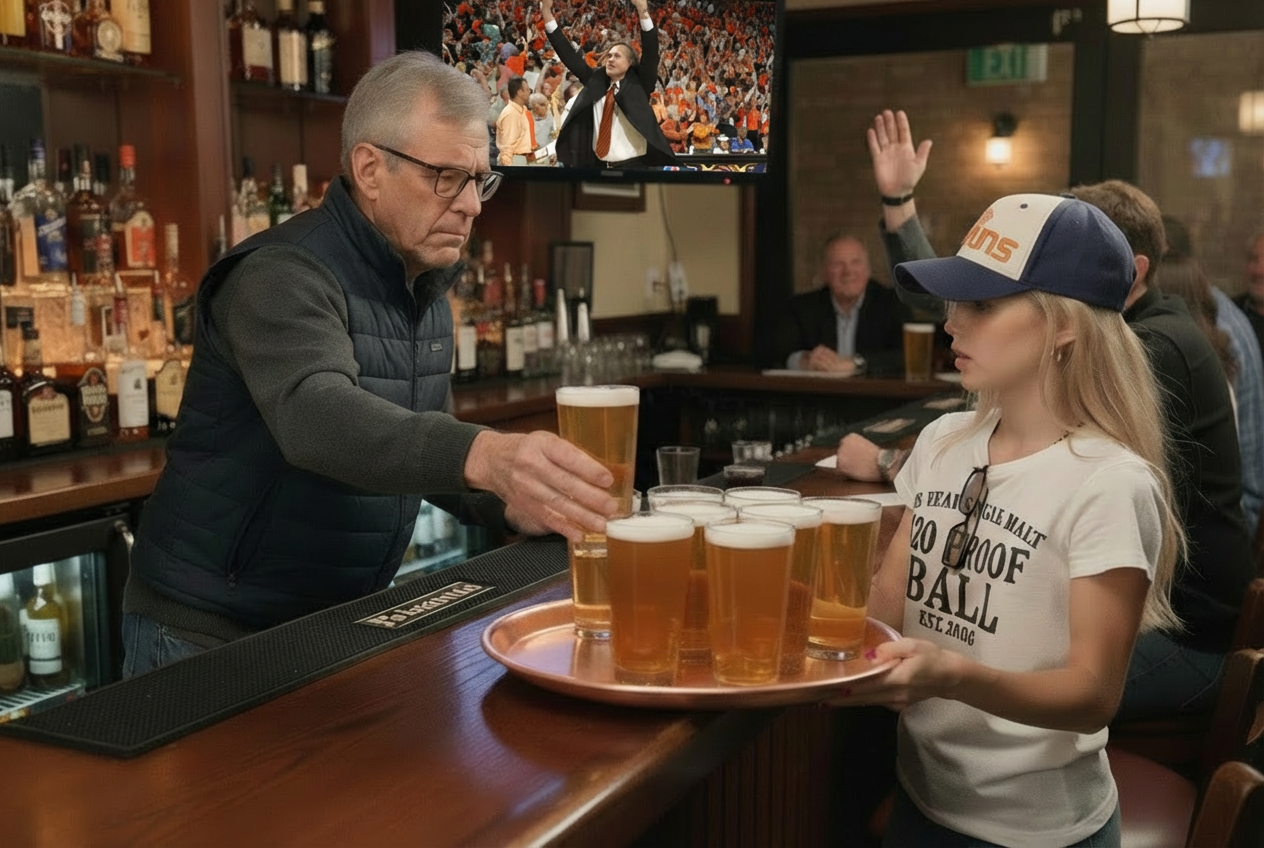
The tray is balanced because it has to be.
She’s learned the angles, the pace, the small corrections that keep everything upright. Not because it’s heroic — because there’s no one else to help. Somewhere behind the bar, someone has decided that adding more servers would only hurt the bottom line.
That’s how the Clippers series ends. Six games. The tray wobbled, but didn't spill. Phoenix advances — proud, but visibly spent.
The momentum carries into the conference finals. Against Dallas, the Suns strike first. A 2–1 lead. The system hums. For a moment, speed and trust look like they might outrun size and depth of talent. But Amar’e and Kurt Thomas still aren't there. As Dirk systematically solves the Suns defense, they run out of new angles to show him. The Mavericks win in six.
Phoenix knows exactly why. The difference wasn’t subtle.
In 2005–06, Dallas spent roughly $116 million on basketball. Phoenix spent $54 million. One team was built to absorb injury, fatigue, and variance. The other was built to be brilliant and hope nothing went wrong.
The problem was clear, so how did leadership respond?
Did they add affordable young legs through the draft? The picks were good enough: Nate Robinson and Marcin Gortat in 2005. Rajon Rondo and Sergio Rodríguez in 2006. After draft night, all four were gone — exchanged for cash.
Did they find depth through trades or free agency? The opposite. Joe Johnson was moved before his price rose. Tim Thomas signed with the Clippers after the Suns used their mid level exemption to sign Marcus Banks, a backup guard who would struggle to learn their system.
For Robert Sarver, this works. Revenue-sharing checks clear. Payroll stays lean. The team remains competitive. Jerseys sell. This is an owner who calculates that if the profits are wide enough, a Larry O’Brien Trophy is optional. If the NBA felt this was a problem, the incentives would be different.
For the Suns, continuity — and a return to health — will need to be enough as the 06-07 season begins.
In the regular season, it mostly is. Sixty-one wins. No drama. In the first round of the playoffs, Phoenix hands Kobe Bryant and the Lakers a gentleman’s sweep — a reminder of how overwhelming this team looks when it’s whole. After three years, they aren’t just harmonizing anymore. They can really jam.
And in the semifinals, a familiar foe awaits them. A team that exists almost as a refutation of the Suns’ very principles.
6 The Long and Winding Road
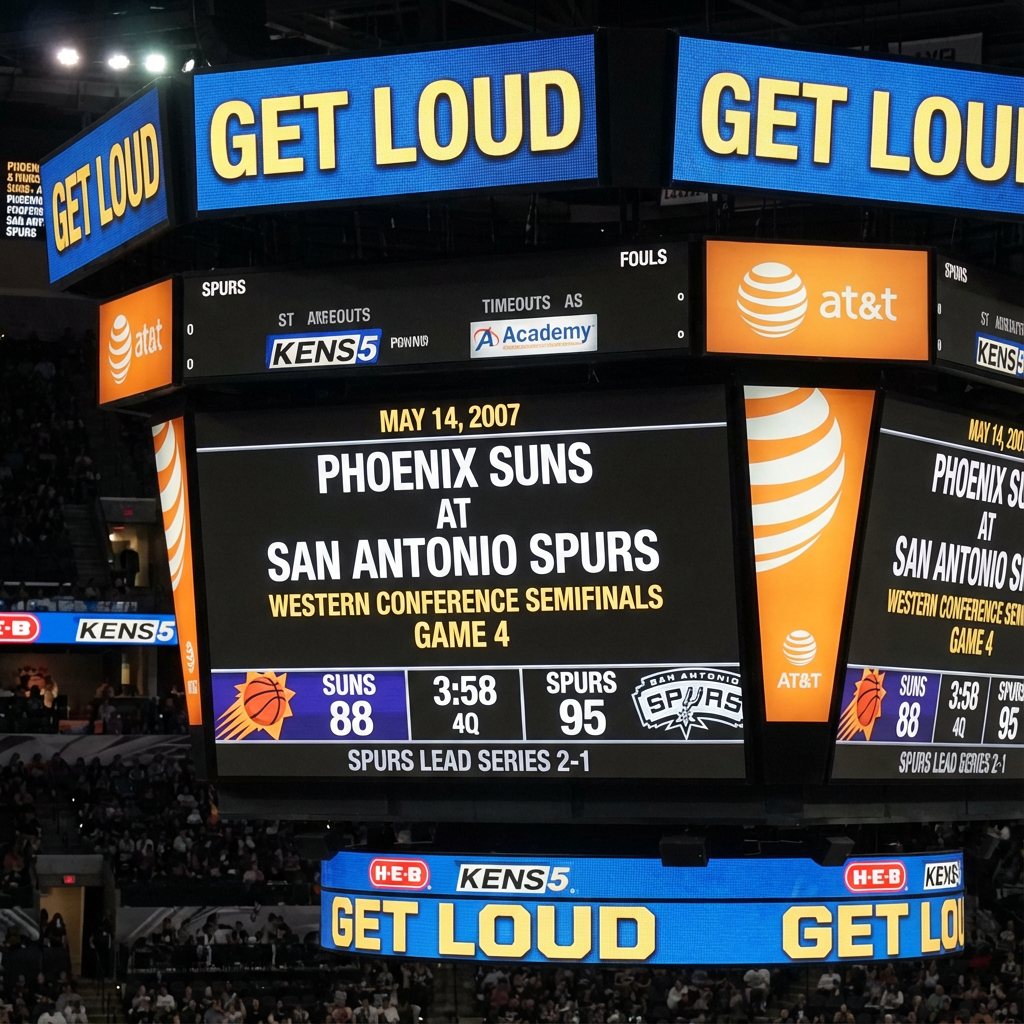
Amar’e yanks his shorts into place in front of the Suns bench as Tony Parker steps up to the stripe for the first of two. Mike steps out just far enough for his voice to cut through the noise. “He makes these, we're down seven,” he barks. “Been here before. You know what to do. If you see it, go. If not, trust your teammate, pass it. No hesitation."
Then he leans in, voice dropping, eyes locked on Amar’e.
“Duncan has five fouls too,” he says as Tony Parker sinks the first one. “The whistle doesn't go on the guy making the play in a game like this; be aggressive.”
Amar’e nods and hustles to line up to rebound the second shot. It goes through clean.
Nash takes the ball on the run. Bowen is late getting back, Ginóbili shading toward the middle to slow the lane. Nash gives it up early to Raja and keeps moving, cutting just enough into Ginóbili’s path to widen the closeout. Raja rises cleanly, but the shot comes up short. Oberto holds position and pulls it down.
San Antonio flows straight into early offense. Parker sprints the middle lane, Ginóbili wide to his left, drawing the defense across the floor. Parker gives it up and gets it back without breaking stride, forcing Barbosa to retreat instead of set. When Parker goes up, Barbosa meets him chest-to-chest. The contact carries Parker into the stanchion. Whistle. Two shots. Both fall.
Nash brings it back immediately, not waiting for the floor to organize. He swings it through Marion at the top and curls hard off the return pass, Bowen still attached but trailing. Oberto steps up just long enough to close the lane, and Nash tries to slip a pass behind him to Kurt Thomas cutting baseline. Bowen’s hand is already in the lane. The ball glances off his fingers and skids loose. Parker is gone with it.
Again Parker pushes before Phoenix can load to the ball. Kurt Thomas slides across to cut off the rim, Marion chasing from behind. Parker hangs long enough to draw both, then floats it high through contact. Another whistle. Another two. The margin stretches back out.
This time Nash walks it up, pulling the defense with him. Amar’e drifts toward the screen but never sets it, forcing Bowen to guess. Nash turns the corner anyway, splitting the gap before help can arrive. Duncan retreats instead of stepping up, hands straight, protecting the foul. Nash waits for the collapse and flicks the ball behind his back into space Amar’e is already attacking. Amar’e gathers before Duncan can slide and finishes through him. The lead is five.
Ginóbili initiates, Duncan calling for it on the block. Ginóbili holds the ball just long enough to freeze the help, then knifes between defenders. Marion rotates early and gets a hand on the floater, knocking it loose just enough that it drops straight into Duncan’s hands. Duncan turns and lays it in before the defense can recover.
Nash answers without pause. He stops above the arc, reading Bowen’s feet, then uses Marion’s angle to curl into the lane. Duncan shows and retreats in the same motion, unwilling to commit. Nash rises before the help can close. The shot snaps through.
San Antonio swings the ball side to side, probing without forcing it. Ginóbili cuts under the rim and loops back out, Duncan sealing deep but never receiving the entry. When the ball finally comes inside, Marion and Amar’e crowd Duncan’s space. Duncan kicks it out, the extra pass coming a beat late. Ginóbili drives anyway, but the window is gone. His shot dies on the backboard. Marion pulls it down.
Nash crosses half court and gives the ball up early, drawing Parker toward him. Raja catches with space, shot-fakes to pull the closeout, then slips the ball inside. Marion has already cut behind the defense, hands high. He finishes with two hands before help can arrive.
San Antonio goes right back to Duncan. Amar’e takes him straight up, forcing him to turn twice before shooting. Marion digs down late, just enough to make Duncan fade. The shot hits back rim and comes out. Marion rebounds again.
Nash slows the next possession, waiting until Amar’e comes up. Bowen presses high, so Nash delays, then uses Amar’e late, forcing the switch. Four defenders collapse toward the ball as Nash snakes the dribble through the lane. Before any of them can commit, he snaps a no-look pass into the space Amar’e is stepping through. Amar’e gathers and finishes before Duncan can rotate. Phoenix has the lead.
Popovich calls timeout.
Out of the huddle, San Antonio runs a clean set to free Finley on the curl. He catches in rhythm, rises from eleven feet. The shot catches front rim and bounces out. Marion secures it.
Nash brings it up deliberately now, the clock his ally. Amar’e drifts toward him again, never fully setting the screen. Nash waits for Duncan to settle back, then slips the pass just as Amar’e rolls. Duncan stays vertical, refusing to step forward. Amar’e releases it high, over the contest.
It drops. Suns by three.
San Antonio comes back with one more isolation. Ginóbili attacks Raja, changing speeds and angles, trying to force separation. Raja slides with him, chest square, hands back. The layup spins out. Barbosa controls the rebound and calls time out.
Phoenix inbounds. Nash circles back for the ball in the backcourt, Robert Horry sliding with him step for step. There’s space toward the sideline. Nash takes it, angling wide to keep the ball safe.
Horry steps into Nash, hip checking him out of bounds. The sound is flat and wrong. Nash crumples to the floor in front of the scorer's table, officials at the table wide-eyed at what just happened.
The whistle comes immediately.
Raja Bell lunges forward, grabs the jersey of Horry shouting straight into his face. Barbosa steps in to try and de-escalate the situation, but the moment is too hot for that now. Amar’e and Diaw are already up from the bench — not charging, just moving toward their prone captain — two steps onto the floor before assistant coaches and teammates wrap arms around their chests and pull them back. Amar’e strains once, then stops. Diaw’s hands stay open the entire time.
Tim Duncan is there almost at once, bending toward Nash. Gregg Popovich follows him in, one arm extended, already talking to an official.
Nash sits up slowly. Someone has a hand on his back, another on his arm. He nods once to say he’s there.
The stoppage stretches longer than it should. On the Suns bench, Alvin Gentry watches the officials gather, arms folded. “It’s fine,” he says, almost to himself. “Our guys didn’t do anything.”
Marc Iavaroni shakes his head. "No,” he says. “After the brawl in Detroit? Players squaring up against fans in the stands? This is zero tolerance.”
Gentry exhales. “They didn’t touch anybody. Amar’e was being subbed in — he was allowed to leave the bench.”
“Doesn’t matter,” Iavaroni replies. “The rule isn’t about intent. It’s about optics.”
After a Flagrant 2 on Horry and a technical foul on Stoudemire, Phoenix is up 3 with 18 seconds on the clock. The ball is successfully inbounded to Nash, Spurs must foul to stop the clock. Nash makes one of two, but a late four point lead is enough for the San Antonio faithful to begin milling out to beat traffic.
On the Spurs bench, Tim Duncan doesn’t react. He stands at the scorer’s table, hands on his hips, eyes fixed on the floor as if willing it to explain itself. No anger. No protest. Just calculation giving way to something colder — the recognition that a game they’d had under control has slipped.
As the horn sounds, Phoenix’s bench spills onto the floor, not all at once, but in waves — trainers, assistants, teammates — Nash at the center of it, moving down the line, hand to hand, checking everyone in with a grin. The win is improbable, undeniable. Earned.
“The long and winding road...
It always leads me here
Lead me to your door.”
Tuesday, May 15th, 10:38am. Suns Practice Facility, Phoenix, Arizona.
The phone rings. Mike looks at it long enough to know who it is. “Yeah,” he says, already standing. “David.”
“Hey, Mike,” Griffin says. No small talk. “I talked to the league front office.”
Mike nods once, even though no one can see it.
David continues, “They’ve made their decision on the suspensions.”
That settles it. No appeal. No discussion.
Griffin keeps going, measured. “Horry’s getting two games.”
Mike exhales through his nose. He’d expected that. Writes it down anyway. Habit.
Then Griffin continues. “Amar’e — one.”
Mike loosens his tie without thinking. Looks down at the clipboard in his hand. The page is still covered in the sets he’d drawn up for Game 5. He flips it once. Blank on the back.
“And Diaw,” Griffin says. “One.”
Silence.
Mike presses the clipboard flat against the table. Smooths the paper like it might change something.
Griffin waits. Then, quietly: “They only stepped off the bench because they care, Mike. Don't ever apologize for that.”
Mike closes his eyes for a second. Just one.
Then he’s back. “When’s the league going public with it?”
Griffin tells him.
Mike nods again. “Alright,” he says. “That gives me a window.” He’s already thinking about who he has to call first. How to say it. How long before the news reaches them anyway.
“Thanks for letting me know,” Mike says.
“Of course,” Griffin replies.
The call ends. Mike flips the clipboard back over.
The page is still blank.
7 Coda
History says the suspensions ended the series.
What it leaves out is that this team was already living on a short rotation — seven men, no safety net. The Spurs did ultimately go on to sweep LeBron's Cavaliers and win the NBA Finals. But in Game 5, stripped down and undermanned, the Suns still gave them hell, losing by just three.
The next summer, the team chased weight instead of rhythm. The roster got slower, older. Shaquille O’Neal arrived, years past his prime — the coda was playing.
The Suns showed that the ball doesn’t belong to anyone — it just finds energy. And for a while, the energy found them.
What’s easy, in retrospect, is to treat the ending as a flaw. To say the system failed because it couldn’t protect itself when things turned violent, bureaucratic, or cynical. That it was too fragile. Too idealistic. Too light for a league that survives by weight and leverage. That misses the point.
The failure was not a bug. It was the cost of fidelity.
When teammates stepped off the bench to protect Steve Nash in San Antonio, it wasn’t recklessness. It wasn’t immaturity. It was the purest possible expression of what they’d been taught for years: Stay in the moment. Read, respond with truth, don’t hesitate.
Love, executed at full speed.
You don’t get to spend a season telling players that instinct matters — that flow matters — that the right response comes from the heart rather than a committee — and then expect them to become accountants when something sacred is threatened. The system worked. It just worked honestly.
D’Antoni’s offense, when it’s right, turns basketball into the beautiful game. It replaces command with conversation. It asks players to see each other, to listen, to move without waiting for permission. It removes restraints while defining what benefits the whole, and then lets each operator solve the problem with the skills they uniquely possess. That’s the beauty.
It’s also a magnifying glass. Every participant who touches that system is revealed by it.
The system revealed Nash as the league MVP, Mike D’Antoni as Coach of the year, Boris as Most Improved Player… the whole team was revealed to be made of the stuff of winners.
But ownership was revealed too. The system asked Robert Sarver for belief. It was met instead with fear — fear of humiliation, fear of loss, fear of losing control. Draft picks sold for cash. Depth treated as indulgence. An owner playing an entirely different ballgame.
The system shuddered.
The NBA front office found itself revealed as well. The system asked them what their heart said to do. And the league said hearts don’t get to vote. No, after the existential threat to the league and its sponsors that The Palace in Detroit represented, fear was holding the league too. Fear of losing it all.
Jazz doesn’t run on fear. You can’t improvize a solo when you’re scared of a missing a note.
Eventually the music stopped; the set concluded — not because it had run out of things to say, but because someone with authority decided it was time to turn it down.
That’s when it’s time to do what musicians have always done when the set ends honestly.
You take a bow. You step off the stage.
You look back at what the movement carried you through:
A refrain of freedom — where basketball once again became the beautiful game.
A bridge that elevated every player and coach, sharpened them, showed who they were when given trust and asked to create.
And a chorus that revealed the truth of this team: greatness.
You have to be able to live with that.
Let it be.
KEEP THE TEMPO UP:
Click on the the banner below to continue to Part 3
THOSE WHO WOULD RUN THE WORLD

The Adelman Kings, We Believe Warriors, Run & Gun Nuggets and the Splash Brothers.
We're covering them all over this nine part series. Subscribe to our Substack newsletter so we can let you now when we drop a banger.
Todd /
120 Proof Ball
If you liked this piece, you’re part of the problem.