
Another Brick on the Wall
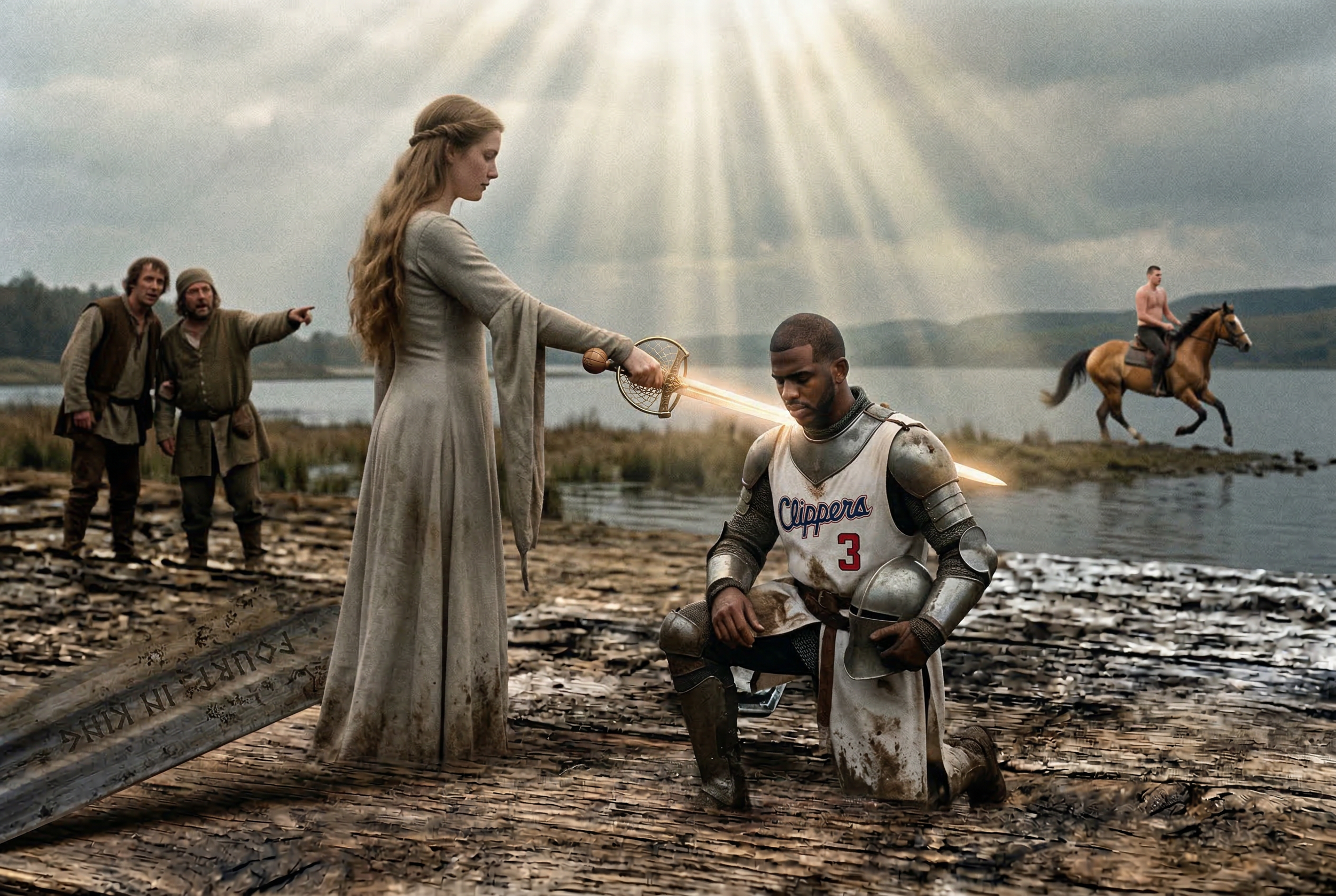
Chris Paul retired recently, which is a polite way of saying the Clippers had him on house arrest before Paul was banished to the icy tundra of Canada before being unceremoniously waived by the Raptors a day later.
Chris Paul leaves the game as one of the sharpest floor generals the sport has ever produced, a mid-range ninja who would weave an S-curve dribble on the first action, always keeping his eyes up and the dribble alive. In 2008, on his way to winning his first of two Olympic medals, there was a real debate as to whether CP3 or Deron Williams would carry the torch forward for the legends who came before: Kidd, Isaiah Tomas, Stockton. And one day the debate was just… over. Chris led the league in assists five times, and six times in steals.
Yet for all of his diligent worship at the altar of the assist to turnover ratio, there he is in the historical record, standing outside the penthouse with his bags.
This is not just Chris Paul’s story. This is the league’s story. The NBA loves to sell a certain lie to its children. Work hard. Win early. Dominate your level. Answer the call. Survive the trials. Become special enough, disciplined enough, undeniable enough, and someday the game will hand you the ending you were promised. The confetti. The coronation. The clean final scene that validates all the years of sacrifice.
Let me explain: On Valentine’s Day in the early 2010s, I needed a hotel room in Los Angeles so my wife and I could celebrate the romance of consumerism.
Everywhere I looked, the city had gone feral. Rooms that normally cost a couple hundred bucks had suddenly been inflated into hostage situations. Eight hundred here. A thousand there. Motel 6 was charging so much that they were interviewing for a maître d’. Finally I found a room at the Hotel Figueroa for something that still felt obscene, but in a world-has-ended sort of way rather than a call-your-bank sort of way. So I took it.
Later, I got a call from someone at the front desk. She apologized: the listing wasn’t supposed to be there. The room wasn’t really available. Then, in the gentle transactional poetry of all American institutions, she let me know that if I could make it worth her time, maybe something could be arranged.
So I did.
That night, when we arrived to check in, there was a man at the desk ahead of me. He was angry in the particular way only a man with a valid reservation can be angry. Not wild-eyed. Not drunk. Just wounded and incredulous. He had the confirmation number. He had called to confirm his room this morning. He had done everything right. And now a hotel employee was explaining to him, with corporate calm and just enough sympathy to make it worse, that on high-demand nights like this, in certain circumstances, rooms can disappear. Policies. Timing. Unfortunate situation. Nothing they could do.
He stood there holding the paperwork for a future that had already been quietly given to somebody else.
Then they checked me in.
That poor bastard was Chris Paul.
Not literally. But spiritually, historically. He is one of the clearest examples the sport has ever produced of a man who kept arriving at the desk with a legitimate claim, only to be told — politely, professionally, and with just enough regret to be insulting — that the room was no longer available.
That’s what this piece is about.
Not playoff chokers, nor pretenders to the throne. No, the darker thing. The administrative cruelty of sports history. The way a man can do everything the story asks of him — win early, master the craft, answer the call, survive the trials, become one of the best who has ever done it — and still discover that his era has been overbooked.
Look, sometimes the best team wins. Other times you show up on time, reservation in hand, and some 7’4” Frenchman is already upstairs with his shoes off, enjoying the room that was supposed to make your whole story make sense.
That’s the reality nobody talks about.
Let’s get real. Five era’s of basketball. Five walls to dash your destiny upon.
The 80's
The Quest for the Holy Title
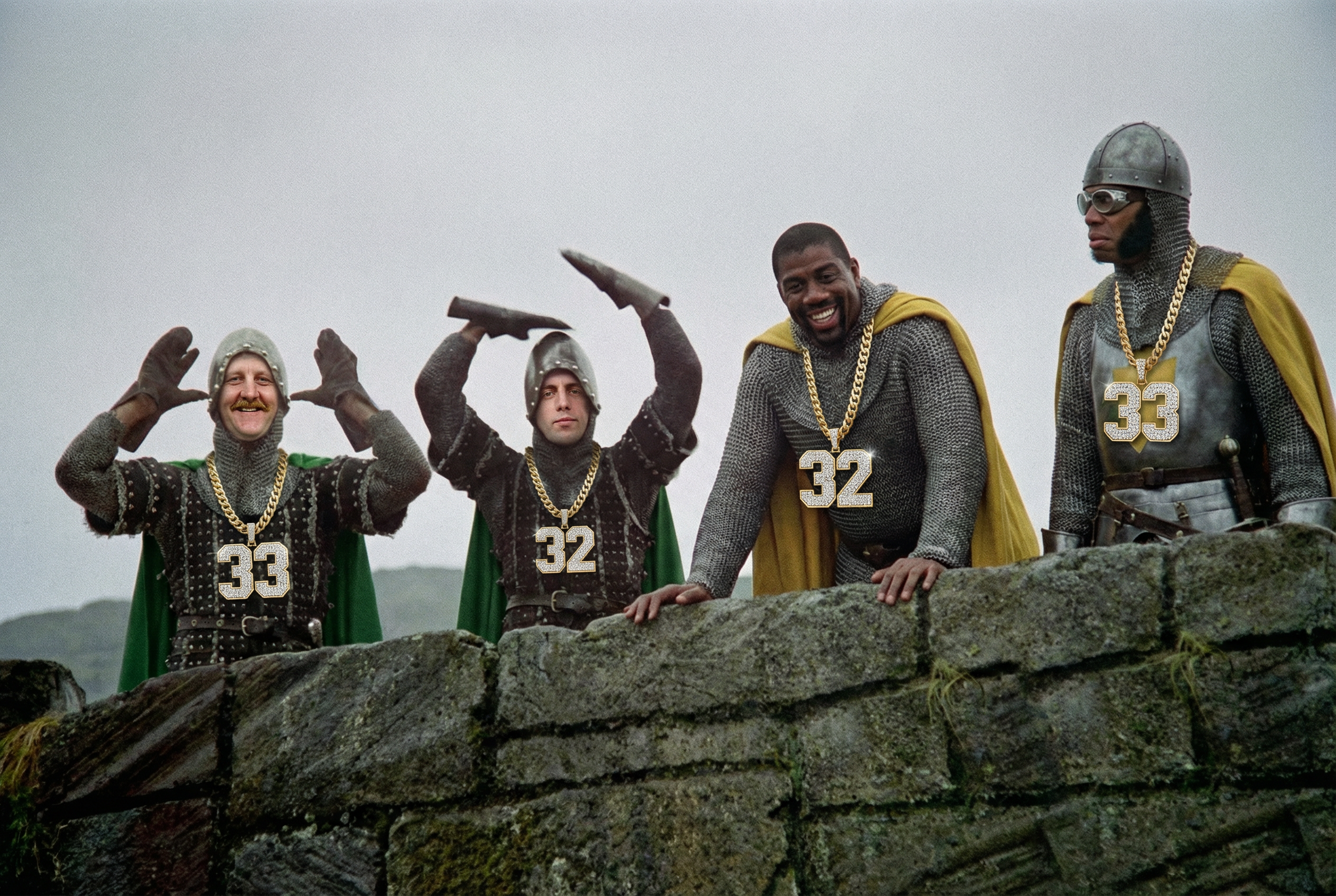
Sidney Moncrief had the sort of résumé that, in a fair and sentimental universe, gets handed a sword, a prophecy, and a soundtrack that starts quietly before swelling at exactly the right moment.
He was the pride of Arkansas, a high-school star turned college hero. At Arkansas, he led the Razorbacks to their first Final Four in more than three decades, became a Consensus First-Team All-American, swept the Southwest Conference honors, and shot such a ridiculous percentage for a 6-foot-4 guard, you'd probably guess he manned the paint and was built like Wilt. Milwaukee drafted him fifth and tasked him with the modest quest of building the next great Bucks era now that Kareem Abdul-Jabbar and Oscar Robertson had moved on.
And for a moment, the shape of the story made perfect sense. Moncrief was efficient, tough, disciplined, and complete in a way that coaches fetishize and fans usually don’t appreciate until twenty years too late. Five-time All-Star. Still the only player to win Defensive Player of the Year twice in a row. He was the real thing. A two-way star; a role model to aspire towards.
And his Bucks won like contenders — 52 wins per regular season during the 80's. Remarkably, they’d arrive at the Playoffs as the 2-seed seven seasons in a row.
And so, having answered the call, passed the trials, and gathered a band of worthy fellow warriors, Sidney Moncrief would show up for his date with destiny, antlered helmet polished, flowers in hand.
And a peasant would shoo him away, “Oi, move your 'ead, I’m trying to watch Magic and Bird.”
The 1980s were not a healthy basketball civilization. They were a pay-per-view prizefight between two giants, and everybody else was standing too close to the ring.
The first wall was not just Boston, not just Los Angeles. It was the arrangement itself. The whole glamorous little cartel. The decade had already decided what mattered: Magic and Kareem on one coast, Bird and McHale on the other, trading haymakers while television cameras drank it in and the rest of the league got recategorized as supporting scenery.
Ten years. Eight titles for the two great houses. The only interruptions were Moses Malone conducting a one-year military coup in Philadelphia and Detroit showing up at the end of the decade with brass knuckles and a class-action grievance. Other than that, the message was simple: thank you for your interest in championship glory. Unfortunately, your decade is currently experiencing unusually high demand.
The Bucks were dashed to pieces by the Celtics three times in the 80's. And looming behind Boston, always, was Los Angeles — the smiling empire on the other coast, prepared to greet whoever survived the East with glamour, length, and a skyhook.
That was the cruelty of the first wall. It was not one villain. It was a whole social order. A wall with a bemused knight from French Lick atop, who upon hearing that the Bucks were requesting entry for their Quest for the Holy Title, taunted, "Holy Title? We already have one. It's very nice. Your assistant coach smells of elderberries!"
The 90's
Tonight We Dime In Hell
A warrior of legend like Patrick Ewing doesn’t come along every year.
His greatness was apparent in college, where John Thompson forged his raw talent and giant frame into a dangerous combination of footwork, fundamentals, finesse, and finishing at the rim. Three title-game appearances. One national championship.
When the first draft lottery delivered him to New York, it felt like prophecy fulfilled. A giant had been summoned to restore glory to the hallowed temple of Madison Square Garden.
In the NBA, he kept ascending: Rookie of the Year, before becoming an eleven-time All-Star. He grew into exactly the kind of player New York liked to imagine as its own: tough, serious, burdened, and faintly irritated by the general stupidity of the world. He was a franchise center; civic duty in kneepads.
Pat Riley arrived in ’91 and the Knicks got harder, the city louder. Undrafted nobody John Starks came in for a workout and attempted to make an impression by dunking on Ewing in the paint. Instead, Ewing tried to “take his head off,” and Starks ended up on the floor with a sprained knee. The team couldn’t waive Starks while injured, so they kept him, and he became a symbol of their grit. The prophecy was starting to gather its proper cast.
Ewing led the Knicks to the playoffs in all ten years of the 1990s. Nine of those runs reached the semifinals or deeper. But to become a champion, his path always led through the same narrow strip of rock.
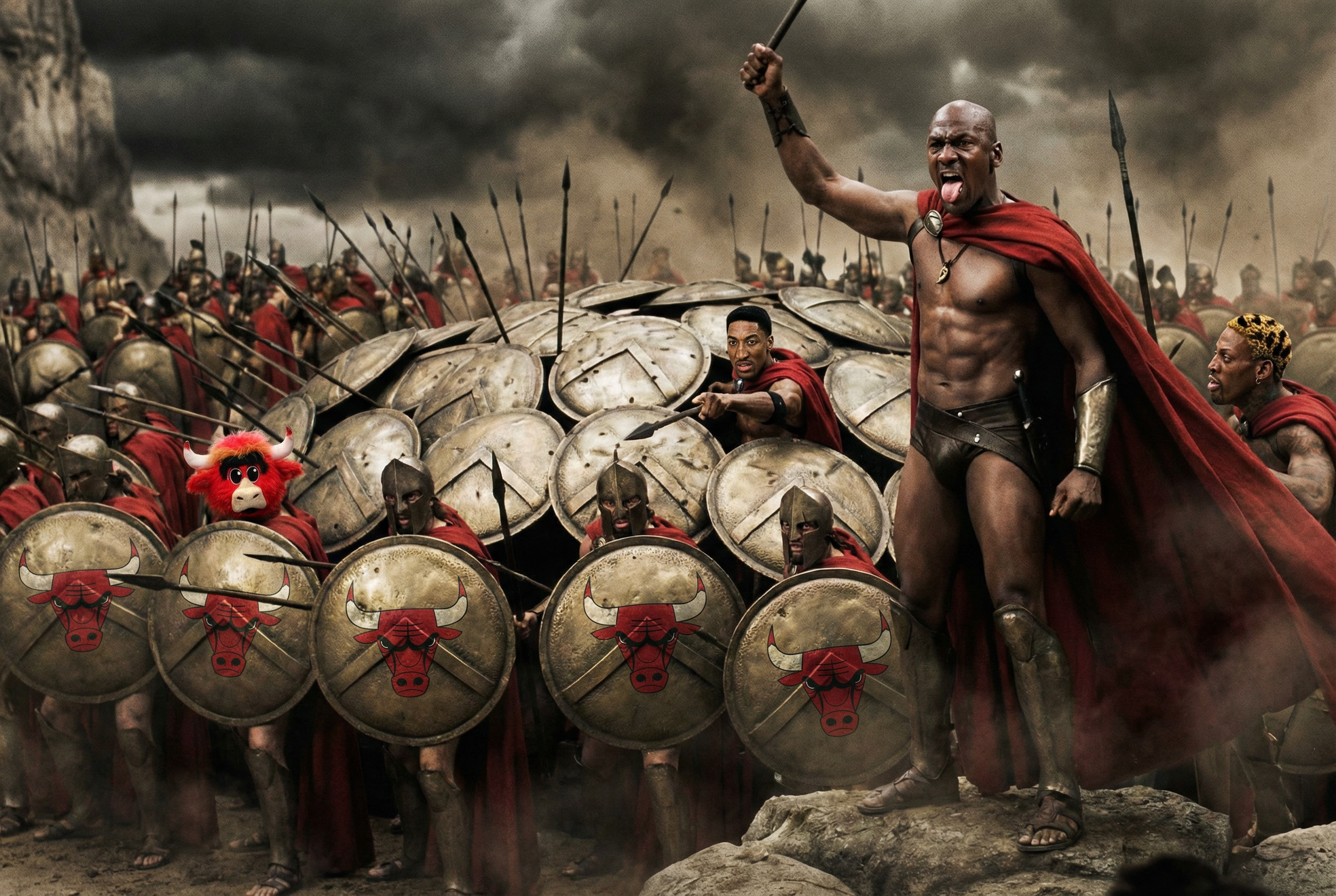
There was no scenic route around the Hot Gates. No “maybe the bracket breaks right this year.” You wanted the crown? Fine. March into the pass and see if Michael Jordan felt like allowing it.
He did not.
At the front of the pass stood the psychotic warrior-king, relishing his role as executioner. Behind him, the geometry of the pass allowed a handful of men to become a wall stopping forward motion. Pippen, the loyal lieutenant, anchored the defense, filling gaps. Later, Rodman would arrive looking like the goblin from a side quest that had gone violently off the rails. Kerr and Paxson applied lethal pressure from range. The Bulls made the decade’s postseasons feel like one of those medieval bridges where the tax collector was also allowed to kill you.
And Patrick Ewing kept having to cross it.
1991: Lost to Chicago in the first round.
1992: Lost to Chicago in the semifinals.
1993: Lost to Chicago in the conference finals.
In 1994, a window opened as Michael Jordan got bored of trolling the NBA and tried his hand at minor league baseball. New York broke through to the Finals, but Hakeem the Dream would not be denied his own chance to steal a title from the 1990’s.
Jordan returned in 1996, and Ewing was right back at the same miserable patch of blood-soaked rock, losing to the Bulls in the second round. The only road to glory had Michael Jordan standing in it with a spear, and he was taking it personally that any other team had dared to print championship T-shirts.
As the decade ground on, the Bulls turned the pass into a wall of the dead. Barkley. Drexler. Malone. Stockton. Reggie. Kemp. Payton.
Jordan retired in ’98 and the Knicks broke into the Finals as an 8-seed the following season. But the Cinderella story ended prematurely. A decade of brutality at the Hot Gates caught up to Ewing, and injuries cost him the entire Finals.
For the would-be heroes of the 1990s, there was only one strategy that seemed to work against peak Jordan: face him not at the Hot Gates, but on a baseball diamond.
The 00's
They're Taking the Hobbits to Point Guard
Not all heroes are built like Spartan warriors. Some beginnings are humbler than that. As a skinny Canadian point guard, Steve Nash was not heavily scouted. Despite dragging his high school to a provincial title while averaging something close to a triple-double, only Santa Clara made him an offer. Not exactly the sort of résumé that normally causes trumpets to sound and old men to nod gravely at prophecy.
As a freshman, his 15-seed Broncos knocked off 2-seed Arizona in a historic NCAA tournament upset.
Then Phoenix selected him 15th in the 1996 draft, and Suns fans booed. To be fair, he looked about equally likely to ask to join your rec league team or invite you to come see his Tom Petty cover band play.
But Nash kept paying his dues. In Phoenix and then Dallas, he studied the dark arts of passing and pace, offered a nightly shooting clinic that became a recurring 50/40/90, and slowly turned himself into the kind of hero that men could believe in. By 2001, he was an All-Star. By 2003, he had helped drag Dallas to the conference finals, to the Fortress of the San Antonio Spurs. His team was dashed against the wall.
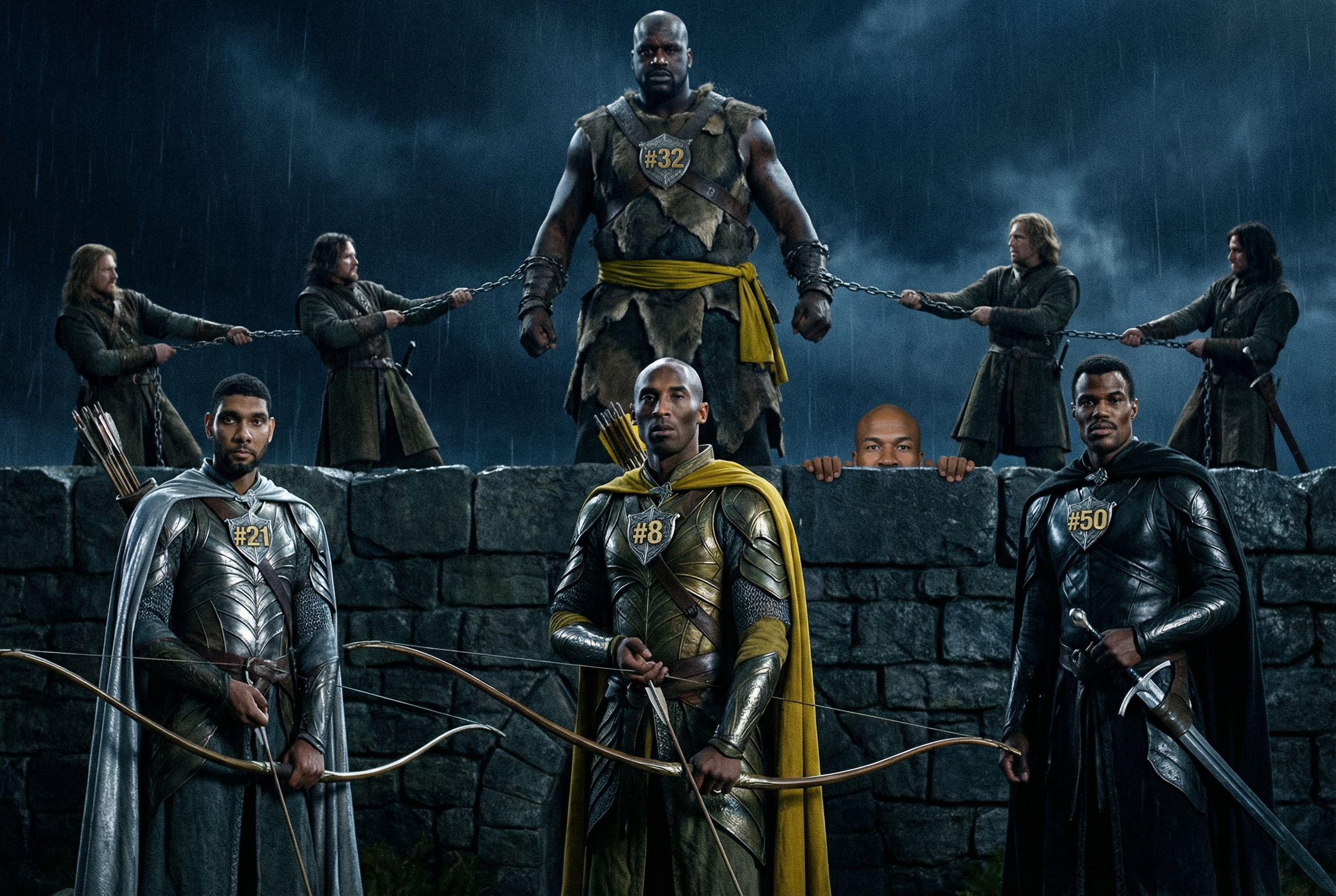
And by then it was clear: the world is changed. In the West, two great fortresses had risen: the Lakers and the Spurs. One came draped in imperial glamour. The Lakers had a Balrog named Shaq, with young Kobe stalking behind him like a Nazgûl assassin.
The other stood in gray stone and silence. David Robinson was still there on the wall, unmistakably human — the scarred veteran, carrying both the wounds and the wisdom of the prior wars. Beside him stood Tim Duncan, not an apprentice but an inevitability: a Wraith Lord disguised as a power forward, his dead eyes betraying no emotion as his methodical assaults found their mark.
And so the grey mage Mike D’Antoni summoned Nash back to Phoenix, gathered a fellowship around him of fearless warriors. He then cast a haste spell on the whole enterprise, and more or less told them:
Fly, you fools.
And suddenly they were on the move. Nash won two MVPs. He led the league in assists five times. He made Phoenix feel like the place where the future had arrived early, where spacing had become sorcery and hesitation a moral failure.
But the special cruelty of Nash’s era was that the Lakers and Spurs' monsters were only the beginning. After the Balrog came the orcs. After the assassin came the bench. After the bank shot came the extra foul, the extra rebound, the eighth man who still knew where to stand, the ninth guy who still knew exactly how hard to hit you before jogging calmly back on defense. Phoenix was often six men deep in a world built for nine.
And so Nash kept carrying the future up to the wall, and the wall kept standing. The Spurs defeated Phoenix in '05, and again in '07.
After taking so many beatings from the Lakers and Spurs, a weaker man might have been tempted to slip on the One Ring and disappear. But Nash had seen what the Eastern Conference did with disappearing acts all decade, and the results were not especially inspiring. Besides, Nash's fellowship still didn't have a ring.
So he kept showing up. But after a loss to the Lakers in 2008 it was clear that his time in Middle Earth was coming to a close. And so, Steve Nash took the boat west with the elves, never getting to see the kingdom he helped usher into existence.
The 10's
Hold the Door
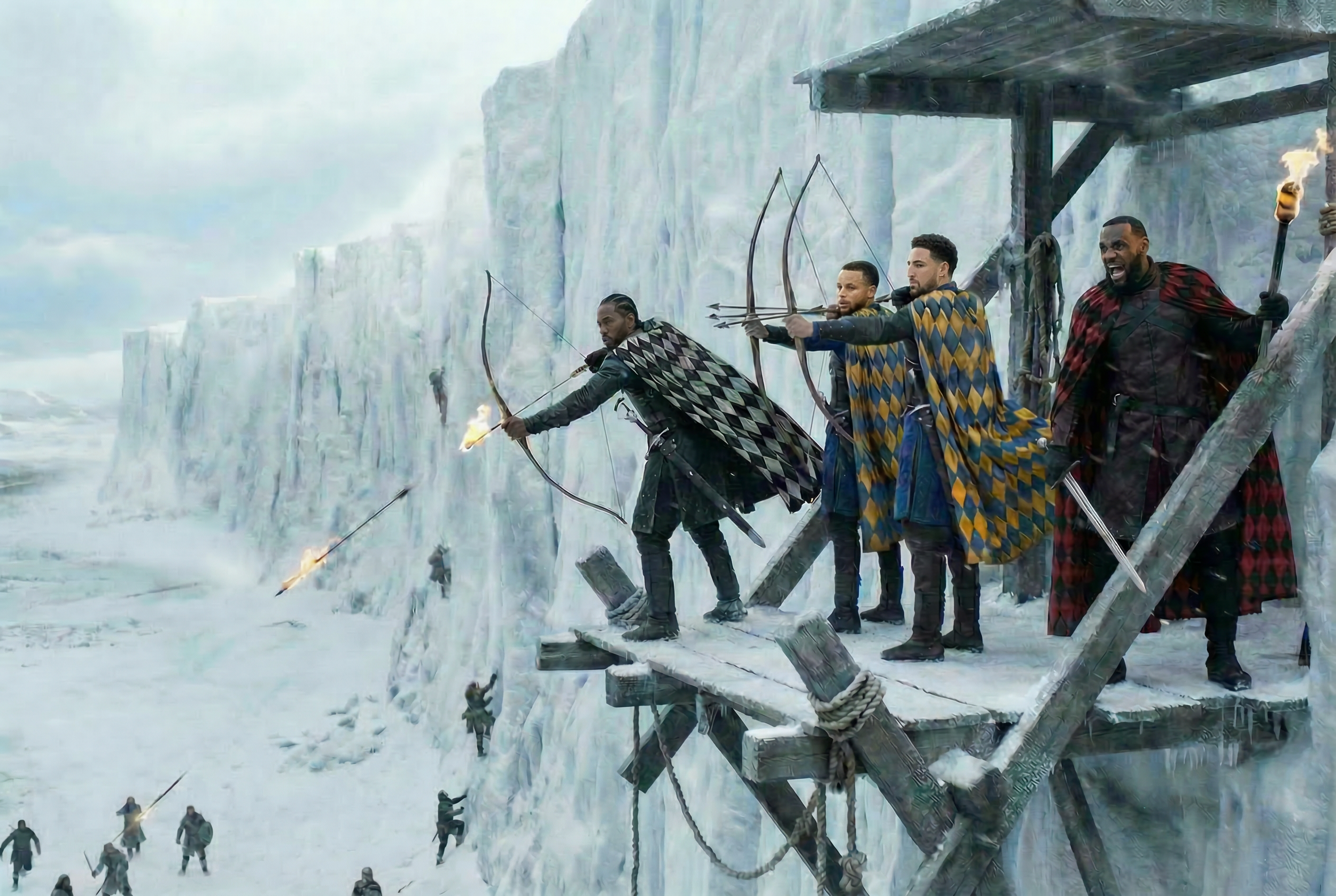
By the time the 2010s began, Chris Paul had already done everything the opening chapters of a champion’s story are supposed to require.
He had won young, and often. He had stacked the sort of honors that, in every other kind of myth, are there to reassure the audience that the road is opening: Rookie of the Year, assist titles, steal titles, All-Star Games, All-NBA respect, Olympic gold from 2008 hanging on his chest like proof that the gods had at least glanced in his direction. Then came another gold in 2012, just in case the universe had not been sufficiently clear.
This is how the lie works — with every checkpoint whispering, yes, keep going, this is what it looks like right before the coronation.
Chris started the 2010s in New Orleans before carrying his banner to Los Angeles. Lob City was loud, ridiculous, overcaffeinated, and occasionally one alley-oop away from violating several workplace safety codes. It looked like ascent — the little general with the giant mind had finally attached himself to a kingdom with enough spring, spectacle, and star power to batter through the wall.
And, his teams were dominant. Over a ten-year run his teams averaged north of fifty-one wins a season. He had the résumé of a man who keeps arriving at the gate with a perfectly valid claim.
But by the 2010s, the wall had learned a new trick. In the older eras, the wall mostly belonged to franchises. Great houses. Fortresses. Dynasties. By the 2010s, as NBA fandom drifted from teams to players, the battlements were decorated not with the emblems of great teams, but with the signatures of great players. LeBron. Kawhi. And bucking the trend as the last great team-shaped war machine, the Warriors.
These were the watchers on the wall.
Chris met the early version of the new order in 2012, when the Clippers ran into San Antonio and got swept clean off the board. Duncan was still there, the Wraith Lord hovering over the ice, methodically bank-shotting hope into dull paperwork. And beside him, not yet crowned but already dangerous, was Kawhi Leonard — the Spurs’ new secret assassin. The most Spurs thing imaginable was quietly growing a 2014 Finals MVP in the dark while calling their rookie a "defensive specialist" as he flirted with 50/40/80.
And then came the really maddening stretch of the decade. The years where Chris kept assembling worthy armies, only to get denied before he could even earn another shot at the battlements.
Memphis in 2013.
Oklahoma City in 2014.
Houston in 2015, after beating the Spurs only to blow a 3–1 lead and somehow set fire to his own escape route.
Injuries in 2016.
Utah in 2017.
And so Chris was on the move again, in search of the army that could break through. Houston offered new weaponry and tactics. A modern solution to the ancient barricade. The Rockets won 65 games in 2017–18. Up 3–2 on Golden State, the wall began to crack, he could see daylight from the other side. But Chris's body broke first. A hamstring strain kept him sidelined from his glory.
He got one more direct shot in 2019. Again the Warriors turned him away from the wall again, impersonating British dominance after the invention of the longbow. Denial from long range.
In the end, eight titles in ten years went to the watchers on the wall. Chris spent the decade changing jerseys, changing co-stars, changing cities, yet the ending kept arriving stamped with some version of the same word: Denied.
What happens to a man who spends seventeen seasons searching for the thing every accolade keeps implying should be just over the next hill?
It hardens him. It narrows his focus. Makes him lonelier, more exacting and demanding, less tolerant of error. It makes patience feel like something for younger men.
A hero can begin the journey believing the old promise — do the little things, keep answering the call, trust the work, and eventually the reward arrives. But after enough years at the gate, that patience starts to rot. Urgency takes its place. The window feels increasingly finite. Every season starts sounding less like one chapter in a long story and more like a hostage negotiation. That’s when men start squeezing. Start trying to bend time. Start making short-term choices because the long term has begun to feel like a practical joke.
We’ve seen it before. Great players near the end of the road trying to fast-forward the ending, joining larger powers, chasing the quick solution, hoping maybe the wall will mistake desperation for strategy. Gary Payton and Karl Malone did it. Harden. Westbrook. The hunger changes shape, but it never gets prettier. The longer the promised land keeps receding, the more a man starts trying to take shortcuts through terrain that was never designed to reward them.
The wall stops being the thing that denies him. Given enough time, it starts editing him.
And that may be the cruelest part of Chris Paul’s story. The same intensity that made him worthy of the quest gets sharpened, year after year, into something harder to carry. The savant who once looked like the beginning of a triumphant epic becomes a man trying to out-negotiate mortality, variance, and time itself.
Ultimately, Chris Paul was never some freak exception to the rule. He was the rule with better handles. The NBA keeps manufacturing decorated heroes, fully qualified, properly armed, seemingly on schedule. Then it crowns two or three powers per era and leaves everybody else outside in the cold explaining themselves on television.
The Wall Still Stands
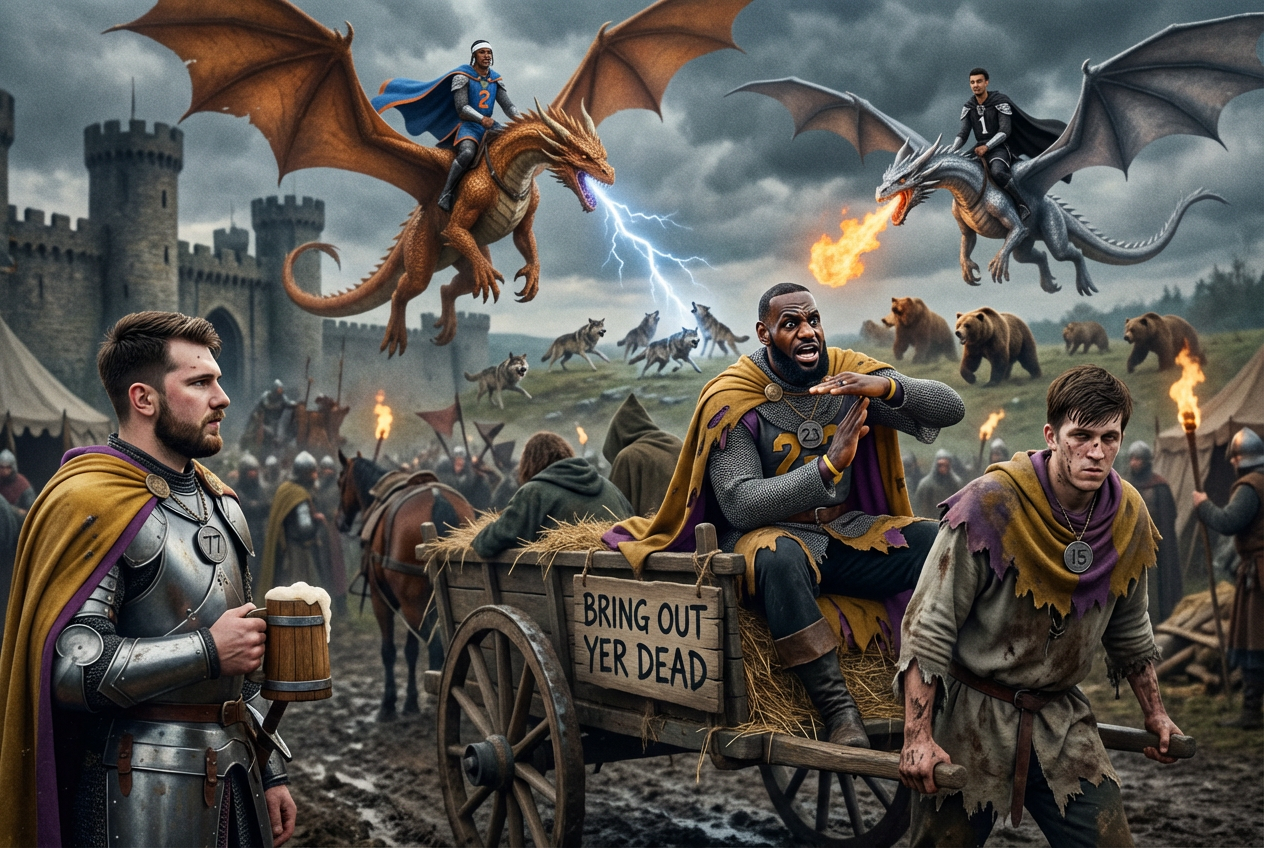
The older tragedies at least came with the mercy of hindsight. We know where Moncrief got turned away, where Ewing got funneled, where Nash hit the wall, where Chris Paul spent seventeen years learning that merit does not guarantee a crown.
But now we watch the wall of the 2020's rise in real time, brick by brick.
A few years ago, Luka Dončić looked like the safest bet in basketball to own a serious piece of this decade. The résumé was already there. The production was already there. He fought his way to the Finals once already. This is how the story is supposed to work. The gifted young star keeps ascending, the window opens, the league eventually makes room.
But windows are fickle.
Could it be that this time the wall belongs to the youth, as they arrive ahead of schedule?
The old kings used to hold the gate and force younger stars to wait their turn. This time, the younger powers may be arriving early enough to close the door on players who thought the decade was just opening for them. SGA already has a crown. Victor Wembanyama already looks like a problem with no historical precedent and his Spurs have several roster moves still to come. Luka, now in Los Angeles, has to wonder how long his own runway really is.
Maybe Luka still breaks through. Maybe this whole reading turns out to be wrong. But that uncertainty is the point. The wall is not finished yet, and he already has to ask what it will take to beat it before it hardens.
In the wall’s shadow lives the darkest truth in the sport: The NBA does not lack worthy champions -- it's drowning in them. What it lacks is mercy.
AUDITING THE MYTH SINCE 2006

If you made it this far, you already know what we do here. We write about greatness and delusion, triumph and collapse, and the strange emotional hold sports keeps on people who should probably know better.
Drop your email and once a week we’ll serve you something from the top shelf — no cheap shots.

Todd / 120 Proof Ball
If you liked this piece, you’re part of the problem.
